For years, women over 50 were told to reduce loads, do more yoga, walk more, and be careful with intense workouts. This story was nice, comforting, and also misleading. Because precisely at the age when a woman's body enters a perfect storm of muscle mass and strength loss, the prevailing advice was to slow down. Many women today pay the price in fractures, loss of independence, and increased mortality risk.
The latest wave of research converges on one sharp headline: Building muscle after 50 requires more than resistance training. Resistance training is the foundation, and it is the most powerful and established tool for building muscle at this age. But the part that complements it is nutritional, and when it is in place, the results improve. A large analysis of data from the Women's Health Initiative study on postmenopausal women found a dose-dependent advantage for higher protein intake on body composition, with a clear benefit starting at 1.2 grams per kg per day and above.
What is the perfect storm for a woman after 50?
The female body after menopause undergoes an unfair combination of processes, each of which alone would be a problem, and together they constitute a crisis:
- Sarcopenia: Natural loss of 0.5-1% of muscle mass per year after age 50. Without intervention, a woman starting her fifth decade with 25 kg of muscle could end the decade with less.
- Estrogen decline in menopause: Estrogen is a hormone that supports muscle and bone. When its level drops during menopause, women lose some of this protection, and the rate of muscle and bone loss accelerates.
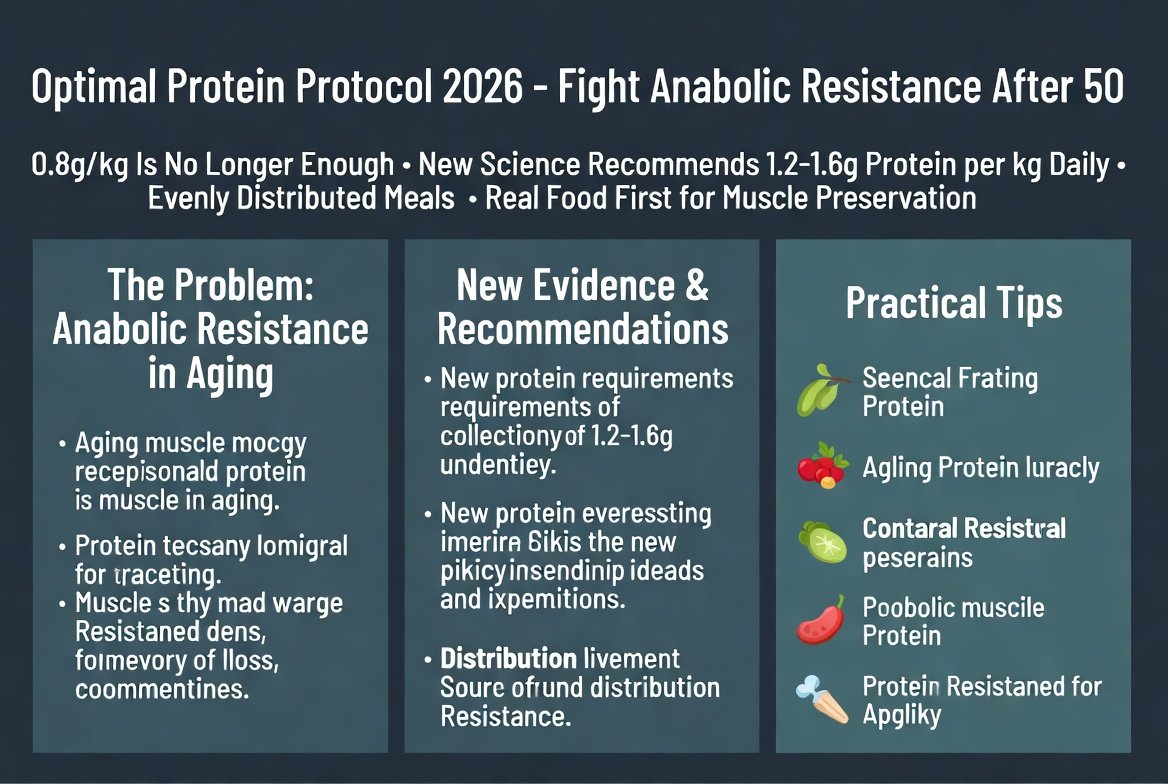
- Anabolic resistance: A phenomenon where muscle cells become less sensitive to the protein signal. A younger woman can stimulate muscle building with a meal containing about 20 grams of quality protein, while a woman after 50 may need 30-40 grams to elicit a similar response.
- Less appetite, less protein: Many women over 50 eat less, and especially less protein. An average intake around 0.8 grams per kg is just at the lower end of the standard, and often lower than what is needed to protect muscle at this age.
This is not a decree of fate. This is a list of targets that can be intervened upon for each one. But the intervention needs to be targeted. Walking alone or yoga alone will not stop this trend. Resistance training alone does build muscle, but appropriate nutrition amplifies the result.
The complementary part: The connection between exercise and protein
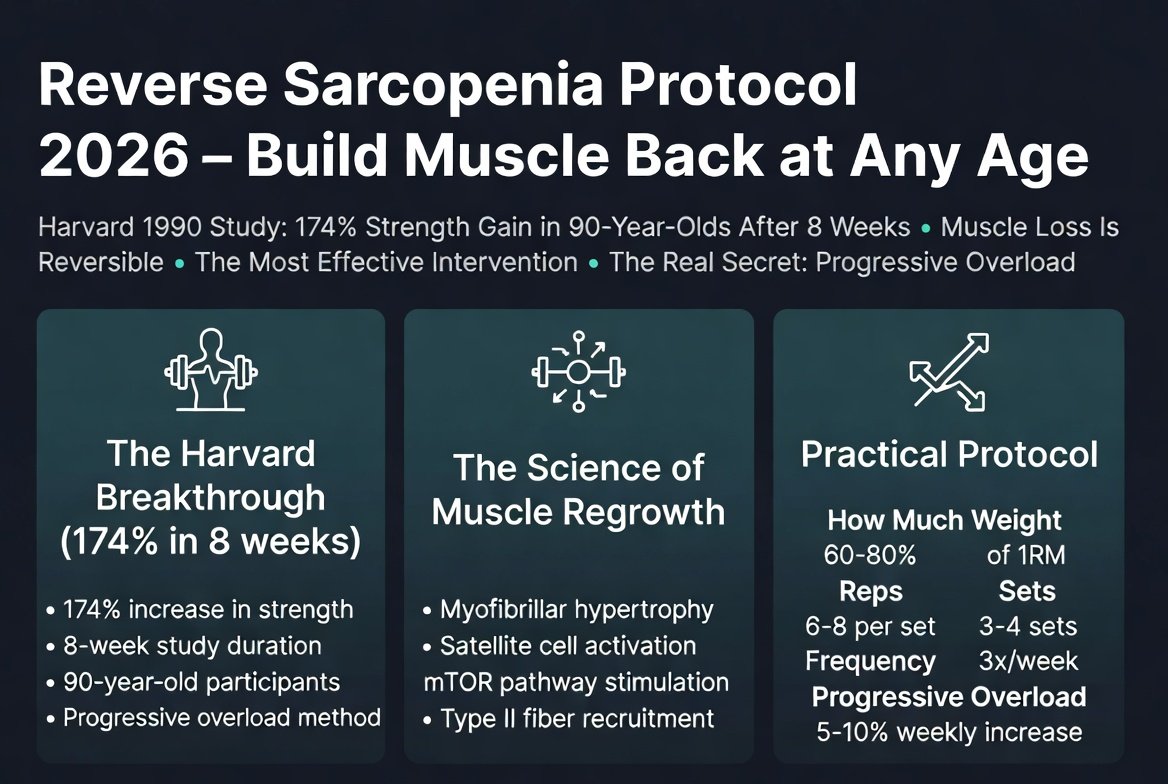
Resistance training is the most established intervention for building muscle in older women. It increases muscle mass and strength even in women aged 70 and 80, and this is not an open question in research. The question is how to get the most out of the workout, and this is where protein comes in.
Resistance training has two roles. The first is to create a stimulus that activates the muscle protein synthesis mechanism. The second is to open a window of increased sensitivity for protein synthesis in the hours after exercise. If there are not enough building blocks in the blood, some of this potential is lost. The body receives the message that it needs to build, but without sufficient protein, the response is weaker. Therefore, the combination of exercise and protein is superior to either one alone.
The story of mTOR and leucine
Inside muscle cells, there is a molecular sensor called mTOR. When activated, the cell increases protein synthesis. One of its main activators is a single amino acid: leucine. In younger women, the leucine threshold is relatively low, around 2-2.5 grams per meal, enough to trigger a response. In older women, due to anabolic resistance, studies indicate a higher threshold, about 2.8-3.5 grams of leucine per meal. Since leucine constitutes about 8% of quality protein, this translates to roughly 30-40 grams of quality protein per meal.
Why is protein distribution important?
Many women eat little protein in the morning, some at lunch, and most of their protein in the evening. This is a pattern worth correcting. Muscle protein synthesis is somewhat blunted when one meal is very heavy, so distribution makes sense. Distributing protein across 3-4 meals, with about 30-40 grams each, is considered a preferred strategy over concentrating almost all protein in one meal, even when total daily protein is the same.
Current evidence
Study 1: Women's Health Initiative analysis on body composition
An analysis published in the International Journal of Obesity (Nature) examined data from approximately 3,789 postmenopausal women, aged 50-79, from the Women's Health Initiative study, and simulated a 3-year clinical trial of increasing protein levels. The result: a dose-dependent advantage, with decreased body fat and increased lean tissue as protein intake increased, with a clear benefit starting at 1.2 grams per kg per day, and the greatest benefit around 1.5 grams per kg per day.
Study 2: Protein and hip fracture risk
A large cohort study on middle-aged and older women found that higher protein intake was associated with a lower risk of hip fracture. The estimate: each additional 25 grams of protein per day was associated with about a 14% reduction in hip fracture risk, and the benefit was even greater in lean women. Protein can come from any source: meat, dairy, eggs, or legumes and nuts in a plant-based diet.
Study 3: Creatine combined with exercise in older women
Creatine has long been considered a supplement for young strength athletes. It is not only for them. Meta-analyses in older populations found that adding creatine monohydrate combined with resistance training adds about 1.1 kg of lean tissue beyond exercise alone. A dedicated meta-analysis on older women (Nutrients 2021) found a significant advantage mainly in upper body strength, and benefits in strength and mass that were evident especially when the training program lasted at least 24 weeks. There is no mandatory requirement for a loading phase, and no need for cycling.
Study 4: Protein distribution and grip strength
A study based on NHANES data (National Health and Nutrition Examination Survey, USA, 2011-2014) examined approximately 4,123 adults aged 51 and over, and tested the relationship between protein distribution across meals and grip strength. The analysis focused on comparing eating protein at a level of at least 25 grams in one meal versus distributing the same protein across two, three, or more meals. The finding supports that distributing protein throughout the day, rather than concentrating it, aligns better with maintaining muscle function.
What about osteoporosis and fractures?
The story of muscle after 50 is not just about muscle. It is closely linked to the skeletal system. A strong muscle pulls on the bone, stimulates it, and supports maintaining bone density. Resistance training has been found to help maintain bone density and even moderately improve it in postmenopausal women, compared to a gradual decline without intervention.
The mechanical stimulus that muscle transmits to bone is an important part of bone health, alongside calcium and vitamin D. Strong muscle = fewer falls = fewer fractures. Declining muscle function is a major cause of falls in older women, and about 17-25% of women who suffer a hip fracture die within a year, roughly one in five. This is not just a statistic; it is a major reason to prioritize muscle maintenance.
Is it really just protein and creatine? A cautious perspective
It is important to keep things in proportion. The data are not uniform: there are interventional studies in postmenopausal women where adding protein beyond the standard did not significantly add to muscle mass beyond the exercise itself. That is, exercise is the engine, and protein is support that increases the chance of a good outcome, not a magic bullet on its own. Additional points to remember:
- Kidney function: In women with normal kidney function, consuming 1.6-2.2 grams per kg of protein is considered safe. In women with chronic kidney disease, it is mandatory to consult a doctor and not assume it is fine.
- Protein source: Animal protein is richer in leucine compared to most plant-based protein sources. Women on a vegetarian or vegan diet may need more total protein and should combine diverse sources, for example, pea or soy protein powder, to reach the leucine threshold.
- Creatine and side effects: There may be a slight temporary weight gain due to water retention in the first few weeks. No kidney damage has been demonstrated in healthy women. Gas in a minority is usually resolvable by dividing into two smaller doses.
- Resistance training and technique: Older women need initial guidance. An exercise like the deadlift with poor technique can be harmful. Investing in a few private sessions with a qualified trainer at the beginning is worthwhile.
- Estrogen and hormone therapy: In women for whom it is suitable, hormone replacement therapy (HRT) may help maintain muscle mass and bone density. This is not a substitute for exercise and protein, but a legitimate option worth discussing with a doctor.
The guiding principle: None of the components is a complete solution on its own. Exercise alone builds muscle but benefits from nutritional support. Protein alone without exercise does not build muscle. Creatine alone without exercise provides little. The combination brings the best result.
The practical protocol for a woman after 50
- Protein 1.6-2.2 grams per kg of body weight per day. For a woman weighing 65 kg, this is about 105-145 grams of protein daily. If it is hard to reach this from food, whey protein powder 25-30 grams once or twice a day is a convenient solution.
- Distribute across 3-4 meals, 30-40 grams of protein each. A breakfast with protein is especially important. Not just coffee and fruit, but eggs, cheese, or a protein shake.
- Resistance training 2-3 times per week, with an emphasis on compound exercises: squat, deadlift, row, shoulder press, assisted pull-up. A truly challenging load, in the range of about 6-12 repetitions, is what generates the stimulus.
- Creatine monohydrate about 5 grams per day, at any time. Can be mixed in water, a shake, or coffee. An inexpensive supplement with extensive research documentation.
- Vitamin D as needed, especially when sun exposure is low. It is advisable to check levels once a year and adjust dosage with a doctor.
- Sleep 7-9 hours. A significant portion of repair and recovery occurs during sleep. Postmenopausal women sometimes suffer from sleep disturbances, and it is worth addressing this.
- Daily walk of 30-45 minutes, preferably also after meals. Walking improves insulin sensitivity and supports cardiovascular health, alongside resistance training.
The broader perspective
The big story here is that the female body after 50 is not a body that needs to be given up on, but rather a body that requires adaptation. The same exercise that sufficed at age 30 may not be enough at age 55, and the same diet that worked at age 40 may neglect muscle at age 60. This is not just a matter of age, but of changing physiology and adapting the intervention to it.
The old recommendations, which spoke of "slowing down" and "being careful," came from a place of concern but sometimes led in the opposite direction. Women who stop challenging their bodies after 50 lose a significant portion of their muscle by age 70, while with appropriate exercise and supportive nutrition, it is possible to preserve, and sometimes even increase, muscle mass and strength in these decades.
This is not an empty promise but cumulative evidence from many studies and diverse populations. Resistance training is the foundation, and protein, leucine, creatine, and distribution are the part that complements it. Without them, exercise alone accomplishes less than it could. And at this age, every advantage counts.
The opportunity is open to every woman. The evidence is here, the protocol is clear, and the cost is low. What is needed is a decision to start, preferably with professional guidance.
References:
Estimating the effect of hypothetical dietary protein interventions on changes in body composition of postmenopausal women: an emulated target trial (Women's Health Initiative), International Journal of Obesity, 2026
Bauer J et al. Evidence-based recommendations for optimal dietary protein intake in older people: a position paper from the PROT-AGE Study Group. JAMDA 2013 (PMID 23867520)
dos Santos EEP et al. Efficacy of Creatine Supplementation Combined with Resistance Training on Muscle Strength and Muscle Mass in Older Females: A Systematic Review and Meta-Analysis. Nutrients 2021
Association between dietary protein intake and grip strength among adults aged 51 years and over: NHANES 2011-2014. PLOS One 2018 (PMID 29364939)

💬 Comments (0)
Be the first to comment on the article.