Osteoarthritis (OA) affects more than 500 million people worldwide. In Israel, over 30% of those aged 60+ suffer from it. Existing treatments—physical therapy, anti-inflammatory drugs, hyaluronic acid injections, and ultimately joint replacement—all focus on symptom relief. But the disease continues to progress. A new study published in Experimental & Molecular Medicine (Nature group) presents a completely different approach: injecting Yamanaka factors directly into the joint to restore cartilage to a youthful state.
Background: Why Doesn't Cartilage Regenerate?
Cartilage is a complex and delicate tissue at the ends of bones in a joint. It provides low friction and shock absorption. But it has a problem: cartilage cells (chondrocytes) divide with difficulty. When cartilage is damaged (injury, age, obesity), it does not repair itself. Over time, it erodes, bone is exposed, and osteoarthritis begins.
Cartilage cells also have another problem: with age, they become senescent (zombie-like). They secrete inflammatory factors that worsen joint damage.
The New Approach: OSK Factors
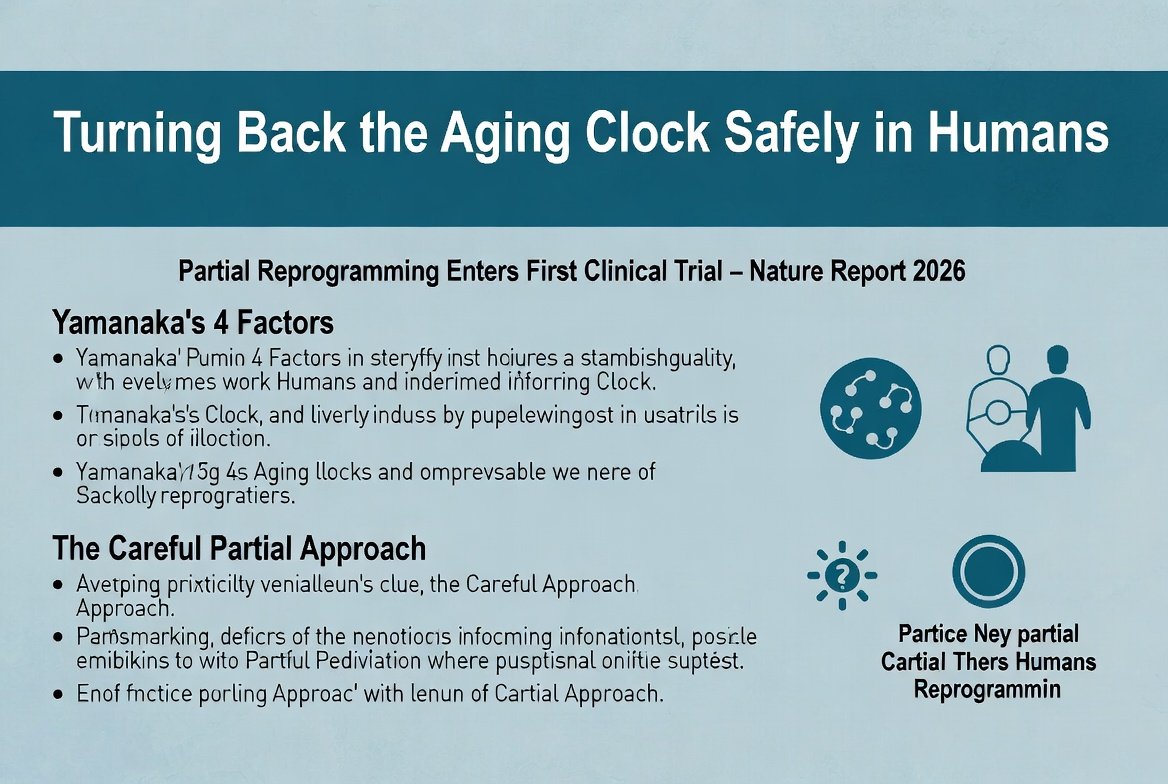
The classic Yamanaka factors are 4 (Oct4, Sox2, Klf4, c-Myc). But c-Myc is considered a cancer-causing factor, so most research focuses on the first three only. This group is called OSK (Oct4, Sox2, Klf4). Together, the three can partially "rewind cells in time" without the risk of cancer.
The Experiment
The team built an AAV vector (adeno-associated virus (AAV2), a safe carrier for gene therapy) carrying the 3 OSK genes. They injected it directly into the knee joints of mice with osteoarthritis. The genes were activated only in cartilage cells.
The Results
After a follow-up period, the team examined the joints under a microscope and with scans:
- Improved cartilage integrity. The eroding cartilage began to regenerate, with improvement in OARSI scores
- Reduced subchondral bone thickening. A classic sign of osteoarthritis that was reduced
- Hyalinization. Fibrotic cartilage (scar-like, rich in COL1) was converted back to hyaline cartilage (normal, rich in COL2)
- Epigenetic changes. DNA methylation patterns in cartilage cells resembled those of young cells, accompanied by changes in the enzymes DNMT3a and TET2
How Does It Work?
OSK acts through several parallel mechanisms:
- Epigenetic rejuvenation. They alter DNA methylation patterns, returning them to a young cell profile. A young cell divides more and produces building materials for cartilage
- Reduced senescence. Cartilage cells that were zombie-like re-enter the cell division cycle
- Reduced inflammation. As a result of reduced senescence, the level of inflammation in the joint decreases
- Extracellular matrix repair. The proteins that make up cartilage are renewed
Why Is This Important?
Other approaches still in development for osteoarthritis:
- Stem cell therapy (mesenchymal stem cells) - extensive research, but mixed results
- Monoclonal antibodies against inflammatory pathways - expensive
- Senolytics - experimental
- Gene therapy for collagen - in development
The OSK approach is unique because it does not treat the symptom; it returns the cell to work as it once did. Instead of suppressing inflammation, it causes the cell to renew itself.
Safety and Risks
Two central questions:
- Cancer risk. Without c-Myc, the risk is reduced, but not zero. No tumors were observed in the study, but this will require long-term follow-up
- Local side effects. Inflammation in response to the AAV vector, rare but possible
The advantage of local injection: the genes are activated only in the joint, not throughout the body. This drastically reduces the risk.
How Far Is This from Humans?
It is important to emphasize: this is a result in mice only. The path to humans is still long. The researchers themselves note that to transfer the technology to larger mammals and eventually to humans, more refined strategies will be required. Among the challenges that still need to be solved: large-scale production of gene carriers suitable for a human joint, regulatory approval processes, and cost. All of these will determine if and when the approach reaches the clinic. There is no binding timeline at this stage, and any estimate of a precise number of years would be pure speculation.
What Does This Mean for You?
If you have osteoarthritis today, this treatment will not be available soon. In the meantime, what works:
- Maintaining a healthy weight: Every extra kg = 4 additional kg on the joint
- Resistance training: Strengthens the thigh muscles and directly impacts the joint
- Omega-3: 2-3 grams per day, reduces inflammation
- Glucosamine + Chondroitin: Modest but real help in some people
- Hyaluronic acid injections: Only in the clinic, for mild to moderate cases
The Bottom Line
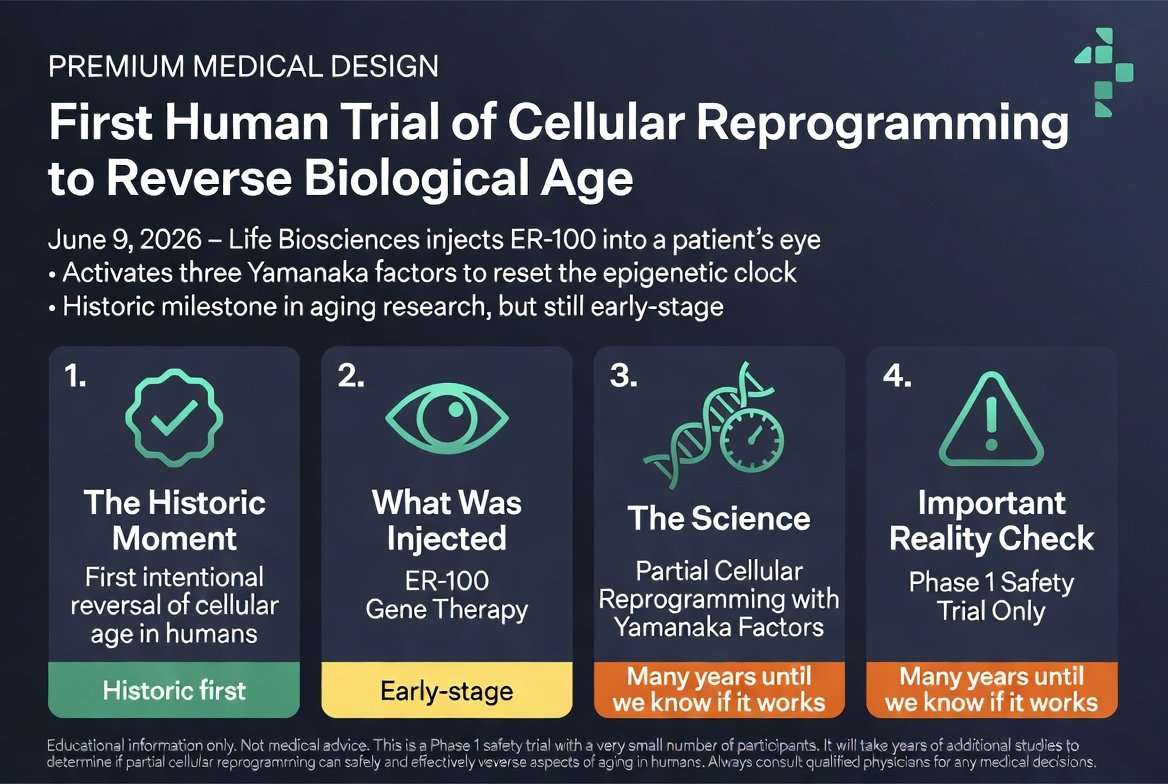
OSK therapy is not an available drug. It is a hope for the future, which still needs to undergo trials in large mammals and then in humans. Combined with other partial reprogramming experiments (like Life Biosciences in the eyes), we are moving from an era where aging was a decree to an era where it is a problem that can be solved. One step at a time.

💬 Comments (0)
Be the first to comment on the article.