This lecture by David Sinclair on the TEDxBoston stage has become one of the most popular entry points into the modern field of longevity. Sinclair, a professor at Harvard Medical School and the world's most recognized aging researcher, takes the audience on an 18-minute journey that challenges everything we've been taught about aging. Instead of presenting aging as an inevitable process of accumulated damage, he offers a completely new framework: aging is essentially epigenetic information loss, and therefore, in theory, it can be reversed. The question that drives the entire lecture is simple and powerful: if we can restore lost epigenetic information, can we return cells, tissues, and perhaps even entire bodies to a younger state?
What the Video Is About
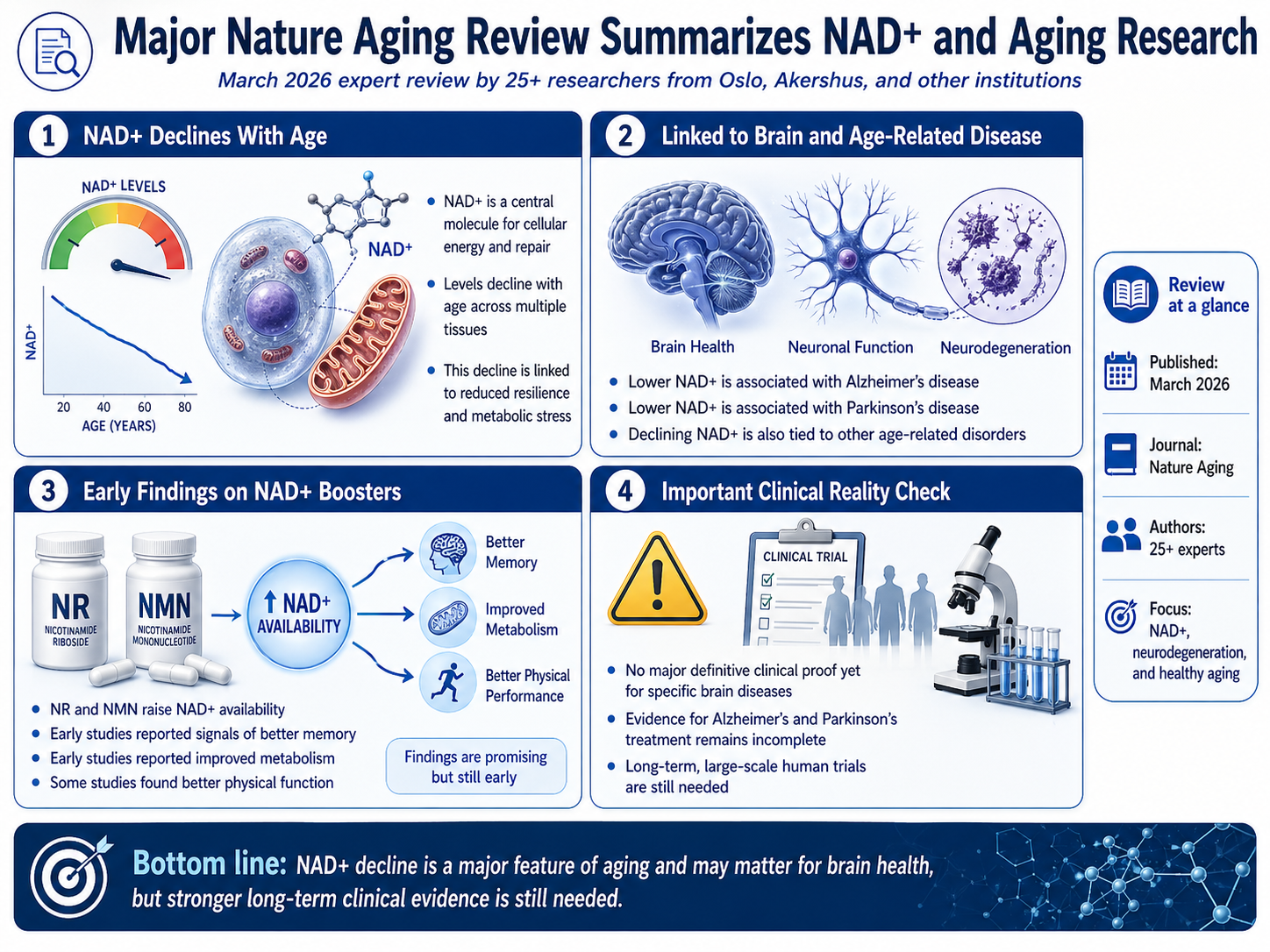
Sinclair opens with a brief historical overview of how biology perceived aging in the 20th century: as a chain of damage that accumulates in cells, oxidizes, and is irreversible. He challenges this model and presents what he calls the Information Theory of Aging. The idea: our DNA, the hard software, remains relatively stable with age, but the epigenetic information that activates the right genes in the right cells degrades over time. He explains the role of sirtuins, a family of proteins that coordinate DNA repair with gene regulation, and why they become overloaded with age. He presents data on NMN and his lab's experiments in mice: restoring vision after optic nerve injury, slowing measured biological ages, and even making nerve cells younger. In the end, he ties it all to a vision of medicine that treats aging itself as the unifying root cause, instead of chasing each age-related disease separately—cancer, Alzheimer's, heart disease, diabetes.
Why You Should Watch
This is one of the best lectures for those taking their first steps into the world of longevity. Sinclair is a rare communicator: a senior scientist who knows how to turn complex concepts like the epigenome, sirtuins, and NAD into something that even someone without a biology background can grasp in about 18 minutes. The lecture doesn't claim there is a ready solution today; it offers a new framework for thinking. If you're just starting to explore the topic and want the big picture, this is the right starting point. If you're already deep in the field, the lecture is worth rewatching for its concise articulation of the information theory, which has since become the framework for much of the discourse among aging scientists worldwide, and a common citation in articles, podcasts, and conferences wherever science-based longevity is discussed.
Enjoy watching!

💬 Comments (0)
Be the first to comment on the article.