If you look at the OECD life expectancy tables, the numbers seem clear: women win. In Israel, a woman's life expectancy is 84.6 years, a man's is 80.7. In France: 85.5 vs. 79.6. In Japan: 87.7 vs. 81.6. This gap, of 4-7 years, crosses cultures, healthcare systems, and income levels. It existed in 1900 and exists in 2026.
But beneath this headline hides a fascinating paradox: women indeed live longer, but they also get sicker. Some of their extra years are marred by functional disability, chronic pain, or diseases that undermine quality of life. This is not fiction; it is a statistic that repeats itself in every major epidemiological study of the last decade.
This paradox has become one of the hottest topics in aging research. A global analysis published in JAMA Network Open in December 2024, which examined data from 183 countries, showed that the gap between life expectancy and health expectancy is growing worldwide, and that it is wider for women. In this article, we will try to delve deeper and show why the extra years for women are not always good years, and what sex-specific biology tells us about how to change that.
What is the Female Longevity Paradox?
The paradox consists of two data points that work in opposite directions:
- Lifespan: Women live 5-7 years longer than men on a global average.
- Healthspan: The years we live without chronic disease or functional disability.
- The gap between them: Globally, it is about 9.6 years on average, and growing over time.
- The gender difference: This gap is wider for women by about 2.4 years compared to men.
- The implication: A significant portion of the extra years women receive fall into the category of 'alive, but not healthy'.
In other words: female biology provides a time-extension, but at a high qualitative cost. The extra years are not given for free; they often come with diseases that men simply do not live long enough to develop. Indeed, among women, the burden of non-communicable diseases, especially neurological, musculoskeletal, and genitourinary disorders, contributes to a large part of the years in poor health.
The Biology of the Gap: Estrogen, X Chromosome, and Immune System
Why do women live longer but get sicker? The answer is divided into three main biological factors, all starting from the same place: sex differences in the genome and hormones.
1. The Protection of Estrogen, and Its Sharp Decline
Estrogen is not just a reproductive hormone. It acts as an antioxidant, anti-inflammatory, and vascular protector. It improves the function of endothelial cells in blood vessels, lowers LDL, raises HDL, and maintains bone density.
For decades, from the first menstrual cycle to menopause, estrogen actively protects the heart, brain, and bone systems in women. Around age 50, when menopause arrives, estrogen levels drop by about 90% during the menopausal transition. This decline is significant and relatively rapid. And within a decade, women 'catch up' to men's risk for heart disease, and sometimes surpass them in risk for osteoporosis.
2. Double X Chromosome: An Advantage and a Burden
Men carry XY, women carry XX. The second X chromosome in women provides a 'genetic backup' advantage: if a problematic gene appears on one, the other can function. This is one explanation for why women are less vulnerable to X-linked recessive genetic diseases.
But there is a price: the second X is supposed to undergo 'X-inactivation', but in about 15-23% of genes, the inactivation is incomplete. Some genes that are expressed in women at double strength are on the X and are linked to the immune system. This is one reason women tend to have stronger immune responses, an advantage when fighting infections, a disadvantage when the immune system turns against the body itself.
3. A Stronger Immune System, and Therefore More Sensitive
Women develop a stronger immune response to vaccines and survive viral infections at a higher rate. In COVID-19, mortality was significantly higher in men than in women. But this same active immune system is a double-edged sword: about 80% of all autoimmune diseases occur in women.
- Lupus: About 9 women for every man.
- Hashimoto's thyroiditis: A very high ratio favoring women (on the order of about 5-8 women for every man).
- Multiple Sclerosis (MS): About 2 women for every man.
- Rheumatoid Arthritis: About 2-3 women for every man.
- Fibromyalgia: About 3 women for every man in population-based studies (higher ratios sometimes reported are due to referral bias to clinics).
The reason: a combination of estrogen (which boosts immune response), the double genes on X, and the estrogen cessation at menopause that alters the immune balance.
Current Evidence: Between Lifespan and Healthspan
Study 1: The Global Gap Between Life Expectancy and Health Expectancy (JAMA Network Open, 2024)
A global analysis led by researchers from the Mayo Clinic, based on WHO data from 183 countries, examined the gap between life expectancy and health expectancy. Key findings:
- The average global gap reached about 9.6 years, and grew over the two decades examined.
- The gap for women was wider by about 2.4 years compared to men.
- The wider gap in women was linked to a higher burden of non-communicable diseases, mainly neurological, musculoskeletal, and genitourinary disorders.
- The United States recorded the largest gap in the world, about 12.4 years on average living with disease or disability.
Study 2: Hormones and Dementia After Age 65 (WHIMS)
A sub-study of the Women's Health Initiative (NIH-funded) examined hormone therapy and dementia risk in older women. In the estrogen plus progestin arm, about 4,500 women participated, and in the estrogen-only arm, about 2,947 women, all aged 65-79 at the start of the study. The surprising finding: when hormone therapy was started at an older age (65 and over), it actually increased the risk of dementia, not decreased it. This is one of the data points that shaped the understanding that the timing of treatment initiation is crucial.
Study 3: Early Menopause and Dementia (UK Biobank)
An analysis of UK Biobank data published in Human Reproduction (2023) examined the link between age at menopause and dementia risk. In women who experienced early menopause, before age 40, the risk of all-cause dementia was about 35% higher compared to women whose menopause was within the normal range. Additionally, menopause before age 45 was linked to an increased risk of early-onset dementia (before age 65). The researchers conclude: estrogen is neuroprotective, and its early loss may impair brain protection.
Study 4: Bones and Fractures
In women, bone loss accelerates in the years after menopause, and in this decade, an average woman can lose a significant portion of her bone mass. The practical risk is an osteoporotic fracture. A hip fracture after age 70 is associated with high mortality in the following year, in the range of about 20%-24% (and sometimes more, depending on the population). A data-based analysis published in The Lancet Healthy Longevity in 2025 showed that hormone therapy protects bone during use, and that fracture risk temporarily increases in the years after stopping treatment, a finding that highlights the role of hormone therapy in protecting the female skeleton.
What About Alzheimer's? The Number 1 Female Disease
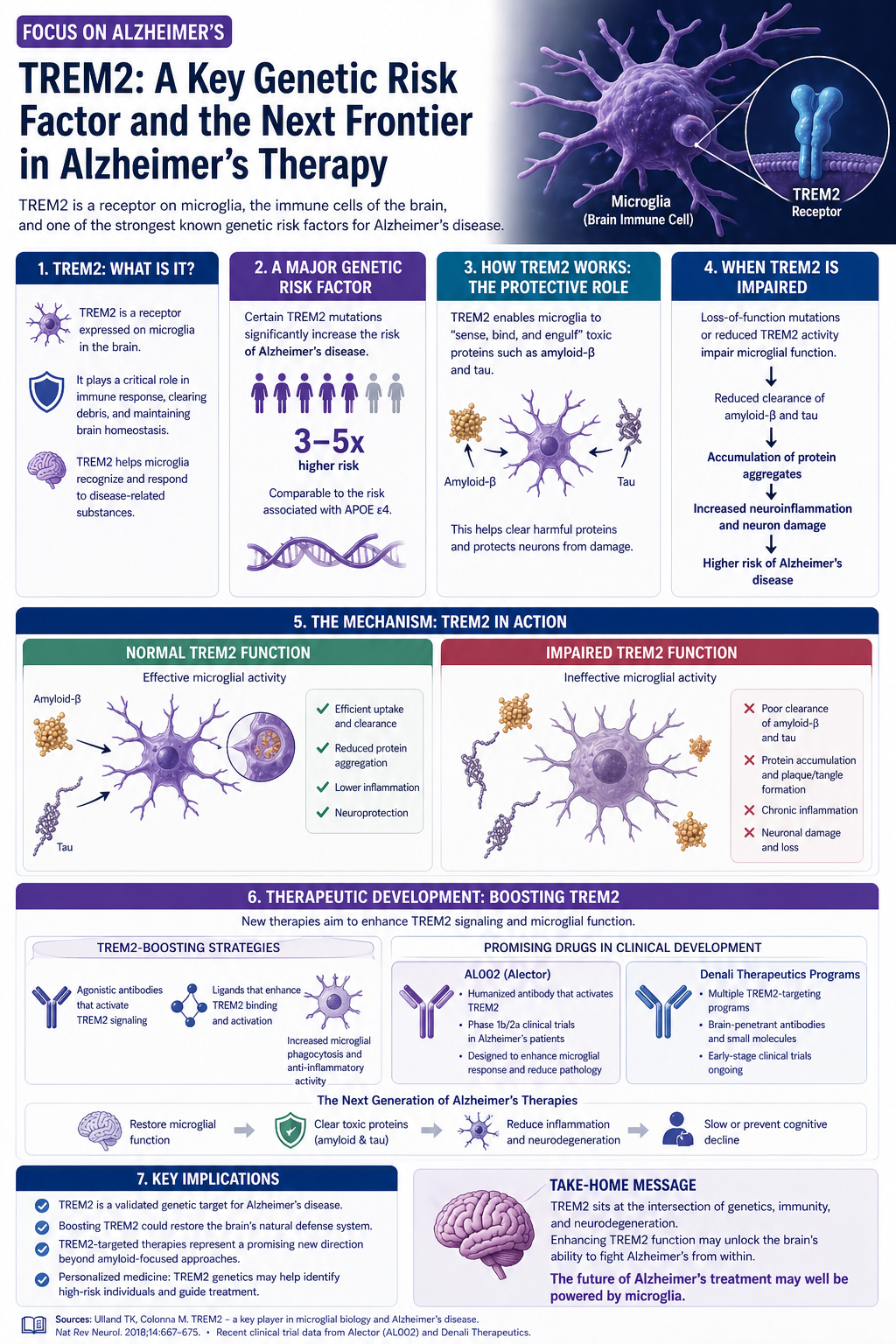
Two-thirds of all Alzheimer's patients worldwide are women. The common explanation was simple: women live longer, so they have more time to develop the disease. But studies in the last decade have shown this is not enough to explain the gap.
A woman at age 65 has about a 1 in 5 risk of developing Alzheimer's in her lifetime. A man of the same age, about 1 in 11. This gap is too large to be explained solely by life expectancy.
The biology: Estrogen protects neurons, encourages synapse growth, and reduces the accumulation of beta-amyloid, the protein that creates Alzheimer's plaques. When estrogen drops at menopause, neurons lose a major protective layer.
The interesting data point: Some studies indicate that women who received hormone replacement therapy (HRT) within about 5 years of menopause showed a lower risk of Alzheimer's, in the range of 30-40%. In contrast, women who started HRT many years after menopause did not receive the same protection, and there is evidence (like the WHIMS arm) that at an older age, treatment may even be harmful. This is called the 'window of opportunity', and it has enormous implications.
Should You Take HRT?
After the WHI (Women's Health Initiative) crisis in 2002, millions of women stopped taking HRT due to fear of breast cancer. But repeated studies in the decades since, and a re-reading of the data, have shown that the initial conclusions were biased in certain contexts:
- Most participants were women aged 60+, far from menopause, so the results do not necessarily represent women starting treatment near menopause.
- The types of hormones used (Premarin + Provera) are rarely used today.
- The absolute increase in breast cancer risk was relatively small, and in the context of younger women, the benefit profile is different.
Today, current recommendations (NAMS 2022) lean towards: HRT with estradiol + micronized progesterone, when the decision for treatment is made near menopause. In this age group, risks are lower, and benefits (brain, bone, vascular protection, sleep quality) may be significant.
This is not a universal recommendation. Women with a personal history of breast cancer or stroke need a careful conversation with their doctor. But the sweeping fear, which caused a widespread cessation of HRT, likely added years of disability to some of the public.
What to Take Away from the Research?
- Know your menopause. If you experienced it early, especially before age 45, your risk for osteoporosis, dementia, and heart disease is higher. Get ahead with screenings.
- Consider HRT around age 50-55. Talk to a menopause specialist (not every gynecologist is up to date). The consideration of HRT with estradiol + micronized progesterone, near menopause, is one of the most significant health decisions during this period.
- Resistance training twice a week. Muscle mass is the best defense against osteoporosis, diabetes, and falls. Women do less resistance training than men, and this must change.
- Protein 1.2-1.6 grams per kg per day. Older women suffer from sarcopenia (muscle loss) to a high degree. A high-protein diet is critical.
- Check D and B12. Two very common deficiencies that can accelerate cognitive decline and bone fragility.
- Neutralize chronic stress. Women are about twice as likely as men to experience depression. Chronic depression is a risk factor for dementia. Meditation, psychotherapy, and adequate sleep are investments in longevity.
The Broader Perspective
The female longevity paradox is not a biological curse. It is, among other things, a result of a research gap: until the 1990s, a large portion of clinical trials were conducted mainly on men. Women were sometimes considered 'too complicated' due to their cycle and fluctuating hormones. Today we are paying the price for decades of medicine that was largely based on the male as the default.
But the trend is changing. In recent years, the NIH mandates representation of both sexes in funded biomedical research. Menopause research centers are opening. Drugs are being tested with consideration for sex. We are at the beginning of an era in women's medicine that recognizes that female biology is different, and therefore requires different solutions.
The good news: the gap between lifespan and healthspan in women is not a decree of fate. With an understanding of sex-specific biology, and with smart decisions at ages 40-55, it is possible to extend not just life, but the good years of life. And that, ultimately, is what matters.
References:
JAMA Network Open (2024) - Global Healthspan-Lifespan Gaps Among 183 WHO Member States
The Lancet Healthy Longevity - Menopausal Hormone Therapy, Bone, and Healthy Aging

💬 Comments (0)
Be the first to comment on the article.