The heart beats fast, thoughts race, muscles are tense, and the stomach churns. Stress and anxiety are a normal human response, an ancient survival mechanism designed to prepare us for danger. The problem is that in the modern world, this switch almost never turns off: emails, notifications, news, bills. When the stress system is on in the background day after day, it begins to erode sleep, mood, the immune system, and even the rate of cellular aging.
The good news: you don't need medication or a therapist to lower the flame's intensity. Most of the most effective tools are simple daily habits that directly affect the nervous system, and some work within minutes. In this guide, we've compiled practical, research-backed techniques to reduce stress and anxiety today, without special equipment or expense.
What happens in the body when we are stressed?
To know how to calm down, it's worth understanding what is actually on. When the brain detects a threat, real or imagined, the 'fight or flight' system is activated:
- The sympathetic nervous system takes over: heart rate increases, breathing shortens, muscles tense.
- The adrenal glands release adrenaline (immediate response) and cortisol (the long-term stress hormone).
- Blood is diverted to muscles and the brain, while digestion and recovery are temporarily shut down.
In short, one-time stress, this is excellent: it helps you brake in time or perform in a presentation. The problem is chronic stress: when cortisol remains high for weeks and months, it is linked to sleep problems, high blood pressure, increased belly fat, inflammation, and impaired concentration and memory. The goal is not to eliminate stress entirely—that's impossible and even undesirable—but to return the nervous system to a resting state (parasympathetic) frequently enough.
Practical Techniques to Reduce Stress and Anxiety
The order here is not random: we started with the most accessible tools, those you can activate even in the middle of a panic attack, and moved on to habits that build resilience over time.
1. Slow Breathing with a Long Exhale (The Fastest Tool)
Why it works: Breathing is the fastest and most direct way to influence the nervous system. A longer exhale than inhale activates the vagus nerve and slows the heart rate, signaling to the brain 'we are safe'. A randomized controlled trial by researchers from Stanford University, led by Balban and Huberman, published in the journal Cell Reports Medicine in 2023, compared 5 minutes a day of breathing exercises versus mindfulness meditation. The 'cyclic sighing' group, which emphasizes a long exhale, showed the greatest improvement in mood and a decrease in resting respiratory rate, more than meditation.
How to do it:
- Physiological sigh: A double inhale through the nose (inhale, then another short inhale to fill the lungs), followed by a long, slow exhale through the mouth. Repeat 1-3 times for immediate calm, or 5 minutes for a deeper effect.
- 4-7-8 breathing: Inhale through the nose for 4 seconds, hold for 7 seconds, exhale slowly through the mouth for 8 seconds. 4 cycles.
- General slow breathing: Aim for about 6 breaths per minute (inhale about 4 seconds, exhale about 6 seconds). This is a rhythm that synchronizes the heart and breath.
The big advantage: it's always available, without anyone noticing, even in the middle of a tense meeting.
2. Regular Physical Activity (The Natural Stress Remedy)
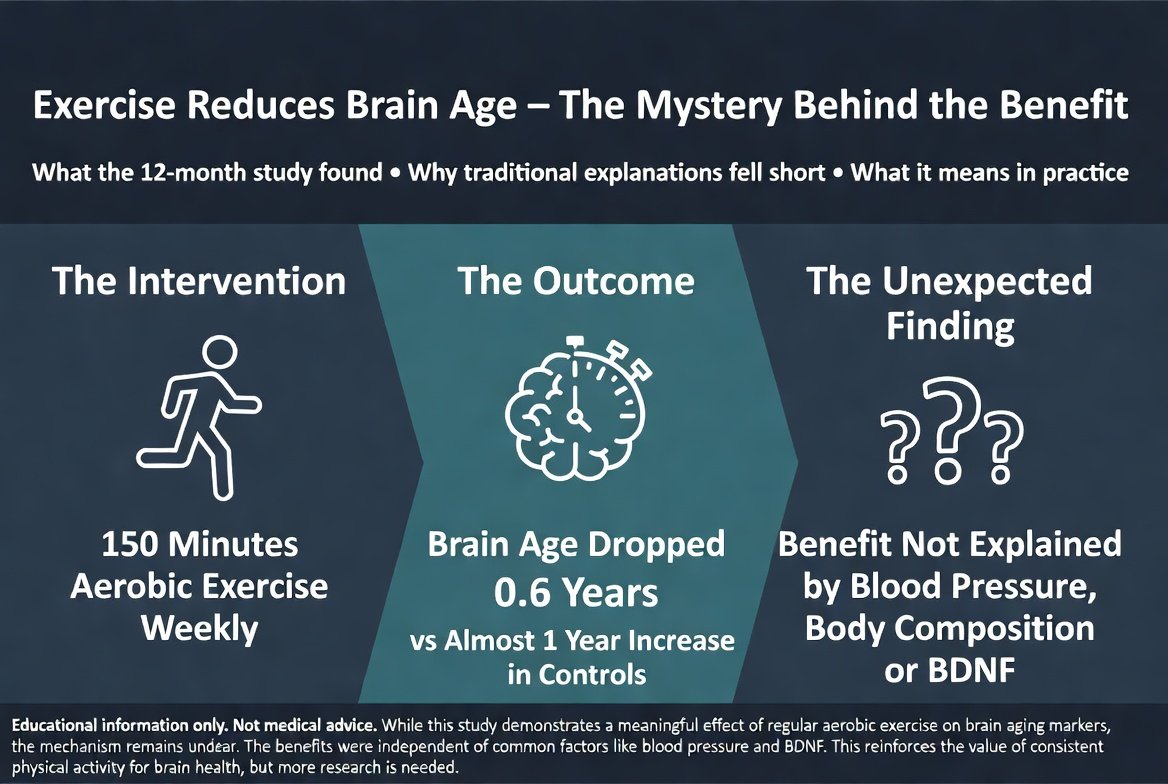
Why it works: Movement 'burns' stress hormones, releases endorphins, and improves sleep quality. A meta-analysis of randomized controlled trials published in 2024 in BMC Sports Science, Medicine and Rehabilitation found, among older adults, a significant effect of physical activity in reducing anxiety symptoms, with a moderate effect size (SMD around -0.6). All types of activity helped, not just intense sports.
How to do it: Aim for 150 minutes of moderate activity per week (e.g., brisk walking for 30 minutes, 5 times a week). Even a 10-20 minute walk reduces stress immediately. If anxiety is high, start gently: walking in nature is preferable to strenuous running, which might feel too similar to the stress response. Want a structured plan? We have a biohacking calculator that can help build a routine.
3. Quality Sleep (The Foundation for Everything Else)
Why it works: A bad night increases the brain's (especially the amygdala's) sensitivity to threats and heightens anxiety the next day, and anxiety impairs sleep. It's a cycle. Breaking the cycle starts with sleep, because a rested brain handles stress much better.
How to do it:
- Consistent bedtime and wake-up time, even on weekends.
- Stop screens (blue light and stressful content) about an hour before bed.
- Dark, cool, and quiet room.
- Caffeine only until noon (see section 6).
4. Morning Light and Time in Nature
Why it works: Exposure to natural light in the first hour of the day sets the biological clock, improves sleep at night, and helps regulate mood. Additionally, time in nature directly reduces stress: a comprehensive review by Jimenez and colleagues (Harvard University), published in 2021 in International Journal of Environmental Research and Public Health, found a consistent link between nature exposure (including 'forest bathing', shinrin-yoku) and decreases in cortisol, blood pressure, and symptoms of anxiety and depression.
How to do it: Go outside for 10-20 minutes in the morning, preferably while walking. Even an urban park or a row of trees counts. The combination of morning light, movement, and nature gives three calming effects in one go.
5. Social Connection (The Most Neglected Buffer)
Why it works: Touch, conversation, and closeness to people we trust release oxytocin and lower cortisol. Loneliness, on the other hand, is a chronic stressor in itself, and long-term studies have linked it to poor health. Good relationships are one of the strongest predictors of mental well-being.
How to do it: A 10-minute phone call with a friend, a shared meal, or simply asking for help instead of coping alone. Pets also count. Avoid social isolation especially during stressful times, when it's easiest to fall into it.
6. Limiting Caffeine, Alcohol, and Endless Scrolling
Why it works: Caffeine mimics the physiological stress response (fast heart rate, alertness) and can trigger or worsen anxiety, especially in sensitive individuals. Alcohol 'calms' in the short term but impairs sleep and increases anxiety the next day. And endless scrolling through news and social media (doomscrolling) feeds the brain a constant stream of threats, keeping the stress system on.
How to do it:
- Caffeine: Up to 2-3 cups, and not after noon.
- News: Set a defined 'news window' per day instead of compulsive checking, and turn off notifications.
- Keep the phone out of the bedroom.
7. Deliberate Relaxation and Focus on the Present
Why it works: Anxiety lives in the future ('what if'). Exercises that bring attention back to the present interrupt the cycle of thoughts. Progressive muscle relaxation, short meditation, or the 5-4-3-2-1 grounding exercise (5 things you see, 4 you hear, 3 you feel, 2 you smell, 1 you taste) calm the nervous system within minutes.
How to do it: 5-10 minutes a day is enough to build a 'calm muscle'. Relaxation apps or guided videos are a convenient starting point.
What Increases Stress (And Should Be Reduced)
Sometimes the most effective step is to remove what fuels the fire, not just add calming tools:
- Multitasking: Splits attention and increases the feeling of overload. Better to do one task at a time.
- Insufficient sleep: Doubles the intensity of every other stressor.
- Too much digital stimulation: Notifications, short videos, and screens until the moment of sleep.
- Lack of boundaries: Saying 'yes' to every request fills the day with unnecessary stress.
- Prolonged sitting: A body that doesn't move maintains muscle tension and alertness.
Calming Supplements: A Small Addition, Not a Solution
It's important to be honest: Supplements are not a substitute for breathing, sleep, movement, and connections; they are at most a small addition, and for most, the evidence is moderate. However, three have been studied more than others in the context of stress and anxiety:
- Magnesium: Involved in regulating the nervous system. It makes sense mainly if there is a nutritional deficiency, which is quite common.
- L-Theanine: An amino acid from green tea, linked to a feeling of calm alertness without drowsiness.
- Ashwagandha: An adaptogenic herb that several studies have linked to a decrease in cortisol and perceived stress, but it has warnings (not during pregnancy, caution with thyroid and liver issues).
If you still want to try, do so with open eyes and an understanding of the evidence. We've honestly compiled the options, including evidence ratings and warnings, on the Supplements for Anxiety and Stress page. But the order is important: First the habits, and only then, maybe, the supplement.
When to Seek Professional Help
This guide deals with daily stress and anxiety, not clinical anxiety disorder. Anxiety that interferes with daily functioning is not a weakness and can be effectively treated. You should see a doctor, psychologist, or psychiatrist if:
- Anxiety persists most days for weeks and impairs work, studies, sleep, or relationships.
- There are recurrent panic attacks, or avoidance of places and situations.
- Persistent physical symptoms appear, or use of alcohol and substances to calm down.
- There are thoughts of self-harm, seek immediate help.
Cognitive-behavioral therapy (CBT) and sometimes medication are effective, evidence-based treatments. The tools in this guide complement professional treatment but do not replace it. The information here is general and does not constitute personal medical or mental health advice.
The Broader Perspective
There is no single magic tool that turns off stress. What works is the accumulation of small habits that return the nervous system to rest again and again: a few long exhales in the middle of a busy day, a walk in the morning light, a decent night's sleep, a conversation with a friend, and less scrolling. Each one alone is modest, but together they change the body's 'baseline', lower chronic cortisol, and thereby contribute not only to calmness but also to health and healthier aging.
The secret is not to eliminate stress, but to make calming a skill you practice, just like a muscle. Start with one tool today, say three long physiological sighs the next time you feel tense, and build from there.
More practical guides on health, sleep, and longevity.
References:
Balban MY et al. (2023) Brief structured respiration practices enhance mood and reduce physiological arousal. Cell Reports Medicine.
Effect of physical activity for reducing anxiety symptoms in older adults: a meta-analysis of randomized controlled trials. BMC Sports Science, Medicine and Rehabilitation (2024).
Jimenez MP et al. (2021) Associations between Nature Exposure and Health: A Review of the Evidence. IJERPH.

💬 Comments (0)
Be the first to comment on the article.