For most of human history, aging was perceived as something that simply happens. Like a car accumulating miles, or clothes wearing out in the wash, we thought the body simply wore down over time. This was the 'wear and tear theory,' and it sounded logical: we live, we wear out, we die. There is no mechanism here, just an inevitable law of nature.
In the last decade and a half, a quiet revolution has occurred. Science has discovered that aging is not a random accident, but an orderly biological process with identifiable factors. Just as cancer research leaped forward once the 'Hallmarks of Cancer' were identified in 2000, so too did aging research leap when a group of researchers led by Carlos López-Otín published the article 'The Hallmarks of Aging' in the journal Cell in 2013. The article identified nine cellular mechanisms that drive aging, and was updated in 2023 to twelve hallmarks, in the follow-up article 'Hallmarks of Aging: An Expanding Universe'.
This is our foundational article on the subject. Here we will explain in depth, but in accessible language, what the 12 hallmarks of aging are: what each one is, what goes wrong with it during aging, and how it pushes the body toward old age. Then we will see the truly important part: how all 12 mechanisms are interwoven, so that failure in one feeds the others in cycles. A companion article (link below) deals with what can be done about each hallmark. Here we will first understand the 'why'.
Before we dive in, a word on what makes a mechanism a 'hallmark of aging'. López-Otín defined three conditions: (1) the mechanism manifests with age, (2) its artificial aggravation accelerates aging in experiments, and (3) intervention in it slows, stops, or reverses aging. That is, not every change that accompanies old age is a 'hallmark,' but only one that also causes it. This is the difference between a cause and a symptom.
1 🧬 Genomic instability · 2 ⏳ Telomere shortening · 3 🔀 Epigenetic changes · 4 🧩 Loss of proteostasis · 5 ♻️ Impairment of autophagy
6 🍽️ Disrupted material sensing · 7 🔋 Impaired mitochondrial function · 8 🧟 Zombie cells (cellular aging)
9 🌱 Stem cell infrastructure · 10 📡 Disrupted intercellular communication · 11 🔥 Chronic inflammation · 12 🦠 Dysbiosis (gut bacteria)
What are the 12 Hallmarks of Aging?
The framework divides the 12 hallmarks into three groups, according to the hierarchical order of aging:
- Primary Hallmarks: The damage itself, which is always negative. Genomic instability, telomere shortening, epigenetic alterations, loss of proteostasis, and impaired macroautophagy.
- Antagonistic Hallmarks: The body's responses to damage, which are beneficial at low doses but become harmful at high doses. Deregulated nutrient sensing, mitochondrial dysfunction, and cellular senescence.
- Integrative Hallmarks: The cumulative results that impair the function of the entire tissue. Stem cell exhaustion, altered intercellular communication, chronic inflammation, and dysbiosis.
Now we will break down each one.
1. Genomic Instability: DNA Accumulates Damage
DNA is the cell's instruction book, and like any text, it is prone to errors. Every day, each cell in the body suffers tens of thousands of DNA damage events: sunlight, free radicals, environmental toxins, and spontaneous replication errors. The body is equipped with an impressive repair system, but it is not perfect.
With age, unrepaired damage accumulates, and the repair system itself weakens. Somatic mutations (changes in the DNA sequence that are not hereditary) accumulate in cells, along with the accumulation of chromosome breaks and structural changes. The result: cells begin to produce defective proteins, lose function, or become cancerous. Rare hereditary diseases of accelerated aging, such as Werner syndrome and Progeria, are caused by defects in genome maintenance and DNA repair systems, and this is strong evidence that genomic instability is a cause and not just a symptom.
2. Telomere Shortening: The Wearing Ends
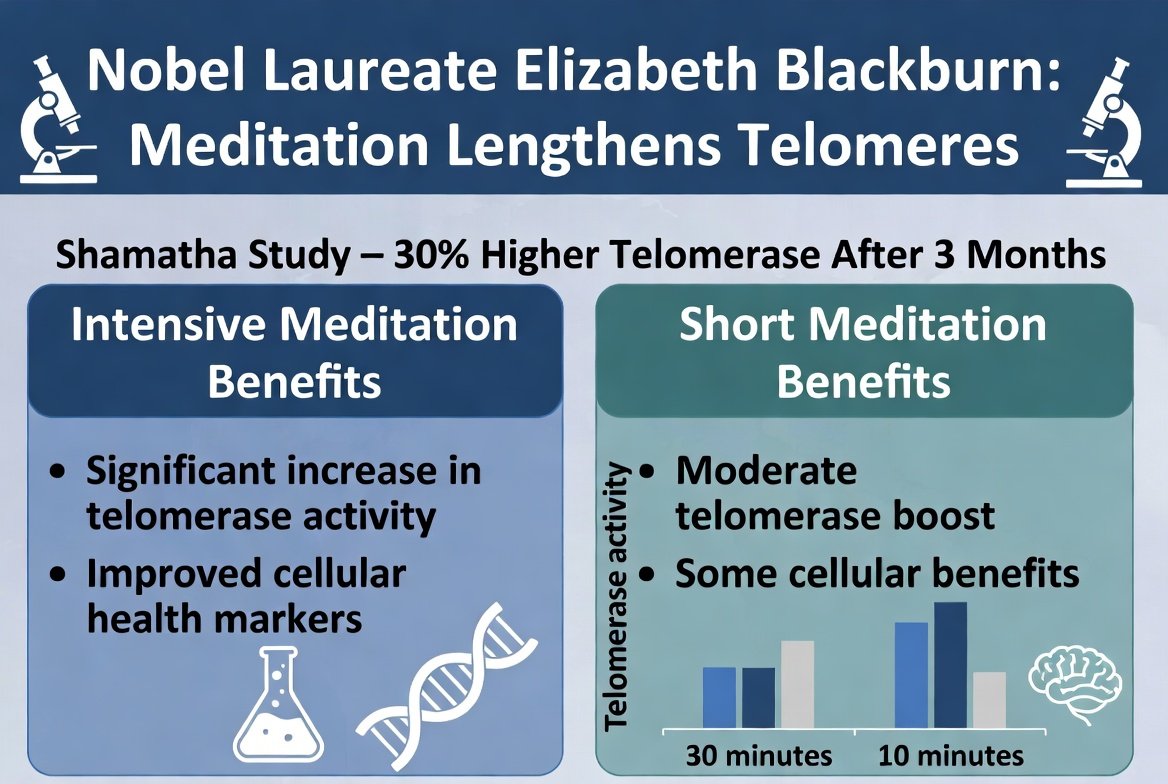
At the end of each chromosome sits a 'protective cap' called a telomere, a repetitive DNA sequence that protects the genetic information beneath it, just like the plastic at the end of a shoelace. The problem: with each cell division, telomeres shorten by about 50 to 200 nucleotides, because the machine that replicates DNA cannot copy all the way to the very end.
When the telomere shortens below a critical length, the cell recognizes the exposed end as if it were a DNA break and enters a state of division arrest. This is the famous 'Hayflick limit,' discovered by Leonard Hayflick back in 1961: most cells in our body can divide only about 40 to 60 times before they stop. The enzyme telomerase, which can lengthen telomeres, is mainly active in stem cells and germ cells, but is silenced in most somatic cells. Therefore, telomeres function as an 'internal clock' that counts the cell's age, and explains why regenerative tissues, like skin and the immune system, weaken over the years.
3. Epigenetic Alterations: The Drifting Software
If DNA is the 'hardware,' the epigenome is the 'software.' The epigenome is the layer of information that decides which genes are active and which are silenced in each cell, through methylation marks on DNA, changes in histone proteins around which it is wrapped, and the three-dimensional organization of chromatin. This is why a liver cell and a nerve cell, with the exact same DNA, function completely differently: the epigenetic software is different.
Unlike stable DNA, the epigenome is vulnerable and drifts with age. Methylation marks change, genes that should have remained quiet awaken, and essential genes become dormant. Cells begin, in a sense, to 'forget their identity.' This insight underlies 'methylation clocks' (Horvath clocks) that measure biological age, and underlies partial reprogramming studies that attempt to 'reset' the epigenome to a younger version. This is one of the most exciting mechanisms, because it hints that part of aging may be reversible.
4. Loss of Proteostasis: Misfolded Proteins
Proteins are the 'workhorses' of the cell, and to function they must fold into a precise three-dimensional structure. Proteostasis is the system that ensures proteins fold correctly, remain functional, and are broken down when damaged. It includes 'chaperone proteins' that assist in folding, and degradation systems that remove damaged proteins.
With age, this system wears down, and misfolded proteins accumulate and clump together into toxic aggregates. This is not a theoretical matter: the amyloid plaques and tau tangles in Alzheimer's, alpha-synuclein in Parkinson's, and huntingtin in Huntington's, are all examples of proteins that have lost their shape and accumulated. Failure of proteostasis is at the heart of neurodegenerative diseases, but it damages every tissue, from muscle to the lens of the eye.
5. Impaired Macroautophagy: The Recycling System Collapses
One of the three new hallmarks added in 2023. Autophagy (literally: 'self-eating') is the cell's internal recycling system: it packages damaged components, worn-out organelles, and aggregated proteins, and sends them for breakdown and recycling. This is the cell's 'garbage disposal,' and without it, waste accumulates.
With age, autophagy efficiency drops sharply, and the cell gradually suffocates in its own waste. The close connection to other hallmarks is clear: when autophagy fails to clear damaged mitochondria (a process called mitophagy), sick mitochondria accumulate. When it fails to clear aggregated proteins, proteostasis collapses. Precisely because of its centrality, this mechanism is a major target for intervention: fasting, physical exercise, and caloric restriction all stimulate autophagy.
6. Deregulated Nutrient Sensing: The Metabolic Switches Fall Out of Balance
The cell has 'sensors' that measure how much food is available and accordingly direct between growth and maintenance. The four main pathways are mTOR (sensor of protein and energy abundance), AMPK (sensor of energy deficiency), the insulin-IGF axis (sugar sensor), and the sirtuins (energy status sensors). When there is abundance, mTOR and insulin push the cell to grow and divide. When there is scarcity, AMPK and sirtuins push it toward maintenance, repair, and cleaning.
With age, this balance is disrupted: mTOR and insulin signaling tend to stay 'on' too much, while maintenance mechanisms weaken. The result is a cell that prioritizes growth over repair, a state that accelerates aging. This also explains one of the most robust findings in aging science: caloric restriction extends lifespan in almost every organism tested, because it returns these sensors to a 'maintenance' balance. Drugs like rapamycin (an mTOR inhibitor) and metformin (an AMPK activator) are being studied precisely for this reason.
7. Mitochondrial Dysfunction: The Power Plants Shut Down
Mitochondria are the 'power plants' of the cell, the organelles that produce most of our energy (ATP). With age, mitochondria function less well: they produce less energy, tend to leak more free radicals (ROS), and lose efficiency. Both their number and their quality decline.
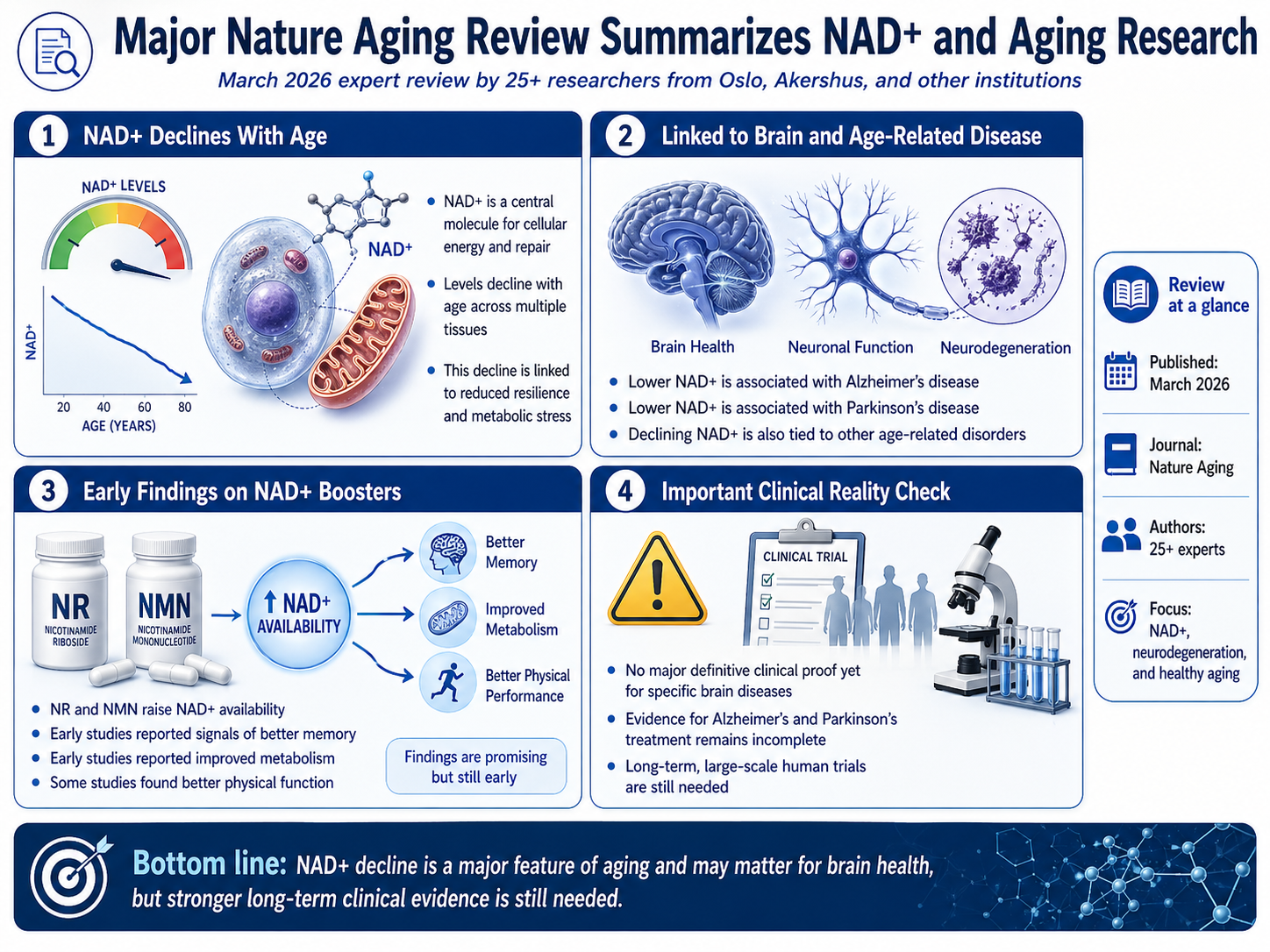
This is a central hub in the entire aging web. The ROS leaking from damaged mitochondria cause damage to DNA (hallmark 1) and proteins (hallmark 4), and can push a cell into senescence (hallmark 8). At the same time, levels of NAD+, a critical molecule for mitochondrial function, drop to about half of youthful levels by middle age, a decline documented in many human tissues. This reciprocal relationship, where mitochondria are both damaged by aging and drive it, is why the NAD+ field and NMN supplements receive so much attention.
8. Cellular Senescence: The Zombie Cells That Refuse to Die
When a cell accumulates too much damage, it has three options: repair, commit suicide (apoptosis), or enter 'senescence,' a state where it permanently stops dividing but does not die. In common parlance, these are 'zombie cells.' They originate from DNA damage, telomere shortening, or metabolic stress, and were originally meant to protect us from cancer.
The problem is not their existence, but their accumulation. In the young, the immune system efficiently clears these cells. With age, it fails to do so, and the zombies remain in the tissue. Worse, they secrete an inflammatory cocktail called SASP (Senescence-Associated Secretory Phenotype), which includes inflammatory cytokines and tissue-degrading enzymes. Thus, a single zombie cell 'poisons' its neighbors, infecting them with senescence, and inducing local inflammation. In an 80-year-old, up to about 20% of cells in certain tissues are zombies. This is one of the hallmarks from which the entire field of senolytic drugs has grown.
9. Stem Cell Exhaustion: The Repair Reserves Are Depleted
Stem cells are the body's 'repair reserves,' the pool of cells that regenerate worn-out tissues: bone marrow that produces blood, intestinal stem cells that replace the gut lining, and stem cells in muscle and skin. As long as the pool is full and active, the body can repair itself.
With age, stem cell pools are depleted and lose their ability to divide and differentiate. The result: tissues regenerate more slowly, wounds heal more slowly, the immune system regenerates less, and muscle loses mass. Stem cell exhaustion is an 'integrative' hallmark, meaning it is largely a consequence of the previous hallmarks: telomere shortening, DNA damage, and senescence all damage stem cells and exhaust them. When the repair reserve is depleted, the body's ability to maintain itself young collapses.
10. Altered Intercellular Communication: The Network Loses Signal
Cells do not act alone; they 'talk' to each other constantly through hormones, cytokines, and neural signals. Normal intercellular communication is what allows tissues and systems to act in coordination: for the immune system to respond appropriately, for hormones to flow in balance, for tissues to 'know' what is happening in their neighbors.
With age, this communication becomes distorted. The signals become 'noisy': too many inflammatory signals, too few maintenance hormones, and a balance that is disrupted. An interesting phenomenon is that aging can be 'contagious': when the circulatory system of an old mouse is connected to a young mouse, the young mouse ages faster due to factors circulating in the old blood. Conversely, factors from young blood can rejuvenate tissues. This shows that systemic communication, not just the state of the individual cell, is a central part of the aging equation.
11. Chronic Inflammation: Inflammaging
Another new hallmark that rose to independent status in 2023, and not by chance. Inflammation is a vital defense tool in the short term, but with age, chronic, low-grade, systemic inflammation develops, without an infection to justify it. The phenomenon has been named 'Inflammaging,' a portmanteau of inflammation and aging.
Where does this inflammation come from? From almost every other hallmark: the SASP from zombie cells, components leaking from damaged mitochondria and nuclei, aggregated proteins, and bacterial components leaking from a leaky gut. This chronic inflammation is a common ground for almost all major age-related diseases: atherosclerosis, type 2 diabetes, Alzheimer's, cancer, and osteoporosis. In this sense, Inflammaging is one of the great 'unifiers,' the meeting point where all cellular damage becomes a systemic impairment of health.
12. Dysbiosis: Microbiome Imbalance
The twelfth hallmark, and the newest in the framework. In our gut live trillions of bacteria, the 'microbiome,' which produce vitamins, train the immune system, and break down food. When the balance is normal, the microbiome is a key partner in health. When it falls out of balance, a state called 'dysbiosis,' it becomes a source of problems.
With age, the composition of the microbiome changes: species diversity decreases, pro-inflammatory bacteria proliferate, and the gut wall becomes more 'leaky'. A leaky gut allows bacterial components to enter the bloodstream and ignite systemic inflammation (a direct link to hallmark 11). Studies in mice have shown that transplanting a microbiome from a young animal to an old one can improve health markers, and vice versa. Including the microbiome in the framework is a recognition that aging is not just a matter of our body's cells, but also of the entire ecosystem we carry within us.
How All the Hallmarks Connect: Aging as a Web, Not a List
The most common mistake is to think of the 12 hallmarks as a grocery list of separate problems. In reality, it is a dense web where each hallmark feeds and reinforces the others, and therefore aging accelerates itself as we get older. Here are some of the key connections:
- Mitochondria at the Center: A damaged mitochondrion (hallmark 7) leaks ROS that cause DNA damage (hallmark 1) and protein damage (hallmark 4), pushes cells into senescence (hallmark 8), and damages stem cells (hallmark 9). Mitochondrial dysfunction is perhaps the most connected node in the map.
- Senescence Ignites Inflammation: Zombie cells (hallmark 8) secrete SASP, which is a major source of chronic inflammation (hallmark 11). Inflammation in turn damages stem cells (hallmark 9) and disrupts intercellular communication (hallmark 10).
- Damage and Repair Disrupt the Epigenome: Every DNA repair event (hallmark 1) slightly disrupts epigenetic marks (hallmark 3), so the very process of protection indirectly contributes to aging.
- Autophagy as a Common Cleaner: When cellular recycling (hallmark 5) fails, aggregated proteins (hallmark 4) and damaged mitochondria (hallmark 7) accumulate simultaneously. Improving one helps both.
- The Gut Inflames the Whole Body: Dysbiosis and a leaky gut (hallmark 12) pump bacterial components into the blood, fueling Inflammaging (hallmark 11) which damages every tissue.
- Nutrient Sensing Orchestrates: mTOR and insulin signaling (hallmark 6) control the rate of autophagy (hallmark 5), mitochondrial function (hallmark 7), and the tendency toward senescence (hallmark 8). This is one reason fasting and caloric restriction affect so many mechanisms at once.
The practical conclusion from this web is actually optimistic. Because the hallmarks are connected, intervention at one junction point can affect several hallmarks together. Physical exercise, for example, improves mitochondrial function, stimulates autophagy, balances nutrient sensing, and lowers inflammation, all at once. So do quality sleep, wise nutrition, and stress management. There is no 'magic bullet' that fixes everything, but there is a broad common ground on which all interventions operate.
Why This Matters: From Scientific Framework to Practical Tool
The importance of the 12 hallmarks framework is not only academic. Before it was formulated, aging research was a scattered collection of observations. After it was formulated, a 'roadmap' was created that unites all researchers around the same mechanisms, and allows asking a clear question about any intervention: which hallmark does it act on, and with what strength?
This framework is also the basis for the tools we offer. Our biological age calculator (link below) attempts to estimate how far your body has 'progressed' along these hallmarks relative to your chronological age. The PhenoAge calculator does so from blood tests, using markers that reflect inflammation, metabolic function, and systemic health. And we have compiled all our articles according to the hallmarks on the 12 Hallmarks of Aging page, so you can dive deep into each one.
It is also important to maintain perspective. This is the leading scientific framework, but not the 'final word'. It itself expanded from 9 to 12 hallmarks within a decade, and some researchers propose additional hallmarks (such as changes in the extracellular matrix or impaired tissue repair). This is a living and breathing field of research, not a closed book. But just as the hallmarks of cancer changed oncological medicine, so the 12 hallmarks of aging are shaping the future of longevity medicine.
The Broader Perspective
The shift from the 'wear and tear theory' to the 12 hallmarks framework is one of the most profound changes in the perception of health in our generation. If we once thought aging was something that happens to us, today we understand it is a process with mechanisms, and every mechanism has points of leverage. This does not mean we can abolish aging, but it does mean we can slow it down, and in some cases even reverse parts of it.
The bottom line to remember: Aging is not a single decree of fate, but a network of 12 interconnected factors, and it is precisely this connectivity that is the source of hope. We do not need to attack 12 separate problems, but to cultivate the lifestyle and interventions that hit several of them simultaneously.
This was the 'why.' Now, after understanding what drives aging, the natural next question is 'what to do about it.' In the companion article How to Slow Aging: Solutions and Research for the 12 Hallmarks (link below) we go hallmark by hallmark and show what science supports today: from nutrition, physical exercise, and sleep, to supplements and drugs under research. Because understanding the 'why' is only the beginning; the true purpose is to live longer, healthier, and better.
Note: This article is educational and scientific only, and does not constitute medical advice. Any decision regarding supplements, drugs, or lifestyle changes should be made in consultation with a physician.
Internal Links:
12 Hallmarks of Aging, All Articles by Hallmark
How to Slow Aging: Solutions and Research for the 12 Hallmarks
Biological Age Calculator
PhenoAge Calculator, Biological Age from Blood Test
References:
Cell, Lopez-Otin et al., 2023: Hallmarks of Aging, An Expanding Universe
Cell, Lopez-Otin et al., 2013: The Hallmarks of Aging

💬 Comments (0)
Be the first to comment on the article.