You sit down to work on something important. You open the file, concentrate for a moment, and then, as if by itself, your thumb is already sliding across the phone screen. Ten minutes later you return, trying to remember where you were, and it repeats itself over and over. At the end of the day, you accomplished much less than you planned, and you are much more tired. It's not because you are lazy. It's because your attention is fragmented, and in today's world, it is attacked from every direction.
The good news is that concentration is not an innate trait you simply weren't born with. It is a skill that can be trained, and an environment that can be shaped. In this guide, you won't find magic promises or a miracle supplement, but a practical, numbered list of moves that truly change your ability to sit on one thing and make progress on it. Each technique here is based on a clear mechanism and real research. If you implement even three or four of them, the change will be noticeable within a week.
Why is our concentration so fragile?
To improve something, it's good to first understand how it works. Attention is a limited resource. At any given moment, the brain can hold only a very small amount of information in the forefront of consciousness and direct the majority of its processing resources towards it. This is not a personal weakness, it's architecture: the attention system was built to filter the world, not to process everything at once.
From this stems one of the great myths of the productivity era: multitasking. We like to think we are doing several things simultaneously, but the human brain almost never performs two cognitive tasks at the same time. What it actually does is rapid switching between tasks, and each such switch comes at a cost. A classic study by Rubinstein, Meyer, and Evans from 2001, published in the Journal of Experimental Psychology, precisely measured this cost. Subjects asked to jump between tasks lost significant time with each switch, and the cost increased as the tasks became more complex. The researchers described two stages in each switch: goal shifting (deciding to move to another task) and rule activation (loading the rules of the new task into the brain). Both of these stages take time, and this time is pure waste.
In simple terms: when you jump between email, a meeting, and a chat, you are not doing three things, you are doing them poorly and slowly, one after the other, and paying a switching tax each time. The foundation for any improvement in concentration is understanding that one thing at a time is not a limitation, it is an advantage.
Eight practical techniques for improving concentration
Here are the tools, roughly ordered by priority and effect. There is no need to implement everything at once. Choose two or three to start with.
- Protect sleep above all else. Sleep is the foundation of attention. When you sleep too little, the ability to maintain sustained attention is the first to collapse. A broad meta-analysis by Lim and Dinges from 2010, published in Psychological Bulletin and aggregating 70 studies, found that among all cognitive abilities, simple attention lapses are the ones most strongly affected by sleep deprivation. That is, before you look for tricks, make sure you are getting about 7 hours of quality sleep. Poor sleep is the most common cause of 'brain fog' and lack of concentration.
- Do one thing at a time (single-tasking). This is the only recommendation that eliminates the switching tax we discussed. Close all tabs not related to the current task. Mark one task for yourself, and decide that until it is finished (or until the time block ends), you will not touch anything else. The moment you stop jumping, you will feel your attention thicken.
- Work in focused blocks with breaks (Pomodoro). Sustained attention doesn't last forever. Instead of fighting it, leverage it: work in a block of 25 to 50 minutes of full concentration, then take a short break of 5 to 10 minutes. This method, sometimes called Pomodoro, works because it creates a short, clear deadline (it's easier to concentrate when you know the break is near), and renews the resource before it is completely depleted. During the break, get up, move, look into the distance, but don't get sucked into your phone, otherwise the break won't truly clear your head.
- Kill the notifications and remove the phone from the field. Every sound, vibration, or red dot is an invitation to switch tasks, and we already know how costly that is. Turn off push notifications for non-essential apps, put your phone in 'Do Not Disturb' mode, and most importantly: physically place it out of reach and out of sight, in another room or a drawer. The mere presence of the phone on the table, even turned off, draws on some of your attention resources because the brain 'knows' it's there. Physical removal works better than willpower.
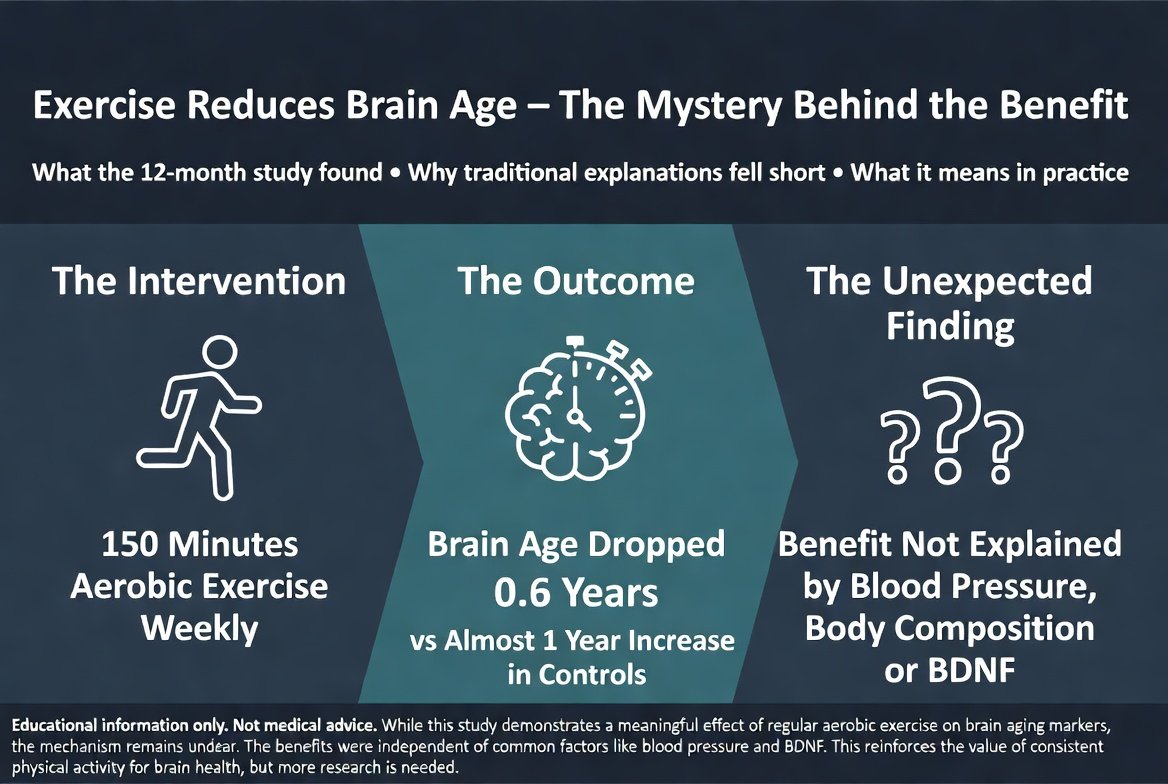
- Use physical activity to 'ignite' attention. Movement is not only good for the body, it provides an immediate shot of attention. A meta-analysis by Chang and colleagues from 2012, published in the journal Brain Research and aggregating dozens of studies, found that a single session of physical activity moderately but significantly improves cognitive functions like attention and processing speed, through an increase in arousal and blood flow to the brain. Practical implication: before a task requiring a clear head, go for a 10 to 20 minute brisk walk or any activity that raises your heart rate. You will return sharper.
- Expose yourself to morning light. Natural light in the morning synchronizes the biological clock, and a synchronized clock means better alertness during the day and better sleep at night, both of which directly support concentration. Try to go outside for 10 to 15 minutes within the first hour after waking, even on a cloudy day. This is one of the cheapest and simplest moves with an impact on alertness throughout the day.
- Maintain stable hydration and blood sugar. The brain is very sensitive to energy availability and fluids. Even mild dehydration impairs alertness and attention, so drink water throughout the day, not just when you are thirsty. At the same time, a meal high in fast sugar gives a short spike followed by a 'sugar crash' accompanied by fog and drowsiness. Prefer meals with protein, healthy fat, and fiber that release energy slowly and maintain stable attention. Stable satiety, stable mind.
- Caffeine: a real but small aid, and preferably with caution. Coffee truly increases short-term alertness and attention, and this is established. But it's important to be honest: caffeine does not create concentration out of nothing, it mainly offsets fatigue. It is not a substitute for sleep. To enjoy the benefit without the downside: drink it in the morning and not in the afternoon (late caffeine impairs nighttime sleep and returns you to fog the next day), and consider combining it with L-theanine (an amino acid from green tea), which tends to balance the 'jitteriness' of caffeine and is reported to improve a sense of calm focus. This is a gentle supplement and not a solution, and precisely for that reason it is last on the list, not first.
What destroys concentration (and what to reduce)
Sometimes the greatest improvement comes not from adding a technique, but from removing what brings you down. These are the silent thieves of attention:
- Task switching ('quick checks'). Every 'just a second' glance at email or social media resets your concentration and reactivates the switching tax. This is the number one cause of lack of concentration during work.
- Chronic sleep deprivation. You cannot 'train' your way to attention when the system hasn't rested. Poor sleep negates almost every other technique.
- Phone on the table. Even when it is silent and face down, its mere presence consumes attention.
- Excessive stimulation without a break. Continuous hours of scrolling, short videos, and rapid switching between content train the brain for impatience, making prolonged concentration difficult afterward.
- Overload and too many open tasks. When twenty things are open in your mind, none of them receive full concentration. Writing the tasks down (on paper or a list) frees the mind and allows focusing on one.
- Sugar and alcohol. Both impair energy stability and sleep quality, and both exact a toll on the next day's concentration.
If you take only one message from this chapter: protecting attention is often a matter of reduction, not addition. Fewer distractions, fewer switches, fewer unnecessary stimuli, and suddenly the concentration that was there all along starts to work.
When to see a doctor or specialist
Most cases of difficulty concentrating improve greatly with good sleep, the right environment, and the work habits above. But sometimes lack of concentration is a symptom of a problem that requires investigation, not just a matter of discipline. It is advisable to see a doctor or specialist if:
- The difficulty concentrating is persistent, lasts for months, and interferes with function at work, school, or home, even after you have fixed sleep and habits.
- There are additional signs that have accompanied you since childhood, such as chronic difficulty starting and finishing tasks, restlessness, and impulsivity, which may indicate undiagnosed Attention Deficit Hyperactivity Disorder (ADHD).
- Concentration has declined along with persistent fatigue, weight gain, sensitivity to cold, and constipation, which could fit hypothyroidism and are diagnosed with a simple blood test (TSH).
- You sleep enough hours but wake up unrefreshed, snore loudly, or wake up gasping, possible signs of sleep apnea which severely impairs daily attention.
- Lack of concentration is accompanied by persistent low mood, high anxiety, or loss of interest, as depression and anxiety directly impair attention and memory.
- You feel a sudden change or rapid worsening in your ability to concentrate or remember, which requires immediate medical investigation.
It is important to remember: medical investigation is not 'overreacting'. ADHD, thyroid problems, sleep disorders, nutritional deficiencies (like B12 or iron), and depression are all common conditions, diagnosable and treatable. A correct diagnosis can completely change the picture.
In summary: Concentration is a system, not willpower
If there is one message to take from this guide, it is that concentration is not the result of 'trying harder'. It is the result of a system: a rested body, an environment free of distractions, the habit of one thing at a time, and a rhythm of work and break. When this system is in place, concentration comes almost by itself. When it is broken, no amount of willpower will hold for long.
Start small. Choose two techniques from the list, for example protecting sleep and removing the phone, and implement them for a full week before adding more. Concentration is a muscle, and it has memory: the more you practice one thing at a time, the easier it will be to return to it. If you want to go deeper, you can also explore biohacking techniques for alertness and sleep, and for those who feel persistent brain fog, we have an honest review of supplements for brain fog, with a fair rating of what is truly research-supported and what is less so.
Important note: This guide is general lifestyle information and does not constitute medical advice, diagnosis, or a substitute for consultation with a professional. If the lack of concentration is persistent and interferes with your functioning, consult a doctor or specialist. Do not start or stop a supplement or treatment on your own, especially if you are taking medications or have an existing medical condition.
References:
Rubinstein, Meyer & Evans (2001), Executive Control of Cognitive Processes in Task Switching, J Exp Psychol HPP
Chang et al. (2012), The effects of acute exercise on cognitive performance, Brain Research
Lim & Dinges (2010), A Meta-Analysis of the Impact of Short-Term Sleep Deprivation on Cognitive Variables, Psychological Bulletin


💬 Comments (0)
Be the first to comment on the article.