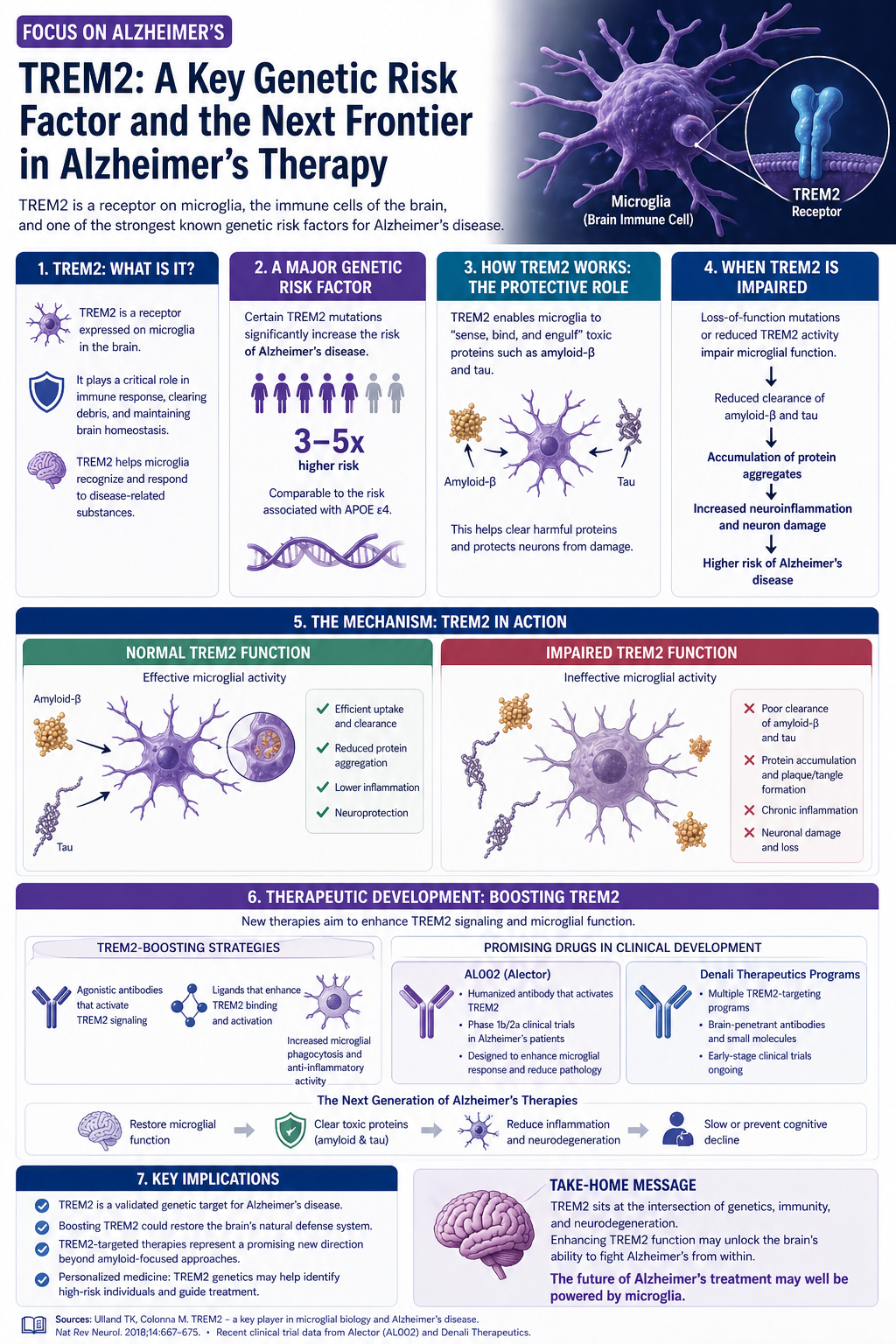
For thirty years, almost every experimental Alzheimer's drug relied on the same assumption: If we can clear amyloid-beta plaques from the brain, we can stop the disease. The mechanism seemed logical. Amyloid plaques are the hallmark pathological sign of Alzheimer's, they accumulate years before cognitive symptoms appear, and they look damaging under a microscope. Tens of billions of dollars were invested in developing antibodies, vaccines, and enzyme inhibitors aimed at reducing existing amyloid.
The results were consistently disappointing. Aducanumab (Aduhelm) was approved in 2021 under controversial conditions and ultimately withdrawn from the market. Lecanemab (Leqembi) and Donanemab (Kisunla) show modest slowing of cognitive decline, alongside a significant risk of brain hemorrhages and edema. Over 99% of experimental drugs in the field failed at some stage of clinical trials. New research from Japan offers a conceptually opposite approach: instead of cleaning up plaques after they form, prevent them from forming in the first place.
The proposed tool is not an expensive new drug. It is a natural amino acid called arginine (L-arginine), a molecule that has been available for decades at low cost and is used in cardiovascular medicine to increase nitric oxide levels. The team from Kindai University in Osaka published the findings on October 30, 2025, in the journal Neurochemistry International, and received extensive coverage in SciTechDaily.
What is Arginine and What is Amyloid-Beta
To understand the novelty, it is important to know the two players:
- Arginine (L-arginine): A natural amino acid, found in meat, nuts, legumes, and pumpkin seeds. The body also produces it on its own under normal conditions. Its known functions: precursor to nitric oxide (NO) which dilates blood vessels, essential for protein synthesis, and involved in the urea cycle. Sold as over-the-counter pills as a cardiovascular and sports supplement.
- Amyloid-beta (Aβ): A short protein fragment, 40-42 amino acids long, created from the cleavage of a larger protein (APP, Amyloid Precursor Protein) on brain cell membranes. When this fragment misfolds and begins to accumulate, it forms fibrous bundles that crystallize into plaques visible under a microscope. Plaques have been linked to Alzheimer's for over a hundred years.
- Chemical chaperone: A small molecule that wraps around another protein, stabilizes its correct shape, and prevents it from folding pathologically. Such compounds are used in laboratories to stabilize proteins in experiments, but their transition to experimental medicine is a novelty.
The Connection Between Arginine and Alzheimer's: A Surprising Mechanism
The team of Prof. Yoshitaka Nagai, with co-supervisor Associate Prof. Toshiyuki Takouchi and doctoral student Kanako Fujii, searched for cheap molecules that could act as chemical chaperones against amyloid-beta. They screened dozens of molecules and discovered that arginine binds to amyloid-beta and creates molecular interactions that stabilize the protein in its non-aggregating form.
In simpler terms: arginine does not 'clean' already accumulated amyloid. It prevents it from sticking to itself in the first place. If we imagine the amyloid protein as a Lego brick with a mating hook, arginine covers the hook, preventing the bricks from connecting to each other in a chain.
This is a paradigm shift. Instead of trying to break down years-old plaques, plaques the brain has already adapted to and may have even developed a chronic inflammatory response around, the new approach says: let's stop the aggregation in its early stages, before structural damage occurs.
This logic also explains why 'cleaning' approaches failed. When antibodies are given to patients already suffering from clinical Alzheimer's, the plaques have existed for many years, neural damage has already occurred, and attempting to break down the plaques carries a high risk of bleeding and edema. A chemical chaperone like arginine would work best in exactly the opposite scenario: early administration, before symptoms, to people at risk.
Current Evidence
Study 1: Fruit Flies with Alzheimer's from 2025
The Kindai team used fruit flies (Drosophila) engineered to express human amyloid-beta protein in their eyes. Without treatment, the eyes developed visible degeneration within two weeks. When arginine was added to the flies' food in increasing doses, the results were clear: a dose-dependent decrease in eye damage and the amount of accumulated amyloid. At the highest dose, degeneration was almost halted.
Study 2: Alzheimer's Model Mice from 2025
The next step was mice carrying the genetic mutations that cause familial Alzheimer's in humans. The team divided the mice into two groups: a group that received arginine in their drinking water for months, and a control group. Results: fewer plaques in the hippocampus and cerebral cortex, two critical areas for memory. The reduction was statistically significant and specifically affected the most vulnerable areas in the disease.
Study 3: Behavioral Tests in Mice
Beyond pathology, the researchers tested behavioral function. Arginine-treated mice showed increased exploratory activity, more movement, and fewer signs of freezing, signs reflecting preserved cognition in Alzheimer's models. They also showed decreased levels of inflammatory cytokines, including IL-1β, IL-6, and TNF, three key markers of chronic neuroinflammation that accompanies Alzheimer's.
Study 4: Molecular Analysis In Vitro
Alongside animal experiments, the team demonstrated the mechanism in vitro. When purified amyloid-beta was mixed with arginine at a physiological concentration, the rate of amyloid fiber formation dropped dramatically. Cryogenic electron microscope observations confirmed that arginine binds to specific areas on the surface of amyloid-beta and prevents adhesion between molecules.
What About Other Neurodegenerative Diseases?
The 'chemical chaperone' approach is not limited to Alzheimer's. The team of Nagai and Takouchi has been working for years on arginine as a chemical chaperone against polyglutamine diseases, a group of neurodegenerative diseases including Huntington's disease and spinocerebellar ataxias, and even led a Phase 2 clinical trial of arginine for patients with spinocerebellar ataxia type 6 (SCA6), the results of which were published in 2024. The principle of preventing defective protein folding could theoretically extend to other neurodegenerative diseases such as Parkinson's (alpha-synuclein) and ALS (TDP-43, SOD1), although these involve different proteins and future research that has not yet been conducted. All these diseases share a common characteristic: proteins that misfold and accumulate in nerve cells.
If arginine or a similar molecule proves effective in multiple diseases, it would mark a completely new medical paradigm: not a drug for each disease, but 'chemical chaperones' as a regular addition for at-risk populations. The idea is far from implementation, but the research path is now open.
Should We Start Taking Arginine?
The short answer: Almost certainly not, not yet. The reasons for caution are many and important:
1. These Are Only Preclinical Results
Flies and mice are not humans. The vast majority of drugs that work in mice fail in clinical trials. The reasons are varied: different disease progression times, different metabolism, different brain structure. Alzheimer's, in particular, is a successful graveyard for drugs that worked in rodents. Not a single human clinical trial has yet been conducted on arginine for Alzheimer's prevention.
2. The Dosages in the Experiments Do Not Match Commercial Supplements
This is a key point that the authors themselves emphasize. The dosages used in the study do not match the supplements available on the shelf. Commercial L-arginine supplements typically contain 500-1000 mg per pill and are recommended at 3-6 grams per day for cardiovascular purposes. The dosages in mice, adjusted for body weight, were often much higher. There is no evidence that a routine supplement dose would be sufficient to reach an effective concentration in the brain.
3. Cardiovascular Risks at High Doses
Arginine is not a molecule without effects. It raises nitric oxide levels in the body, dilates blood vessels, and can lower blood pressure. These effects are significant in several scenarios:
- People taking blood pressure medications: Combining with ARBs, ACE inhibitors, or calcium channel blockers can cause dangerously low blood pressure.
- People taking sildenafil (Viagra) or tadalafil (Cialis): These drugs also work through the nitric oxide pathway. The combination can cause a sharp drop in blood pressure.
- Anticoagulant users: Arginine may inhibit platelet aggregation and increase bleeding risk.
- Herpes patients: Arginine can reactivate the virus, which needs the amino acid for replication.
- Post-heart attack period: A 2006 study in JAMA showed higher mortality in patients who received high-dose arginine after a heart attack.
4. The Amyloid Hypothesis Itself Is Controversial
This is the philosophical point. For 30 years, all Alzheimer's research assumed amyloid is the cause of the disease. But in 2022, allegations of image manipulation arose in a seminal 2006 paper that established the 'amyloid hypothesis,' and the paper was subsequently retracted. Additionally, all anti-amyloid drugs have failed or shown minimal benefit. Leading researchers, including Karl Herrup and Bart De Strooper, have begun to suggest that amyloid is a symptom rather than a cause, that it accumulates in response to a deeper problem in the brain (inflammation, metabolic stress, glymphatic system damage), and that removing it will not solve the disease.
If the amyloid hypothesis is wrong, the arginine chemical chaperone approach will hit the same ceiling. It is possible that preventing plaques will stop a clear pathology but will not prevent cognitive decline, because the decline stems from a completely different cause.
What to Take Away from the Research
- Do not rush to buy arginine for Alzheimer's prevention. The evidence is at an early preclinical stage, dosages have not been studied in humans, and the cardiovascular risks are real.
- If you already take arginine for a cardiovascular reason, continue as per your doctor's instructions. There is no reason to stop based on this study. Just do not increase the dose on your own 'for the brain.'
- Invest in interventions with stronger evidence: Quality sleep clears amyloid via the glymphatic system (REM sleep impairment is linked to amyloid accumulation), aerobic exercise reduces neuroinflammation, and a Mediterranean diet reduces Alzheimer's risk by 30-40% in epidemiological studies.
- Maintain cardiovascular health. Brain blood vessels are particularly vulnerable in Alzheimer's. High blood pressure, diabetes, and cholesterol are more established risk factors than any supplement.
- Follow the clinical trials. If the Kindai team or another team starts a controlled human trial on arginine as a chemical chaperone, results are expected in 5-7 years. Then it will be possible to discuss recommendations.
The Broader Perspective
The arginine story is an excellent example of the immense power and dangers of a good scientific idea. On one hand, the idea of 'chemical chaperones' for neurodegenerative diseases is a paradigm-shifting innovation that could open a new door after three decades of failure. It is cheap, based on familiar molecules, and has preventive rather than therapeutic potential.
On the other hand, the history of anti-aging and neurology medicine is full of 'promising' ideas that turned into disappointment. Vitamin E was supposed to prevent Alzheimer's. It did not. Estrogen was supposed to protect women's brains. It did not. Omega-3 was supposed to slow cognitive decline. The effect is modest in large studies.
The lesson repeats itself: A beautiful molecular mechanism in the lab is no guarantee of clinical benefit in a living human. The path from a mouse's hippocampus to the aging human brain passes through twenty possible confounding factors, each of which can derail the drug. Caution is not skepticism; it is data-based realism.
In the meantime, whether you get Alzheimer's depends much more on sleep, activity, diet, blood sugar, and social connections than on any single supplement. The brain is not a machine that can be fixed with one capsule. It is a complex system that responds to the quality of your life, day after day, decade after decade. And that, as of today, is the only approach to Alzheimer's prevention with solid research backing.
References:
SciTechDaily, Scientists Identify Simple Supplement That Greatly Reduces Alzheimer's Damage
Neurochemistry International, Kindai University, Fujii et al. 2025

💬 Comments (0)
Be the first to comment on the article.