"I forgot where I put the keys." Every person aged 50+ has said this at some point. Most of the time, it's insignificant. But sometimes, it's the first sign of a much more troubling process. Until now, the initial diagnosis of cognitive decline relied mainly on expensive MRI scans or PET scans costing thousands of shekels. A new study published in Scientific Reports (a journal from the Nature group) presents an interesting direction: Performance on a short clinical memory test shows a moderate correlation with the brain age index derived from MRI.
What is SOMI?
SOMI (Stages of Objective Memory Impairment) is not a test in itself but rather a staging method that classifies performance on a standard clinical memory test called FCSRT (Free and Cued Selective Reminding Test). Based on FCSRT performance, a person is assigned to one of 6 stages:
- Stage 0: Normal performance. Functional memory
- Stage 1-2: Difficulty in retrieval (the person remembers the information but struggles to retrieve it without cues). A mild phenomenon
- Stage 3-4: Problem with storage (the information is less well preserved in the brain, and cues help less). A significant phenomenon
- Stage 5: Significant memory impairment affecting daily functioning
The FCSRT test itself is relatively simple: the subject learns a list of words, performs distracting tasks, and is then asked to recall the list (first alone, then with cues). The pattern of success indicates the SOMI stage. The test typically takes about 10 to 20 minutes, with no need for imaging equipment.
BrainAGE: Brain Age by MRI
Meanwhile, BrainAGE (Brain Age Gap Estimation) is a value derived from an MRI scan of the brain. A machine learning algorithm analyzes brain structure (volume, atrophy, density) and compares it to samples from a normal population. The result: a gap between brain age and chronological age. If you are 50 and your BrainAGE is 60, your brain is 10 years older than expected.
The Relationship Identified in the Study
The study examined 119 older adults on the cognitive continuum towards Alzheimer's. The team found that SOMI stages correlate with BrainAGE with a moderate correlation. The correlation coefficient (Spearman rho) was 0.53, meaning the memory test stage explains about 28% of the variance in the brain age gap. The higher a person's SOMI stage, the larger the biological age gap of the brain tends to be. The relationship is:
- Stages 0-2: BrainAGE relatively close to chronological age
- Stages 3-5: A notable jump in the brain age gap. The brain tends to be significantly older than expected
This jump between stages 2 and 3 reflects a transition from "retrieval difficulty" to "storage difficulty," considered an early sign of Alzheimer's pathology. It is important to emphasize: this is a moderate correlation, not a replacement for MRI. The memory test provides a useful hint, but is not a full substitute for imaging.
Why Is This So Important?
Currently, diagnosing early Alzheimer's often requires:
- Advanced MRI scan (1,500-3,000 NIS)
- PET scan (10,000+ NIS)
- Spinal fluid tests (invasive)
- Genetic tests (for APOE clarification)
These tests are expensive, invasive, and not accessible to everyone. The FCSRT test and SOMI staging:
- Cheap: Cost of one hour with a psychologist
- Non-invasive: Just questions and memory
- Fast: About 10 to 20 minutes
- Accessible: Can be performed in health centers, not just hospitals
Practical Implications
For the General Population
If you are over 50 and feel your memory is less sharp than before, a structured memory test can provide an objective answer. It is not a diagnosis of Alzheimer's, but it is an early sign if something is wrong.
For Family Doctors
A short memory test could be part of a routine check-up for those over 60, like blood pressure or blood sugar. Screening with high sensitivity.
For Alzheimer's Clinical Trials
Early detection is critical. New Alzheimer's drugs (like lecanemab) work best when started before significant damage occurs. A cheap and accessible screening tool can identify potential patients early.
What to Do If Your Memory Result Is High?
If a memory test shows you are at SOMI stage 3+, or have a high BrainAGE gap, it is not a death sentence. Next steps:
- Extended evaluation: Neurologist, MRI, possibly additional tests
- Treat risk factors: High blood pressure, diabetes, high cholesterol
- Research-based dietary changes: Mediterranean or MIND diet, omega-3
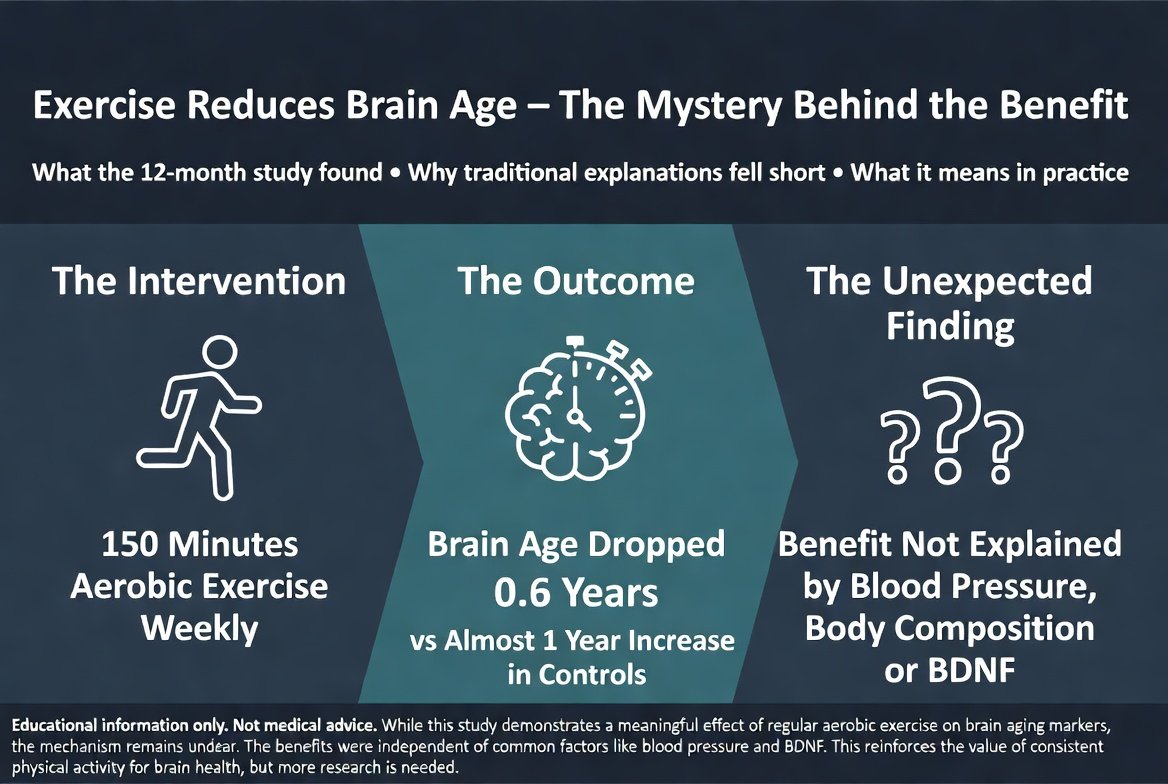
- Regular physical activity: 150 minutes of aerobic exercise per week + resistance training
- Cognitive stimulation: Learning a language, musical instrument, social interaction
- Sleep management: 7-9 hours, brain waste clearance
- Consider appropriate medications: With your doctor, possibly new anti-amyloid or anti-tau drugs
Criticism and Limitations
It is important to present the other side:
- SOMI is not yet an approved screening tool. It is mainly used in research
- The study was small (119 participants) and the correlation was only moderate (rho=0.53), so larger studies are needed for confirmation
- Low results do not rule out Alzheimer's. It can develop without initial SOMI signs
- BrainAGE is population-specific. Validation is needed for the Israeli population
- Psychology: Diagnosis can cause anxiety. Counseling context is needed
The Bottom Line
In an era where we want early diagnosis and tailored treatment, a structured memory test and SOMI staging offer an accessible and cheap approach. They will not replace MRI, but they can be the first step. If you are over 60 and feel a change, do not wait. Talk to your doctor. Early detection is the best opportunity for effective intervention.



💬 Comments (0)
Be the first to comment on the article.