Sarcopenia - accelerated muscle loss with age - is one of the most serious problems of longevity. Those who lose too much muscle fall more, recover less, and die earlier. The question researchers asked: Is there a link between the rate at which the body ages biologically and sarcopenia? A large cross-sectional study examined 29,437 Chinese adults aged 20 to 80, published in the journal Biology of Sport. The finding: Accelerated biological age is associated with a significantly increased risk of sarcopenia.
What is Accelerated Biological Age?
Chronological age is what's on your ID card. Biological age is how your body actually functions. Two 60-year-olds can be:
- One with a body functioning like a 50-year-old (decelerated biological age)
- The other with a body functioning like a 70-year-old (accelerated biological age)
How is it measured? There are several methods:
- Epigenetic clocks: DNA methylation patterns
- Biochemical tests: Levels of markers in the blood
- Functional tests: Grip strength, walking speed, memory tests
- Statistical models: Combining all of these
In the Chinese study, biological age was calculated using the Klemera-Doubal method (KDM), a well-established statistical model that combines a range of clinical measures from routine tests into a single estimate of biological age. The method is relatively inexpensive and easy to apply to large datasets.
The Study: A Snapshot of an Entire Population
The team collected data on 29,437 adults aged 20-80 from the China National Health Survey (CNHS). It's important to understand this is a cross-sectional study: a snapshot at a single point in time, not a follow-up over years. For each person:
- A biological age score was calculated using the KDM method from clinical measures
- Acceleration was calculated: biological age minus chronological age. This gap is the "acceleration."
- They were checked for sarcopenia (according to Asian criteria: grip strength, muscle mass, and physical performance)
- Additional factors were also weighted: BMI, physical activity, diet, smoking, income
Findings: Biological Aging Linked to Sarcopenia
The main finding: People whose biological age was higher than their chronological age (i.e., a body aging faster than the clock) showed a higher prevalence of sarcopenia. As the gap between biological and chronological age increased, so did the prevalence of sarcopenia.
Equally important: The association remained even after adjusting for other factors. Even after accounting for BMI, physical activity, smoking, and other factors, the link between accelerated biological aging and sarcopenia persisted. This suggests that biological age is related to muscle condition in a way not fully explained by known risk factors.
An important note for interpretation: Since this is a cross-sectional study, it shows a correlation (association) at a single point in time, not a cause-and-effect relationship or predictive ability for the future. It does not follow people over time and does not prove that a higher biological age "causes" future muscle loss.
Differences Between Groups
The link between accelerated biological aging and muscle health was observed across the wide age range examined, from young to old. Due to the cross-sectional nature of the study, differences between subgroups should be interpreted as a population snapshot, not a personal prediction. However, the prevalence of sarcopenia itself is known to be higher with increasing age, highlighting the importance of maintaining muscle mass with age.
Why This Matters to You
Even if the study doesn't prove causality, it reinforces a logical line of thought: Maintaining a biologically "younger" body goes hand in hand with healthier muscle. The established ways to maintain muscle mass:
- Assess biological age: Epigenetic clocks are commercially available, and routine blood markers (albumin, creatinine, glucose, CRP) can serve as a basis for statistical estimates of biological age.
- If the gap is large (5+ years): This is a good reminder to prioritize lifestyle interventions.
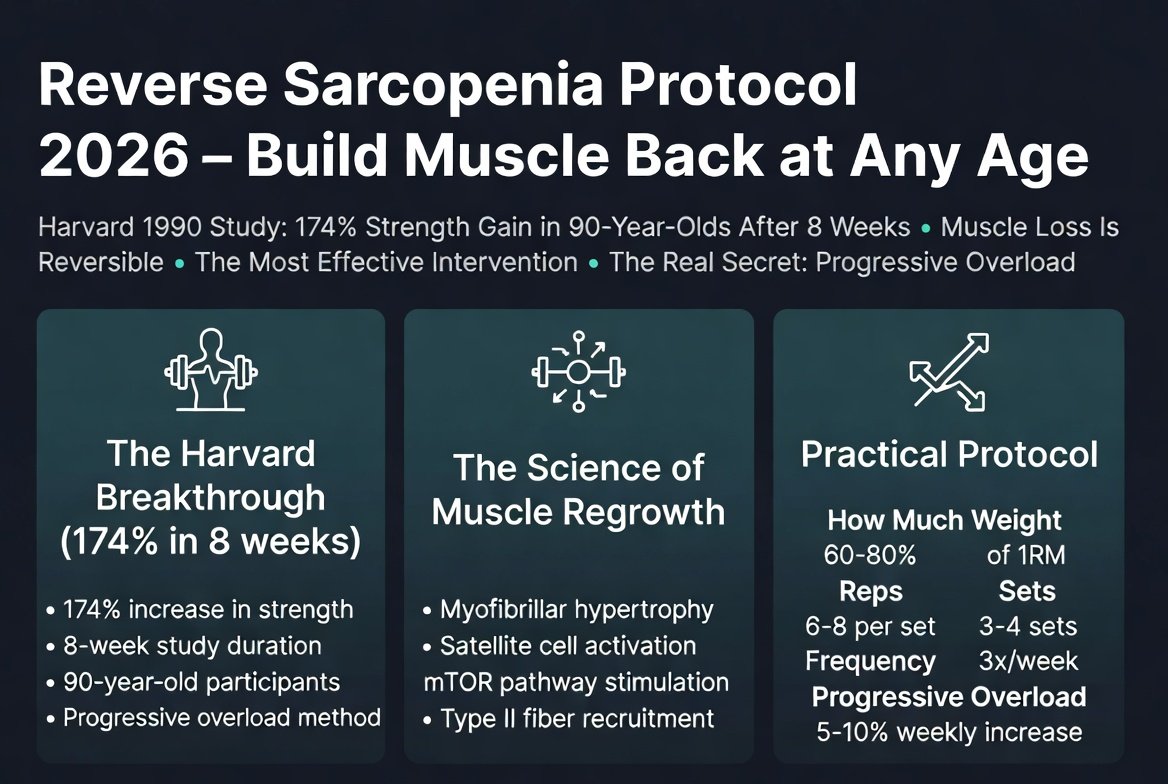
- Resistance training: 2-3 times per week. Even in 70-year-olds, strength training can significantly increase muscle mass and strength within months.
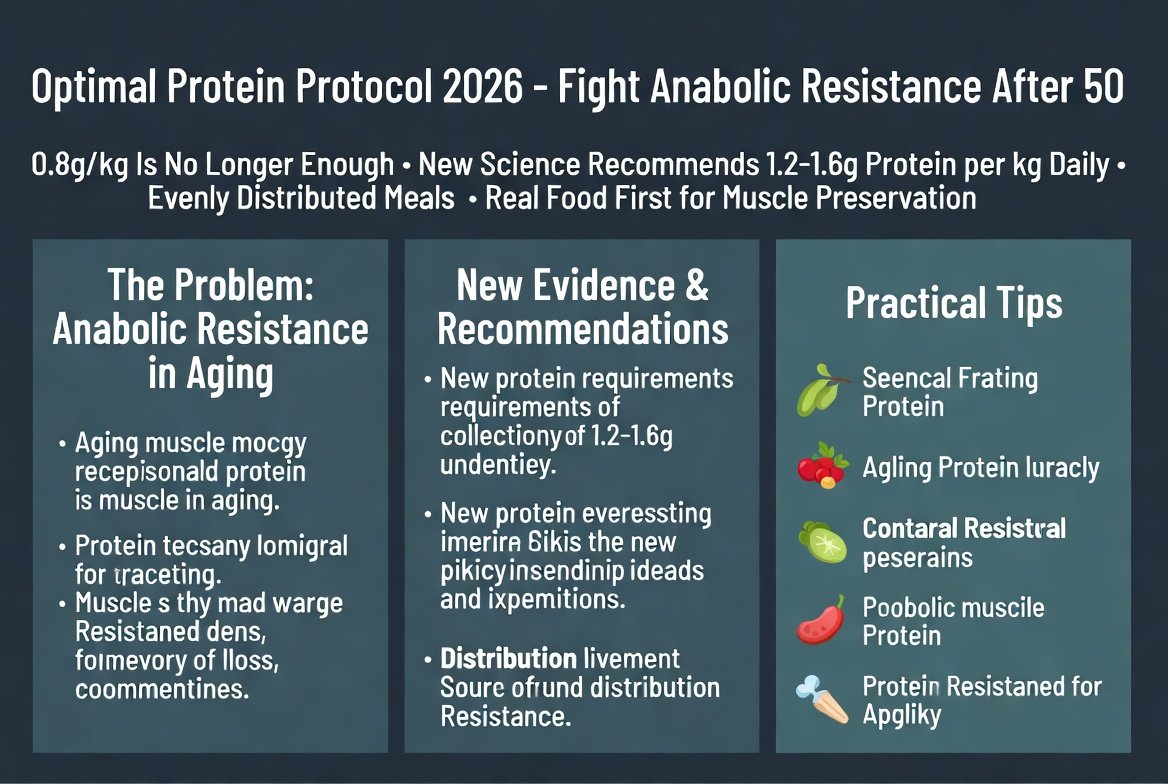
- Adequate protein: 1.2-1.6 grams per kilogram of body weight per day, spread throughout the day, not just in one meal.
- Vitamin D: Linked to muscle function. Test and supplement as needed.
- Quality sleep: Muscle regenerates primarily during rest and sleep. Poor sleep impairs recovery.
What Causes Accelerated Biological Age?
According to the broader body of knowledge on biological aging (not necessarily from this study):
- Harmful lifestyle: Smoking, excessive drinking, insufficient physical activity
- Poor diet: Processed foods, sugars, lack of protein
- Chronic stress: Prolonged high cortisol levels
- Poor sleep: Less than 7 hours a night over years
- Loneliness and social isolation: A modern risk factor
- Untreated diseases: High blood pressure, cholesterol, diabetes without proper management
- Exposure to environmental toxins: Air pollution, chemicals
What's Next?
Since this is a cross-sectional study, the logical next step in future research is a longitudinal examination: Does accelerated biological aging actually predict future muscle loss, and does reducing biological age through lifestyle changes actually lower the risk of sarcopenia? These are open questions requiring follow-up and intervention studies, which the current study did not examine or promise.
Theoretically, if follow-up studies show that lowering biological age also lowers sarcopenia, this could support the idea that biological age is a potential target for intervention, not just a metric. Currently, this is a hypothesis, not an established conclusion.
Conclusion
Sarcopenia is one of the silent epidemics of modern society. Up to 30% of adults over 65 suffer from it. This large Chinese study adds an important layer: It shows that accelerated biological aging is associated with sarcopenia even in a large and diverse population. If you are interested in longevity, monitoring your health metrics alongside strength training and a protein-rich diet is a cheap and useful investment. This way, you can act to preserve muscle before signs of sarcopenia appear.

💬 Comments (0)
Be the first to comment on the article.