There's inflammation we know well: a swollen knee after a fall, a red throat during a cold, an area that heats up and hurts. This inflammation is good and beneficial, it's part of the body's defense and disappears when the problem passes. But there's another type, much quieter and more dangerous: low-grade chronic inflammation, smoldering in the background for years, without pain or external sign, slowly damaging tissues.
In this guide, we won't sell you a superfood that clears inflammation overnight, because such a thing doesn't exist. Instead, we'll honestly explain what chronic inflammation is and why it's linked to aging, and systematically go over the anti-inflammatory foods that research truly supports, what's worth reducing, and what a full day of anti-inflammatory eating looks like. Everything in a practical, step-by-step approach.
What is Chronic Inflammation and Why It Matters (Inflammaging)
With age, for many of us, the baseline level of inflammation in the body gradually rises. Researchers have given this phenomenon a name: inflammaging, a blend of inflammation and aging. It's a state where the immune system remains "on a low flame" all the time, constantly releasing inflammatory substances that damage tissues over years.
Why does this matter? Because low-grade chronic inflammation is now involved in almost every major age-related disease:
- Cardiovascular disease: Inflammation accelerates the formation of plaques in arteries.
- Type 2 diabetes and metabolic syndrome: Inflammation impairs insulin sensitivity.
- Neurodegenerative diseases: Inflammation is linked to processes that harm nerve cells.
- Frailty, muscle loss, and functional decline in older age.
The intensity of inflammation can be measured with simple blood tests, for example CRP (C-reactive protein, especially the sensitive hs-CRP version) and IL-6. And here's the encouraging news: what we eat directly affects these markers. This isn't theoretical, but measured repeatedly in studies.
The Big Rule: It's the Pattern, Not the Single Superfood
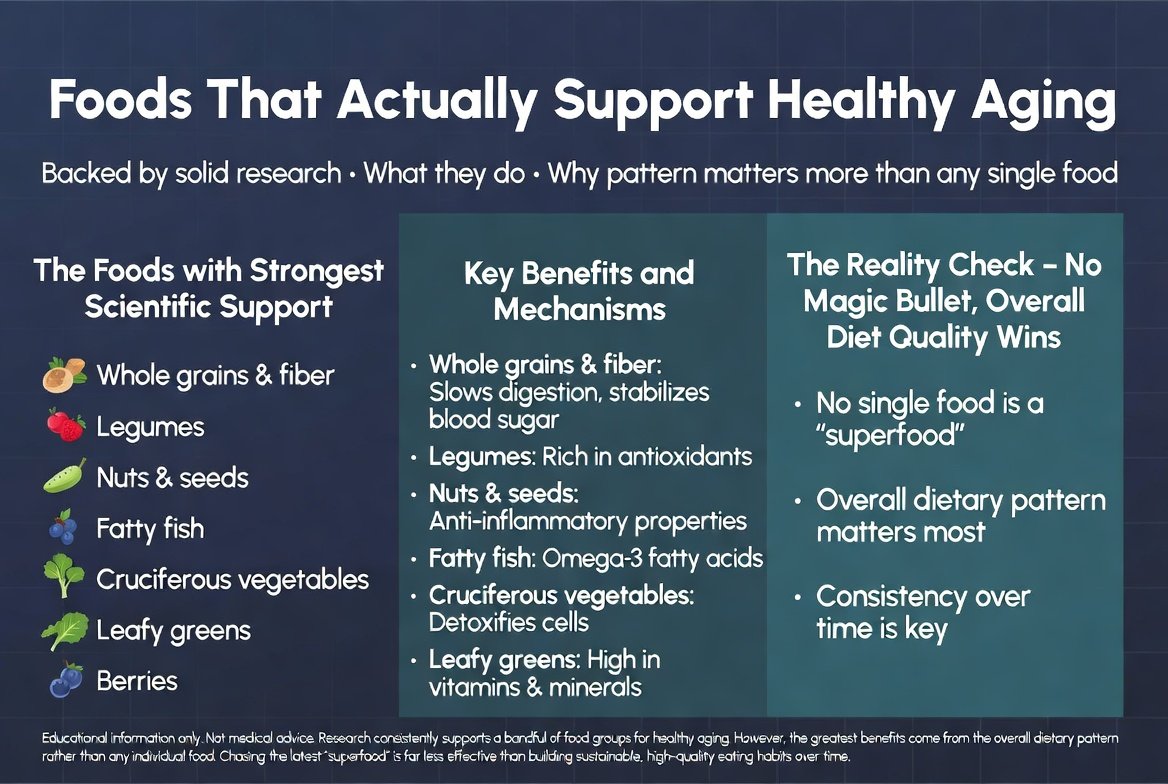
Before we dive into the list, it's important to internalize the principle that will repeat throughout this guide: No single food puts out inflammation. One turmeric won't save you from a diet loaded with sugar and processed food, and no "detox juice" "flushes" inflammation. What does work is a consistent eating pattern over time, and that's exactly what nutrition science points to.
The best example is the Mediterranean diet. In the large PREDIMED study, republished in 2018 in the New England Journal of Medicine, people at cardiovascular risk who ate a Mediterranean diet enriched with olive oil or nuts showed a significant reduction in cardiovascular events compared to a standard low-fat diet. Accompanying studies on the same diet also showed a decrease in inflammation markers like CRP and IL-6. In other words: not one magic ingredient, but the whole package together.
So when you read the following list, don't look for "the winner." Look for a few things that are easy for you to incorporate into your routine, because the accumulation of habits is what moves the needle.
The Anti-Inflammatory Foods: A Practical List
Here are the groups that research consistently supports. There's no need to adopt all of them at once; even adding two or three of them to your week makes a difference.
1. Fatty Fish and Omega-3
Fatty fish like salmon, sardines, mackerel, and herring are rich in omega-3 fatty acids (EPA and DHA), from which the body produces inflammation-soothing molecules. Omega-3 is known for its ability to lower inflammation markers and support heart and brain health. Two servings of fatty fish per week is a reasonable and evidence-based goal. For those who don't eat fish, walnuts and ground flaxseeds provide plant-based omega-3 (though in a less efficient form).
2. Extra Virgin Olive Oil
Extra virgin olive oil is the heart of the Mediterranean diet, and for good reason. It's rich in monounsaturated fat and polyphenols, especially a compound called oleocanthal, whose mechanism of action resembles that of mild anti-inflammatories. Use it as your base oil for cooking and dressing, instead of butter or processed oils. This is one of the easiest and most impactful changes.
3. Colorful Vegetables and Berries
The colors in vegetables and fruits are polyphenols and antioxidants, the same compounds that help curb inflammation. Berries (blueberries, raspberries, strawberries) are rich in anthocyanins, and vegetables like red bell pepper, tomato, beet, and carrot each contribute different compounds. The simple rule: "eat the rainbow", as many different colors on your plate as possible throughout the week.
4. Leafy Greens and Cruciferous Vegetables
Dark leafy greens like spinach, kale, chard, and lettuce are rich in vitamins, folic acid, and antioxidants. Cruciferous vegetables like broccoli, cauliflower, and cabbage contain sulfur compounds (like sulforaphane) linked to activating the body's natural defense mechanisms. Aim for a serving of vegetables with every main meal.
5. Nuts and Seeds
Nuts (walnuts, almonds, pecans) and seeds provide healthy fats, fiber, and antioxidants. In dietary studies, they have been repeatedly linked to lower inflammation markers. A small handful a day (about 30 grams) is a good serving. Note the quantity, as they are calorie-dense, but in terms of quality, they are an excellent choice.
6. Legumes and Whole Grains
Legumes (lentils, chickpeas, beans) and whole grains (oats, quinoa, brown rice) are rich in fiber and feed the good gut bacteria. These bacteria produce short-chain fatty acids with an inflammation-soothing effect. Replacing white bread and white rice with their whole-grain versions is a small change with a cumulative impact.
7. Spices: Turmeric and Ginger
Turmeric (and its active compound, curcumin) and ginger are the most well-known anti-inflammatory spices, and they have a real research basis. But here's the honesty: Turmeric is not a miracle cure. Curcumin is poorly absorbed by the body, and most impressive studies were done with high doses and supplements, not with the pinch you sprinkle on rice. Use them freely for flavor and contribution, but don't expect them to do the job alone.
8. Green Tea
Green tea is rich in catechins, especially EGCG, a polyphenol with antioxidant and anti-inflammatory properties. One or two cups a day, instead of a sweetened drink, is a simple and pleasant way to add polyphenols to your diet.
What to Reduce: The Pro-Inflammatory Side
Sometimes what you remove is as important as what you add. These are the things consistently linked to increased inflammation, and it's worth reducing them:
- Ultra-processed food. Snacks, industrial pastries, sausages, and fast food have been linked in large studies to higher inflammation and disease. This is likely the most influential factor.
- Added sugar and sweetened beverages. High consumption of sugar and liquid calories raises inflammation markers and worsens insulin resistance.
- Refined carbohydrates. White bread, pastries, and sweets cause sharp sugar spikes that contribute to inflammatory load.
- Processed meat. Hot dogs, sausages, and smoked meats have been linked to inflammation and increased health risk, and it's best to significantly reduce them.
- Excess alcohol. A small amount is a matter of debate, but heavy drinking is clearly pro-inflammatory and harmful.
Note the balanced message: There's no need for total prohibition and guilt. A cake at a wedding won't ruin anything. What matters is what you eat most of the time, on most days.
What a Full Day of Anti-Inflammatory Eating Looks Like
Theory is nice, but what do you actually eat? Here are some practical examples that show how simple and tasty this can be. These are ideas, not a rigid menu; adapt them to your taste and budget.
Sample Day 1: Classic Mediterranean
- Morning: Yogurt with berries, a handful of walnuts, and a tablespoon of ground flaxseeds.
- Lunch: Baked salmon, quinoa, and roasted vegetables in olive oil.
- Evening: Lentil soup with lots of vegetables and whole-grain bread.
- To drink: Water and green tea instead of a sweetened drink.
Sample Day 2: Vegetarian and Easy to Prepare
- Morning: Cooked oatmeal with cinnamon, blueberries, and almonds.
- Lunch: A large chickpea salad with leafy greens, tomatoes, avocado, and olive oil.
- Evening: Stir-fried broccoli and tofu with ginger and turmeric over brown rice.
Sample Day 3: Busy and No Time
- Morning: A smoothie with frozen berries, spinach, and a tablespoon of nut butter.
- Lunch: A can of sardines on a slice of whole-grain bread with tomato and olive oil.
- Evening: A ready-made portion of fish or chicken with frozen vegetables heated in a pan with olive oil.
Notice that all examples repeat the same principle: lots of plants and colors, healthy fat from olive oil and nuts, a quality protein source, and very little processed food. Want to build a broader plan from this? Read about nutrition for longevity.
Honest Warnings and Caveats
To maintain honesty, it's important to state a few things explicitly:
- Turmeric is not a miracle. It's a good spice with a research basis, but it won't replace a good overall diet, and in the small amounts used in cooking, its effect is modest.
- Supplements are not a substitute for food. An omega-3 or curcumin pill can help in certain situations, but it doesn't negate the need for a healthy eating pattern. Plate first, supplement only after. If you still want to supplement, you can honestly read about longevity supplements, always from a "nutrition first" approach.
- This is support, not treatment. If you have a diagnosed inflammatory disease (like rheumatoid arthritis, inflammatory bowel disease, or an autoimmune disease), an anti-inflammatory diet can support you but does not replace your doctor's medical treatment. Do not stop treatment on your own.
- Patience. Lowering chronic inflammation is a process of weeks and months, not a day. Consistency is what works.
Brief Summary: Where to Start
If you take only a few things from this guide: Add fatty fish twice a week, switch to olive oil, fill half your plate with colorful vegetables and greens, and reduce ultra-processed food and sugar. These four changes alone push your entire diet in an anti-inflammatory direction.
And remember the core principle: No single food puts out inflammation; there is an eating pattern that lowers it over time. Eat the rainbow, cook with olive oil, love legumes and nuts, and reduce processed foods. Even if you start small, the accumulation is what matters. Want more practical tools for a healthy life? We have more practical guides.
The information in this guide is general and for lifestyle and informational purposes only, and does not constitute medical advice or a substitute for consultation with a doctor, especially if you have a diagnosed inflammatory or autoimmune disease.
References:
Estruch R et al., N Engl J Med 2018, Primary Prevention of Cardiovascular Disease with a Mediterranean Diet (PREDIMED)
Esposito K et al., JAMA 2004, Effect of a Mediterranean-Style Diet on Endothelial Dysfunction and Markers of Vascular Inflammation


💬 Comments (0)
Be the first to comment on the article.