Blue zones get all the headlines. Nicoya, Sardinia, Okinawa. But there is one place achieving excellent longevity results that almost no one talks about: Norway. In global happiness indices, Norway is always in the top five, and the average life expectancy stands at about 83.2 years, among the highest in the world. Dr. Jeffrey Rauch, a professor of psychiatry and brain mapping at Tulane University who became interested in Norwegian lifestyle habits, points to three cultural habits that anyone can adopt.
Why isn't Norway on every list?
The reason is simple: Dan Buettner, who coined the term "blue zones," focused on subtropical regions with small populations that live long lives. Norway does not fit this profile—it is a large, cold, developed country. But the data shows that the Norwegian population as a whole enjoys excellent longevity.
It is important to note: Norway is not a paradise without health problems. For example, the dementia rate among those aged 70 and over was measured at about 15% in the large Norwegian HUNT4 study, a figure that is not particularly low compared to other developed countries. So it is not about "magic" that eliminates diseases, but rather a set of cultural habits that benefit health over time.
Norway also operates a dedicated healthy aging research network called NO-Age (Norwegian Centre on Healthy Ageing Network), which studies what enables this population to age better.
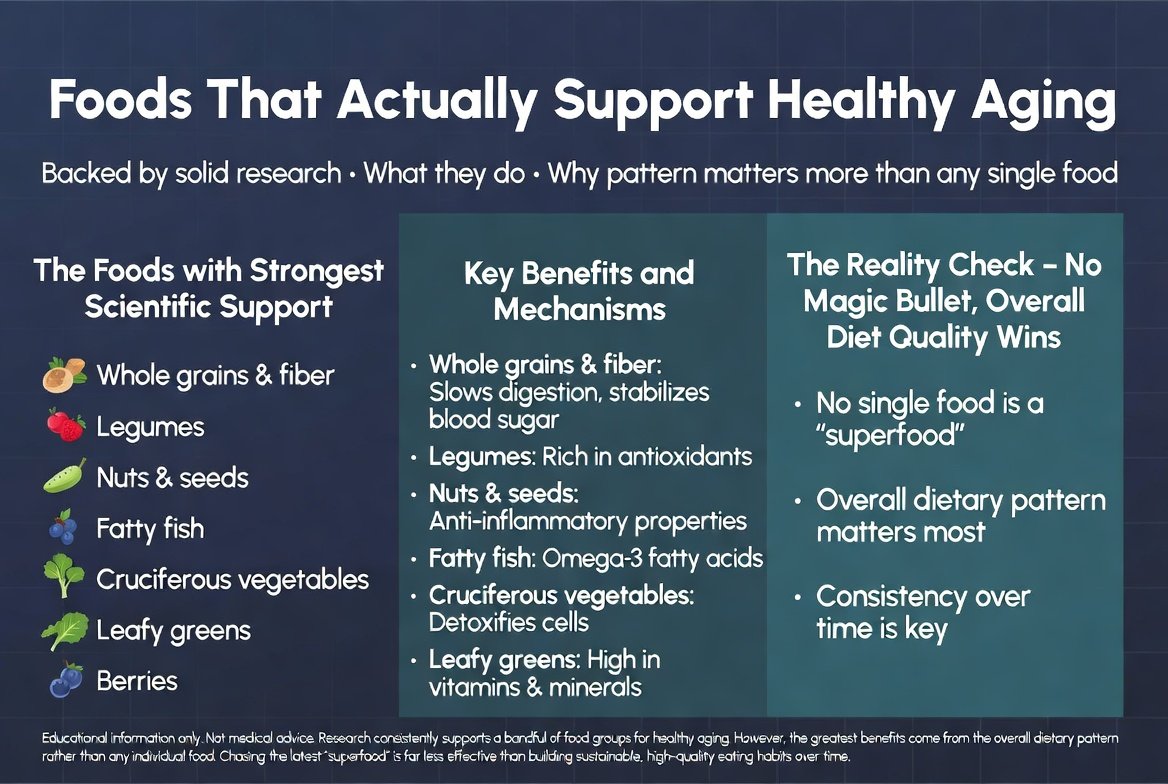
The first factor: The Nordic diet
The Nordic diet is less famous than the Mediterranean one, but it is similar in concept. Instead of olive oil, rapeseed (canola) oil. Instead of certain nuts, local walnuts. Instead of tomatoes, bell peppers and berries. The core is the same: unprocessed, local, and fresh food.
The typical Norwegian plate includes:
- Root vegetables: carrots, beets, potatoes
- Fatty fish: salmon, mackerel, herring. Fish consumption in Norway is among the highest in Europe
- Fermented dairy products: yogurt, cheeses, high quality
- Whole grains: rye, oats, barley
- Berries: full of antioxidants
What does the research say about the Nordic diet? In the NORDIET study, a randomized controlled trial published in 2011 in Sweden on 88 participants with high cholesterol, six weeks of a healthy Nordic diet led to a significant reduction in LDL ("bad") cholesterol and improvements in blood pressure and insulin sensitivity. These are key risk factors for heart disease. That is, even in the short term, this diet improves measurable health metrics, something that includes plenty of fatty fish and whole carbohydrates.
How to adopt it:
- 2-3 times a week fatty fish (salmon, sardines, mackerel)
- Berries every day (cranberries, blueberries, raspberries)
- Potatoes and sweet potatoes instead of white rice
- Oatmeal for breakfast
- Fermented dairy products like yogurt
The second factor: Friluftsliv
This is the magic word: friluftsliv, meaning "open-air living." It is not a sporadic activity; it is a lifestyle. In Norway, outdoor activity is not something planned only for the weekend. It is the default mindset.
- Norwegians walk, hike, or bike at every opportunity, even in winter
- Walking, even in any weather, is a cultural norm from a young age
- Kayaking, skiing, and hiking are social activities done together
- "There is no bad weather, only unsuitable clothing", a famous Scandinavian saying
The large amount of time spent outdoors, day after day, helps explain part of the health gap. Why is it so good?
- Natural physical activity (not a gym) that continues consistently throughout the day
- Sun exposure even in winter, which helps vitamin D production
- Connection to nature that reduces stress and cortisol
- Social interaction, many hike in company
- Clean air, Norway is one of the least polluted countries in the world
The third factor: Heat and cold (Nordic sauna culture)
The sauna is part of the broader Nordic welfare culture, although its origin and most research on it are actually Finnish. The strongest scientific evidence for sauna comes from large Finnish studies: among middle-aged men, regular sauna use 4 to 7 times a week was associated with:
- A reduction of about 40% in all-cause mortality compared to use once a week
- A reduction of up to about 66% in the risk of dementia
- Improvement in vascular health
- Strengthening the immune system
- Reduction in systemic inflammation
It is important to remember that these are observational studies: they show a correlation, not necessarily causation, and it is unclear how applicable the results are to every population.
The mechanism: exposure to moderate heat mimics the effect of light physical activity. Heart rate increases, blood vessels open, and heat shock proteins are activated. These help protect cells from damage.
The combination of heat and cold (sauna followed by a cold shower or cold water immersion) adds an effect. The parasympathetic nervous system is strengthened, which may improve sleep and reduce anxiety.
The cultural environment
Beyond the three habits, there is a cultural foundation that explains part of the picture:
- Moderate pace of life: relatively short work week and long vacations
- High social trust: Norway leads in OECD trust indices. Trust reduces stress
- Universal healthcare: high accessibility to tests and treatment
- Work-life balance culture: weekends are truly free
- High gender equality: less stress on families
It is not just a lifestyle. It is an environment that makes it easy to live a healthy lifestyle. If you live elsewhere, you need to work a bit harder to adopt the same habits.
Three actions to adopt today
You don't have to move to Norway (maybe you do, but it's cold there). But you can implement the ideas:
- Go outside once a day: even 30 minutes, even in any weather. Walk after breakfast or lunch. On days you have time, longer hikes. Connection to nature = restoration.
- Add fatty fish 2-3 times a week: salmon, sardines, or mackerel. If you don't like fish, an omega-3 supplement is a partial substitute.
- Sustained heat twice a week: sauna available at some gyms. If not, a hot bath (40-42°) for about 30 minutes. Consult a doctor if you have heart or blood pressure issues.
It doesn't require a drastic diet, membership in an exclusive club, or a large expense. It requires a small cultural shift: to appreciate the open air, nature, and warm water.
The bottom line
If you want to live to an old age in good health, don't look only at the popular places. Norway offers a realistic model for modern life: activity integrated into daily life, simple nutrition, and body care through heat and cold. It is not magic, it is culture, and anyone can adopt something from it.


💬 Comments (0)
Be the first to comment on the article.