For years, the conversation about "nutrition and the brain" was reduced to a few clichés: omega-3 for memory, avocado for good fatty acids, broccoli against inflammation. But a new and ambitious review published in Frontiers in Molecular Neuroscience presents a completely new concept: Nutrition is not just fuel. It is a systemic regulator that puts your brain on different aging pathways. What goes into your mouth programs your genes, your microbiome, and the communication between your brain cells.
The New Approach: 5 Interconnected Layers
The study presents a systemic model of 5 layers, each directly influenced by nutrition and affecting brain aging:
1. Cellular Metabolism
Brain cells (neurons, astrocytes, microglia) need energy to work. With age, metabolic efficiency declines. Nutrition directly affects:
- Intermittent fasting activates autophagy and cellular cleanup
- Calorie restriction slows the mTOR pathway linked to aging
- Ketosis provides an alternative fuel (ketones) for neurons
2. Gut Microbiome
The stomach and brain are linked by the "gut-brain axis." Gut bacteria produce metabolites (SCFAs, amino acids, neurotransmitters) that reach the brain. Nutrition is the most influential factor on microbiome composition:
- Fermentable fibers: food for beneficial bacteria
- Polyphenols (green tea, red wine in moderation, berries): alter composition
- Fermented foods: add beneficial bacterial species
3. Nutrient Sensing
The cell knows what you eat. It has molecular "sensors":
- mTOR: activated by protein and leucine. When elevated, causes aging
- AMPK: activated by energy deficit. Causes rejuvenation
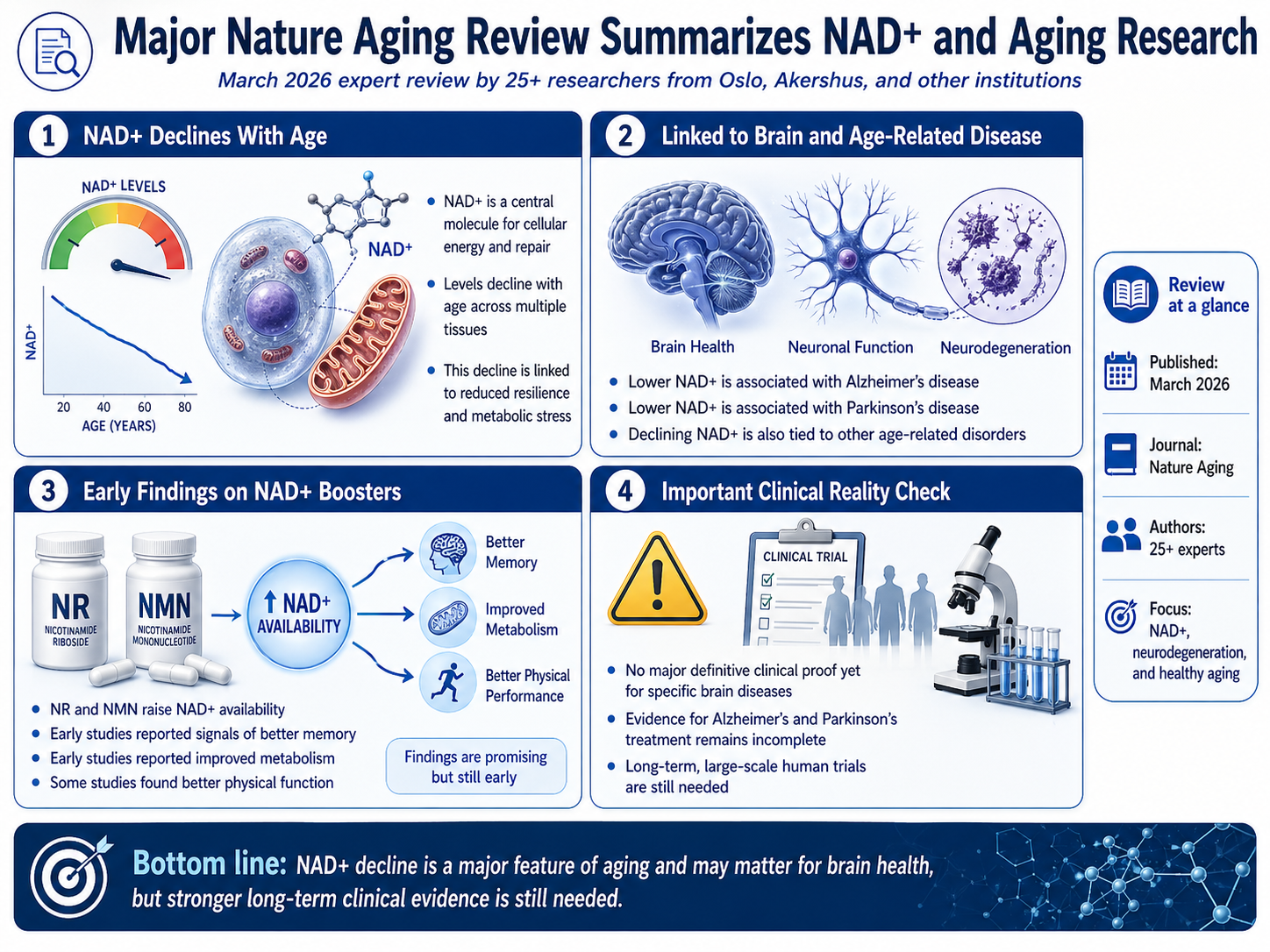
- Sirtuins: activated by NAD+ and polyphenols
Dietary choices tilt the balance between these pathways toward rejuvenation or aging.
4. Epigenetic Memory
Nutrition leaves "epigenetic marks" on DNA. That is, it does not change the genes, but changes which ones are active. These fluctuations are preserved for years:
- Folic acid, B12, choline: affect DNA methylation
- Childhood nutrition: creates an "epigenetic memory" that can affect 50 years later
- Prolonged starvation: epigenetic changes in offspring (studies on offspring of famine survivors, like the 'Dutch Hunger Winter')
5. Neuro-Immune Signaling
Nutrition directly affects inflammation. Chronic brain inflammation (neuroinflammation) is a key driver of brain aging:
- Omega-3: anti-inflammatory
- Processed sugar: pro-inflammatory
- Olive oil: contains oleocanthal (anti-inflammatory similar to ibuprofen)
The Revolutionary Idea: Nutrition as a Multi-System Variable
The review does not see nutrition as merely a collection of raw materials. According to the framework it proposes, nutrients act as signals that direct brain cells toward a specific aging pathway. In simple terms: every meal is a kind of instruction, and consistent instructions over time build a pathway. The question is: Which pathway are you building?
Practical Recommendations
Daily Foundation
- Mediterranean diet: olive oil, vegetables, fish, nuts. The gold standard in studies
- 12-14 hour nightly fast: no eating after 7:00 PM, morning after 7:00 AM. Activates autophagy
- 30-40 grams of fiber per day: diverse vegetables, legumes, whole grains
Brain-Supporting Foods
- Walnuts (omega-3, melatonin)
- Broccoli and cauliflower (sulforaphane, anti-inflammatory)
- Berries (anthocyanins, antioxidants)
- Dark chocolate (flavonols)
- Coffee and green tea (polyphenols)
- Turmeric (curcumin)
- Extra virgin olive oil
What to Limit
- Processed sugar and white flour
- Processed solid fats (trans fats)
- Excess fried foods
- Alcohol beyond one glass of wine per day
- Processed red meat
Brain Supplements (In Moderation)
If the foundation is solid, there are supplements that have been studied:
- Omega-3 (EPA + DHA): 1-2 grams per day
- Vitamin D: 2,000-4,000 IU based on blood test
- B12: 500-1000 mcg, especially for vegetarians
- Creatine: 5 grams per day, also for the brain
The Bottom Line
This review changes the narrative: We don't just eat to live. We eat to shape our future. Every dietary choice is an opportunity to tilt the pathway toward a younger, stronger brain. There is no magic here. Only consistency, variety, and more awareness.

💬 Comments (0)
Be the first to comment on the article.