Morning starts for most of us in a similar way: a slice of bread with jam, a bowl of cereal, a croissant on the way to work, or just coffee on an empty stomach. All of these share one common trait: they are high in carbohydrates and very low in protein. The result is familiar: an hour or two later, we are hungry again, looking for a snack, and our energy crashes. This is no coincidence. Such a meal rapidly raises and lowers blood sugar and barely engages the mechanisms that make us feel full.
In this guide, we explain why a high-protein breakfast is a small change with a big payoff—and not just a trend. It has two real, research-backed benefits: it is much more satiating and reduces cravings throughout the day, and it helps distribute protein intake in a way that supports muscle mass preservation as we age. We will see how this works, provide 8 practical ideas with estimated protein amounts for each, and end with some honest notes worth knowing.
Why Protein in the Morning? Two Real Benefits
The reason to focus on morning protein is not magic, but two well-established physiological phenomena. Understanding them makes all the following recommendations logical.
Benefit 1: Satiety and Craving Control
Protein is the most satiating macronutrient among the three (protein, carbohydrate, and fat). It stimulates the release of satiety hormones in the gut and slows stomach emptying, so the feeling of fullness lasts longer. When you replace a carbohydrate-based breakfast with a high-protein one, many people report being less hungry before lunch and less tempted by sweet snacks.
This is not just a subjective feeling. In controlled studies on young women who typically skipped breakfast, replacing the morning meal with a high-protein breakfast led to greater satiety throughout the morning and reduced desire to eat in the evening, compared to a regular breakfast or skipping it. Simply put: protein in the morning helps break the hunger-snack-energy crash cycle that is so familiar to us.
Benefit 2: Protein Distribution and Muscle Preservation in Aging
This is where the truly important concept for longevity comes in. Our muscle is in a constant process of building and breaking down. To stimulate muscle building (muscle protein synthesis), the body needs a sufficient dose of protein in a single meal—about 25 to 30 grams of high-quality protein. The problem: most people eat almost all their protein at dinner and very little in the morning. This wastes the opportunity to stimulate muscle building two or three times a day.
An important study by Mamerow and colleagues in 2014, published in the Journal of Nutrition, examined exactly this. Subjects who ate the same total daily protein but distributed it evenly across three meals (about 30 grams each) showed about 25 percent higher muscle protein synthesis over 24 hours compared to those who consumed the same protein concentrated mainly in the evening. The conclusion: it's not just how much protein, but how you distribute it. A protein-rich breakfast is the easiest way to fill the morning "gap."
This becomes especially critical with age. From about age 50, muscle becomes less sensitive to protein stimulation (a phenomenon called "anabolic resistance"), and muscle mass loss (sarcopenia) accelerates. Distributing protein throughout the day, along with a training program that includes strength training, is one of the most powerful tools for preserving muscle, strength, and functional independence in older age.
8 High-Protein Breakfast Ideas
Here is the practical list. Next to each idea, we have noted an estimated protein amount and a brief explanation of why it works. The reasonable target for a meal is about 25 to 30 grams of protein, so it is often best to combine a main protein component with an addition. You don't need to eat everything; choose what suits you and your day.
1. Greek Yogurt with Nuts and Berries (about 20 to 25 grams)
Greek yogurt is strained and contains two to three times the protein of regular yogurt, about 15 to 20 grams per cup. Add a handful of nuts (more protein, healthy fat, and satiety) and some berries for flavor, fiber, and antioxidants, and you have a quick, no-cook meal that is very satisfying. Choose yogurt without added sugar and adjust sweetness with the fruit itself.
2. Omelet or Fried Eggs with Vegetables (about 18 to 24 grams)
Two eggs provide about 12 to 14 grams of high-quality protein and all essential amino acids. Add an extra egg white or a quarter block of crumbled tofu into the omelet to reach 25 grams, and pile on vegetables (spinach, mushrooms, tomato, bell pepper). This is one of the cheapest, most flexible, and most satisfying breakfasts. The old concern about cholesterol in eggs has weakened significantly in recent years for most healthy people.
3. Cottage Cheese Bowl with Vegetables or Fruit (about 25 grams)
Cottage cheese is a quiet protein champion: about 25 grams of protein per cup, and rich in casein, a slow-digesting protein that prolongs satiety. You can have it savory (with tomatoes, cucumber, and olives) or sweet (with fruit and cinnamon). It is also great as an evening bowl, but in the morning, it is an especially quick solution.
4. Protein Smoothie with a Real Base (about 25 to 35 grams)
For those in a hurry in the morning, a smoothie is a convenient way to get a lot of protein. Combine a scoop of protein powder (whey or plant-based, about 20 to 25 grams) with milk or soy milk, half a banana, and a tablespoon of peanut butter or chia seeds for satiety. A good smoothie is a meal, not just a supplement, so make sure to have a nutritious base and not just the powder. It is always better to get protein from whole foods when possible, and the smoothie is the solution for busy days.
5. "Protein-Packed" Oatmeal (about 20 to 25 grams)
Oatmeal alone is relatively low in protein, but it is easy to upgrade. Cook the oats in milk instead of water, stir in a scoop of protein powder or a tablespoon of nut butter, and top with seeds and fruit. This turns a classic carbohydrate meal into a balanced one that keeps you full for a long time and prevents the mid-morning energy crash.
6. Smoked Salmon Toast on Whole Wheat Bread (about 20 to 25 grams)
A slice of whole wheat bread with smoked salmon provides high-quality protein and omega-3s, healthy fat for the heart and brain. Add a hard-boiled egg or a little low-fat cream cheese to boost the protein, and slices of cucumber and onion for freshness. A meal that feels indulgent but is well-balanced nutritionally.
7. Chia Pudding with Protein (about 15 to 25 grams)
Soak chia seeds in milk or soy milk (both add protein) with a scoop of protein powder, and leave it in the refrigerator overnight. In the morning, you have a thick pudding rich in fiber, omega-3s, and protein, which can be prepared in advance for several days. An excellent solution for those who have no time or desire to cook in the morning.
8. Shakshuka (about 18 to 24 grams)
Shakshuka is a classic Israeli breakfast that is also rich in protein: two to three eggs in a spiced tomato sauce. Add crumbled feta cheese or a handful of cooked chickpeas to the sauce to increase the protein, and serve with a slice of whole wheat bread. A warm, satisfying meal full of lycopene from the tomatoes.
Honest Notes: What Really Matters
Before you rush to buy protein powders, here are a few things to put on the table honestly, because they change the whole picture:
- Total daily protein is what matters most. Distributing protein throughout the day is beneficial, but its effect is modest compared to the big question: Are you even getting enough protein per day? As a rough target, about 1.2 to 1.6 grams of protein per kilogram of body weight per day is a reasonable range for active adults, and more as you age. If you are far from that, that is the truly important change.
- You don't need a huge breakfast. If you enjoy a light breakfast, or practice intermittent fasting and skip the morning, that is perfectly fine, as long as you make up the protein in your other meals. A high-protein breakfast is a useful tool, not a religious obligation.
- Whole foods are better than processed ones. Eggs, yogurt, cottage cheese, fish, and legumes are preferable to breakfast sausages, industrial protein pastries, or sugar-laden protein bars. Protein powder is a legitimate tool for busy days, but it should not replace real food.
- Don't forget the rest of the plate. Protein is important, but a good meal also includes fiber, vegetables, and healthy fat. A high-protein breakfast consisting entirely of sausage and no vegetables is not necessarily healthy.
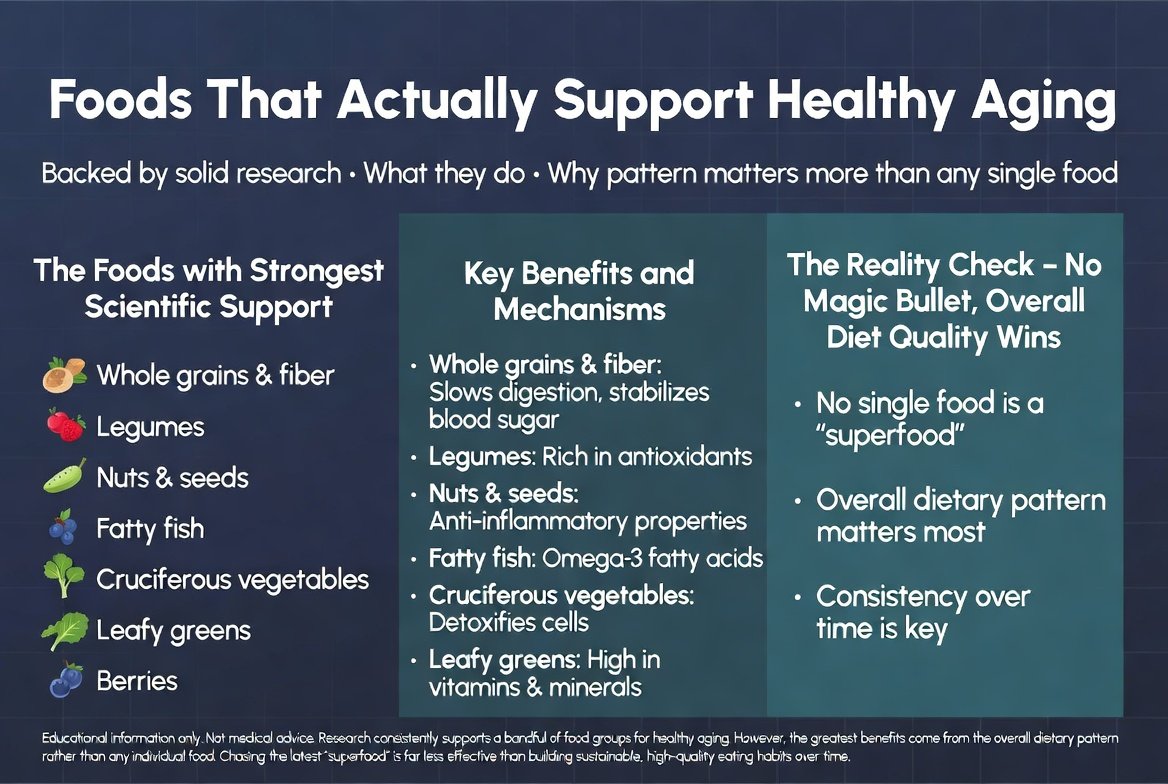
The right approach is to see morning protein as part of a broader nutritional picture. You can read more about nutrition for longevity to understand how protein fits with other principles of healthy eating over time.
Who Benefits Most?
A high-protein breakfast is suitable for almost everyone, but some groups will benefit especially:
- Adults aged 50 and over, who are at increased risk of muscle mass loss, and for whom protein distribution and a significant morning dose are particularly important.
- Those who exercise and build muscle, who need sufficient protein stimulation throughout the day, not just after a workout.
- Those who struggle with cravings, snacking, and constant hunger, for whom the extra satiety from morning protein can change the entire course of the day.
- Those trying to maintain a healthy weight, since greater satiety in the morning tends to lead to more balanced eating later.
Even if you don't belong to any group, replacing a carbohydrate-based breakfast with one containing real protein is an easy upgrade that almost always pays off in terms of satiety and energy.
Brief Summary: Where to Start
If you take only one thing from this guide, let it be this: add a real protein source to your breakfast. Eggs, Greek yogurt, cottage cheese, or a smoothie with a nutritious base—any of these turns the morning from a meal that leaves you hungry to one that sustains you. Aim for about 25 to 30 grams of protein in the meal, and you will feel the difference in satiety and energy within a few days.
And remember the proportions: protein distribution helps, but total daily protein wins. Don't turn the morning into a stressful task; choose one or two ideas from the list that fit your lifestyle, and incorporate them consistently. Want more practical tools for a healthy life? We have more practical guides.
The information in this guide is general and for lifestyle and informational purposes only, and does not constitute medical or nutritional advice or a substitute for consultation with a doctor or dietitian, especially if you have kidney disease, a chronic condition, or a need for personalized protein adjustment.
References:
Mamerow MM et al., J Nutr 2014, Dietary Protein Distribution Positively Influences 24-h Muscle Protein Synthesis in Healthy Adults
Leidy HJ et al., Am J Clin Nutr 2013, Beneficial effects of a higher-protein breakfast on appetite, hormonal, and neural signals controlling energy intake

💬 Comments (0)
Be the first to comment on the article.