If you sweat more than you think you should, or worry about body odor, take a moment and breathe deeply. The first thing that's important to say, and it's also the most reassuring: sweating is a normal, healthy, and vital phenomenon. It's not a malfunction of the body or a sign that something is dirty, but a sophisticated cooling system that keeps your body temperature in a safe range. Without sweating, physical activity on a hot day would be genuinely dangerous.
But let's be honest: even if it's normal, excessive sweating and body odor can be embarrassing and unpleasant, and it's completely legitimate to want to address it. The problem is that this field is flooded with misinformation, from the scary myth that deodorant causes cancer, to a basic confusion between deodorant and antiperspirant. In this guide, we'll honestly sort things out: explain why we sweat and where body odor really comes from, quietly dispel the fears, and lay out what actually works, from the cheap basics to medical treatment for true excessive sweating. And finally, and no less importantly, we'll explain when sweating is a red flag that requires a doctor's check-up.
Why do we sweat, and where does the odor really come from?
To understand what helps, you need to understand what's happening on the skin. Our body has two main types of sweat glands, and this distinction is critical for understanding body odor:
- Eccrine glands. Scattered over almost the entire body, they secrete a watery, clear sweat whose function is to cool us through evaporation. This sweat is mostly water and salt, and it is almost odorless by itself.
- Apocrine glands. Concentrated in areas like the armpits and groin, they become active at puberty. They secrete a thicker fluid, rich in proteins, fats, and amino acids. This fluid, by itself, is also odorless.
And here's the point that changes everything: body odor is not created from sweat but from bacteria living on the skin that break it down. The natural bacteria in the armpit, primarily a strain called Staphylococcus hominis, feed on the secretions of the apocrine glands and turn them into volatile compounds with a strong odor. One of the main ones is a thioalcohol called 3M3SH, responsible for the characteristic sour-onion smell of old sweat. Studies in the chemistry of body odor have precisely identified the bacterial enzyme that performs this conversion.
The practical implication is huge: if the odor comes from bacteria breaking down sweat, then the fight against odor is essentially a fight against two things: sweat (which feeds the bacteria) and the bacteria themselves. All the tools we'll lay out below attack one of the two, or both. This is also why a person can sweat a lot and smell little, or sweat little and smell strongly; it all depends on the amount of apocrine sweat and the bacterial population on their skin.
Dispelling the Myth: Aluminum in Deodorant, Cancer, and Alzheimer's
Before talking about what works, we need to address the most common fear that stops people from using the most effective tool. Quietly and calmly: there is no reliable scientific evidence that aluminum in antiperspirant causes breast cancer or Alzheimer's disease. It's a persistent myth, but it remains a myth.
Breast Cancer
The claim is that aluminum, supposedly absorbed through the armpit skin, accumulates in breast tissue and promotes cancer. But the evidence simply doesn't support this. The American Cancer Society and the NCI (National Cancer Institute) explicitly state that there is no scientific evidence linking antiperspirant use to the development of breast cancer. A comprehensive review from 2014 found no clear evidence that antiperspirants or cosmetics containing aluminum increase the risk of breast cancer. The amount of aluminum absorbed through healthy skin is minuscule, and traces of aluminum are found in completely healthy breast tissue anyway.
Alzheimer's Disease
This concern was born in the 1970s and 1980s when aluminum was found in the brains of Alzheimer's patients. But since then, decades of research have failed to establish a causal link between aluminum exposure (from deodorant, cookware, or water) and the disease. The current scientific consensus is that aluminum is not an established cause of Alzheimer's disease. Leading health organizations and Alzheimer's associations do not consider aluminum in deodorant a risk factor.
So why does the myth survive? Because it's scary, intuitive, and spreads easily online. But honesty requires saying: if you are concerned, the decision to avoid aluminum is legitimate as a personal choice, but it is not required based on safety evidence. Anyone who wants the most effective reduction in sweating can use an aluminum-based antiperspirant with peace of mind.
The Basics That Work: Antiperspirant, Hygiene, Fabrics, and Triggers (🟢)
Now for the practical part. Most people who think they have a sweating problem do perfectly well with the basic tools below, and they are all well-established (🟢) and safe for independent use.
First of all: Deodorant is not Antiperspirant
This is the most common and basic confusion, and it's important to understand:
- Antiperspirant (against sweating). Contains aluminum salts that form a temporary plug in the openings of the sweat glands, thereby reducing the amount of sweat. This is the only proven way to reduce sweating without a prescription.
- Deodorant (against odor). Does not reduce sweating at all, but fights odor through masking agents, antibacterial agents, or neutralization. You can sweat just as much, just smell less.
Many products combine both functions ("antiperspirant deodorant"). If your problem is sweating, specifically look for the word antiperspirant. If the problem is only odor, deodorant will suffice.
The Tip That Changes Everything: Apply Antiperspirant at Night
This is one of the least known and most effective recommendations: antiperspirant works best when applied at night, on dry skin, before bed, not in the morning. The reason: at night, sweating decreases, so the aluminum salts have time to enter the gland openings and form the plug without sweat washing them out. The plug remains active the next day, even after a morning shower. If you apply it only in the morning on sweaty skin, a large part of the product is simply washed away before it has a chance to work.
The Rest of the Solid Basics (🟢)
- Daily hygiene. Regular showering (with attention to the armpits) reduces the bacterial load that produces odor. Thorough drying of warm areas after a shower makes it harder for bacteria to multiply.
- Breathable and natural fabrics. Cotton, linen, and breathable fabrics allow sweat to evaporate, while tight synthetic fabrics trap moisture and heat, creating a breeding ground for bacteria. Looser, breathable clothing reduces both sweating and odor.
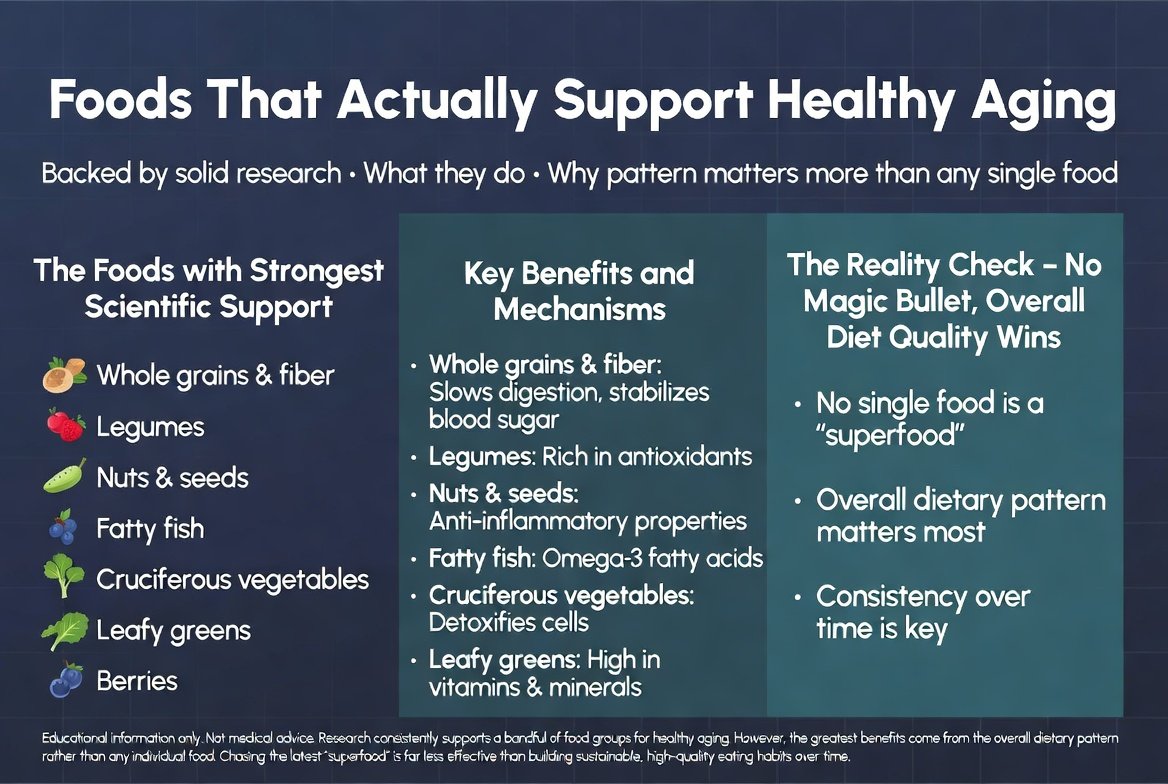
- Trigger management. Several factors increase sweating in many people, and it's worth paying attention to them: stress and anxiety (trigger emotional sweating, mainly in the palms and armpits), spicy food (can cause sweating on the face and scalp), caffeine and alcohol, and of course heat. Identifying your personal triggers and reducing them can significantly lessen the problem. A balanced diet and stable lifestyle also help. You can read more about nutrition for longevity as a foundation for overall health.
"Natural Deodorant": What It Actually Does (🟡)
In recent years, there has been a boom in "natural deodorants" free of aluminum, often based on baking soda, cornstarch, essential oils, or zinc. Honesty is important here, because marketing sometimes blurs the difference: natural deodorant is a deodorant, not an antiperspirant. It fights odor, but it does not reduce the amount of sweat. Rated 🟡 yellow, due to partial and variable effectiveness.
- What it does do. Antibacterial ingredients like zinc or essential oils can reduce the bacteria that produce odor, and baking soda slightly neutralizes acidity. For someone who sweats a normal amount and is mainly bothered by odor, a natural deodorant can certainly suffice.
- What it doesn't do. If your real problem is the amount of sweat (wetness marks, feeling of dampness), a natural deodorant won't solve it, because it doesn't block glands.
- Note on sensitivity. High concentrations of baking soda can irritate sensitive armpit skin in some people. If redness or burning occurs, it's advisable to switch to a gentler formula.
The bottom line: Natural deodorant is a reasonable and legitimate choice for mild cases where odor is the main issue. It's simply not a substitute for antiperspirant for someone who truly sweats a lot.
True Excessive Sweating (Hyperhidrosis): When It's Beyond the Basics
Some people sweat far more than needed for cooling, in a way that interferes with daily life: dripping hands that prevent shaking hands or holding a pen, huge sweat stains on a shirt even without exertion, or constantly wet feet. This is a real medical condition called hyperhidrosis (primary focal hyperhidrosis), and it's more common than people think. The good news: there are effective treatments, and they are all managed by a doctor. The treatment ladder, according to accepted medical guidelines, progresses as follows:
- Prescription-strength antiperspirant (🟢, first line). High-concentration aluminum chloride solutions (much stronger than over-the-counter products) are the first treatment in most cases. Applied at night, they can cause irritation, which can be soothed.
- Botox injections (botulinum toxin) (🟢/🟡). Injections into the armpit or palms temporarily block the nerve signal to the sweat glands, dramatically reducing sweating for several months. Very effective for armpits. Performed only by a doctor.
- Iontophoresis (🟡). A treatment where hands or feet are soaked in water through which a mild electrical current is passed, reducing the activity of the sweat glands. Effective mainly for palms and feet, requires a series of treatments and maintenance.
- Oral medications (🟡). Anticholinergic drugs (like glycopyrrolate) reduce sweating throughout the body, but can cause side effects like dry mouth. Reserved for those who haven't responded to topical treatments, and only by prescription.
- Microwave thermolysis (like miraDry) (🟡). A device that destroys sweat glands in the armpit using microwave energy, for long-term or permanent reduction. Performed in a specialized clinic.
It's important to emphasize: anything beyond over-the-counter antiperspirant belongs to a doctor, preferably a dermatologist. Do not try high-concentration solutions, injections, or devices on your own. A doctor can diagnose if it's primary hyperhidrosis and choose the appropriate treatment for the area and severity.
Red Flags: When Sweating Requires a Doctor's Check-Up
This is the most important part of the guide, so read it carefully. Most sweating is normal or benign hyperhidrosis, but sometimes sweating is a sign of something else that needs investigation. See a doctor if one or more of the following appear:
- Night sweats. Heavy sweating at night that soaks the sheets, without a hot room, is an important red flag. It can be benign, but sometimes indicates infection, a thyroid problem, or, rarely, diseases like lymphoma. Don't ignore it.
- Sudden and new sweating. If you always sweated normally and suddenly started sweating a lot for no clear reason, it warrants a check-up (as opposed to primary hyperhidrosis, which usually accompanies you from a young age).
- Sweating on only one side. Asymmetrical sweating, only on half the body or one area, can indicate a neurological problem and requires evaluation.
- Sweating accompanied by other symptoms. Sweating together with unexplained weight loss, fever, heart palpitations, or extreme fatigue, requires prompt medical attention, because this combination can point to an underlying medical condition that needs treatment.
The simple rule: Sweating that has accompanied you for years, is symmetrical, and has no other symptoms, is almost always benign. Sweating that is new, sudden, nocturnal, one-sided, or with additional symptoms, warrants a consultation with a doctor.
Bottom Line and Practical Checklist
After all the detail, the central truth is reassuring: sweating is normal and healthy, and odor comes from bacteria, not from the sweat. Most people solve the problem with simple, cheap, and safe tools. Here's how to prioritize:
- Antiperspirant at night. The proven way to reduce sweating. Apply to dry skin before bed, not in the morning. Don't be alarmed by the aluminum; there is no evidence it's harmful.
- Understand deodorant vs. antiperspirant. Deodorant is for odor, antiperspirant is for sweat. Choose based on the problem.
- Hygiene and breathable fabrics. Regular showering, thorough drying, cotton and linen instead of tight synthetics.
- Manage triggers. Pay attention to stress, spicy food, caffeine, and alcohol, and reduce what affects you.
- Natural deodorant, for mild cases. Solves odor, not sweat. Legitimate for those for whom it's enough.
- True excessive sweating? See a doctor. Prescription antiperspirant, Botox, iontophoresis, medications, or microwave, all under a doctor's management.
When to see a doctor without delay: Night sweats, sudden and new sweating, sweating on only one side, or sweating with weight loss, fever, or heart palpitations. These are not things to treat with deodorant, but signs that need checking. Want more practical tools? We have more practical guides, and it's worth also looking at the practical guides on other topics.
The information in this guide is educational and general only, and does not constitute medical advice or a substitute for consultation with a doctor. Sweating is a normal and healthy phenomenon, but night sweats, sudden or new sweating, sweating on only one side, or sweating accompanied by weight loss, fever, or other symptoms, require a check-up by a doctor. Any treatment for excessive sweating beyond over-the-counter antiperspirant (prescription-strength solutions, injections, iontophoresis, oral medications, or energy treatments) is performed only under the guidance of a qualified physician.
References:
McConaghy JR, Fosselman D, Hyperhidrosis: Management Options, Am Fam Physician 2018;97(11):729-734
American Cancer Society, Antiperspirants and Breast Cancer Risk
National Cancer Institute (NCI), Antiperspirants/Deodorants and Breast Cancer





💬 Comments (0)
Be the first to comment on the article.