Every decade or two, the history of science tells us the same story: a theory that dominated for decades is confronted with evidence that doesn't fit it, and is eventually replaced or updated by an explanation that better accounts for the data. This happened to the phlogiston theory, the aether theory, and geocentrism. Now, we are witnessing a similar moment in aging research.
For decades, one of the central explanations for biological aging was the DNA damage theory. The accumulation of mutations, double-strand breaks, and misreadings during cell division was supposed to explain why we age. This idea was proposed by physicist Leo Szilard as early as 1959, but contrary to what is sometimes reported, it was never an agreed-upon and uniform consensus: over the years, it has been controversial and has received limited empirical support.
In recent years, evidence has accumulated that shifts the center of gravity. A new study from the Hebrew University, by Marva Bergman and Prof. Itamar Harel, published in the journal Genes & Development in April 2026, provides a new angle: in genetic disorders of DNA repair, what drives tissue degeneration is not necessarily the damage itself but rather an excessive immune-inflammatory response to it. Concurrently, a separate line of research by David Sinclair and his team from Harvard Medical School suggests that the central cause of aging lies in the epigenome, the layer of information that envelops the DNA and decides which genes are active and which are silenced. Two different approaches, but both challenge the assumption that DNA damage alone is the full story.
What does the DNA damage theory say?
The somatic mutation theory of aging offered a seemingly elegant explanation:
- Throughout life, our DNA sustains daily damage: radiation, toxins, free radicals, and replication errors.
- Common estimates speak of thousands to tens of thousands of damage events per day in each cell (an estimate, not an exact number). Most are repaired, but not all.
- Unrepaired mutations accumulate in somatic cells (non-reproductive cells) over a lifetime.
- According to the theory, this accumulation contributes to functional decline, cancer, and aging.
- A hypothetical anti-aging treatment would need to strengthen DNA repair mechanisms.
This idea shaped many research directions. Much attention was devoted to strengthening repair proteins like BRCA1, p53, and ATM. Aubrey de Grey, founder of the SENS movement, and other researchers also built part of their strategy on this assumption.
But there was a phenomenon that was not well explained: Why can cells with significant DNA damage still be functionally young, and why do cells without abnormal DNA damage still age? This question awaited an answer.
The evidence challenging the paradigm
In the last decade, results have accumulated that did not easily fit the classical theory. Here are several key groups of evidence:
Study 1: When inflammation, not damage, drives degeneration
The new study from the Hebrew University (Bergman, Harel, and colleagues, Genes & Development, 2026) examined killifish as a model for rapid aging diseases, such as ataxia-telangiectasia (A-T) and Bloom syndrome, where the DNA repair mechanism is defective. The surprising finding: lowering a protein called cGAS, an immune sensor that detects DNA fragments and activates an inflammatory response, restored tissue function in multiple systems, including reducing cellular aging in the liver and neuroinflammation in the cerebellum. In other words, a significant portion of the tissue damage resulted from the excessive immune response to the DNA fragments, not just from the fragments themselves. As Prof. Harel put it, the body's response to damage is a central part of the problem. SciTechDaily, a science news site (not an academic journal), covered the finding under the headline "New Discovery Challenges Decades-Old Theory of DNA Damage and Aging."
Study 2: Sinclair's ICE mice
One of the most impressive experiments was that of Sinclair in Cell in 2023, dubbed 'ICE Mice' (Inducible Changes to the Epigenome). The team created mice in which they induced controlled DNA strand breaks without causing actual mutations. That is: the DNA was precisely repaired, with no change to the sequence. But the very repair process, 'recruiting' the cellular machinery to the damage site, caused epigenetic confusion.
The result? The mice showed an acceleration of about 50% in their epigenetic clock (a measure of biological age based on methylation patterns), along with signs of aging such as hair loss, cognitive decline, and functional deterioration, all without a single mutation in the sequence. This is one of the strongest pieces of evidence that aging can be accelerated without damaging the DNA sequence itself.
Study 3: Cloning cells from old animals
Another phenomenon challenging the simple theory: it is possible to clone an old animal and obtain a young clone. Dolly the sheep proved this in 1996, and many experiments since have repeated the principle. If DNA damage were the sole cause of aging, how could age be 'reset' just through the cell nucleus? One interpretation: the 'reset' does not erase DNA damage but primarily the epigenetic program, which is reinitialized to that of an embryo.
Study 4: Yamanaka factors
The discovery of Yamanaka factors (OSKM: Oct4, Sox2, Klf4, c-Myc) in 2006 was a breakthrough. Four transcription factors capable of reverting an adult cell to a pluripotent stem cell state. In 2020, a team led by Lu and Sinclair from Harvard showed in Nature that using three of them (without c-Myc, which is dangerous) could improve retinal function in mice. In a glaucoma model and in old mice, the treatment promoted axon regeneration and partially restored lost visual acuity. It is important to be precise: this was an improvement and partial restoration of visual function, not a complete cure for blindness. Again, the central change was epigenetic, not in the DNA sequence.
The information theory of aging
Sinclair formulated this evidence into a unified theory in his book Lifespan (2019) and developed it in subsequent years: the Information Theory of Aging.
The central idea: in every cell, there are two types of information:
- Digital information, the DNA sequence, the four letters (A, T, G, C). Very stable.
- Analog information, the epigenome: methylation marks, histone modifications, and the three-dimensional organization of chromatin. Much more vulnerable.
Sinclair argues that aging is primarily the erosion of analog information, not digital. Every time a cell experiences stress, and every time DNA repair occurs, the epigenome changes slightly. Over the years, the accumulated changes cause cells to lose their functional identity. A liver cell might start to behave partially like another cell, and a nerve cell might express genes that are not its own. The clock goes wrong.
Sinclair compares this to a vinyl record: the DNA is the engraved music (stable, lasting decades). The epigenome is the needle. Every time the record is played, the needle causes tiny scratches. Eventually, the scratches accumulate and the music sounds distorted. But the music itself hasn't changed. Only its reading.
How does this change the treatment strategy?
This is not just an academic question. Shifting the center of gravity changes the direction of anti-aging treatments:
According to the damage theory: strengthen DNA repair
Under the classical paradigm, one should:
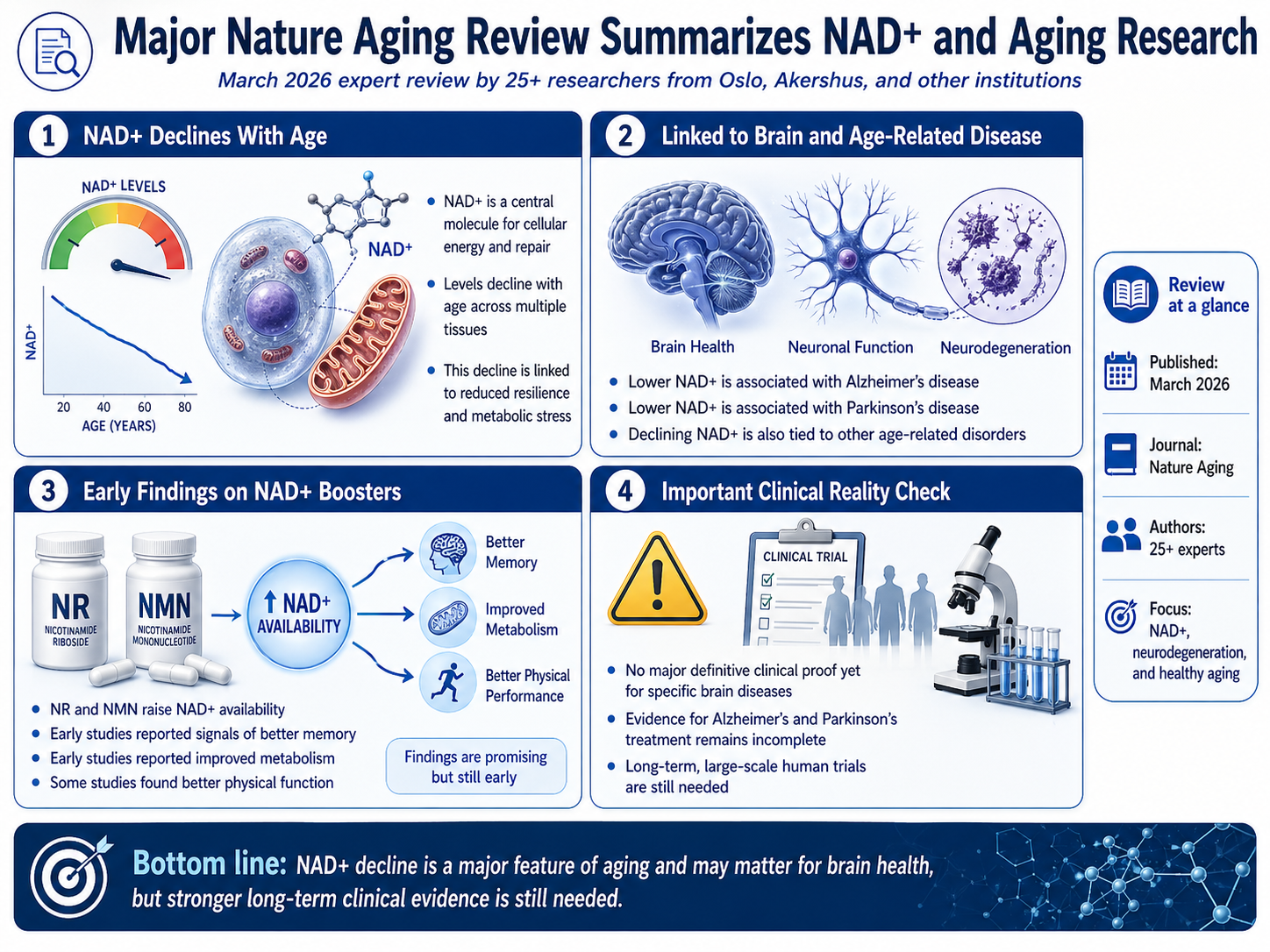
- Supplements like NMN and NR that raise NAD+, which supports DNA repair enzymes.
- Antioxidant supplements to reduce free radicals.
- Drugs that strengthen repair proteins like PARP.
According to the new approaches: modulate the response and the epigenome
The new evidence points to other directions:
- Modulating the inflammatory response to damage: The cGAS study suggests that instead of trying to fix every DNA defect, one might be able to calm the excessive immune response to it, without compromising the body's defense capabilities.
- Partial Yamanaka factors (partial reprogramming), controlled expression of OSK that partially resets the epigenome without turning the cell into a stem cell. Companies like Altos Labs (which raised about $3 billion in 2022) and NewLimit are working on this.
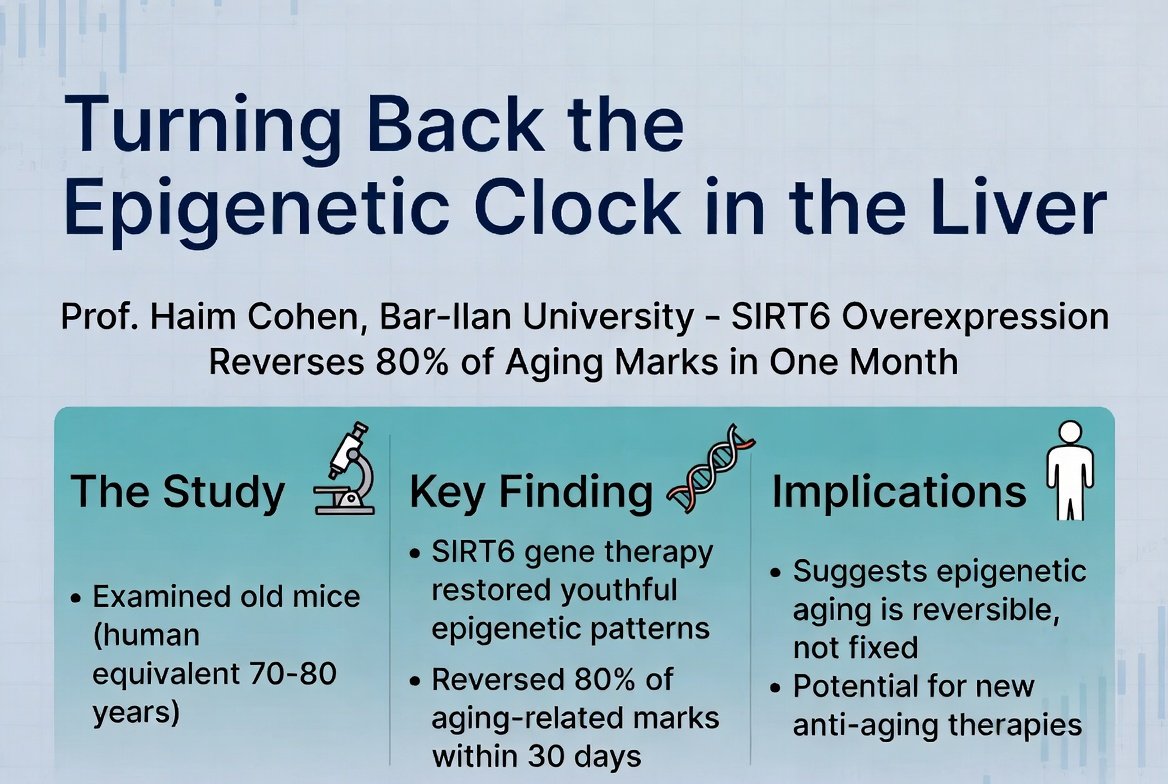
- SIRT1 and SIRT6 activators, sirtuins that help organize and preserve the epigenome (resveratrol, pterostilbene, and others).
- Restoring the circadian rhythm, the biological clock influences the epigenetic program: quality sleep, fasting, and morning light exposure.
Important to know: these are not necessarily contradictory
The paradigms are not necessarily mutually exclusive. DNA damage, inflammation, and epigenetic disruption likely feed each other in a cycle: damage triggers repair and an immune response, these disrupt the epigenome, and a disrupted epigenome weakens repair, and so on. The question is what the initiator is and what should be acted upon first. The new evidence shifts the spotlight from the damage itself to the response to it and to the epigenome.
Philosophical and therapeutic implications
If the new directions prove correct, there are profound implications:
Aging is partially reversible
If part of the problem is that cells have lost their functional identity, or that the body overreacts to damage, rather than the DNA being irreversibly destroyed, then it may be possible to restore some function. The experiments on mouse retinas where partial vision was restored, and on lowering cGAS which restored tissue function, suggest this is possible, at least in part.
Biological age vs. chronological age
Horvath clocks measure biological age based on DNA methylation patterns. They essentially measure epigenetic features, not the DNA sequence itself. The fact that they predict lifespan better than chronological age alone reinforces the importance of the epigenetic layer.
Caution: it is still early
Despite the excitement, it is important to note: no epigenetic drug has yet been approved for humans. OSK experiments in mice present risks: cancer, loss of cell identity, and death. Modulating cGAS also requires caution, to avoid harming the immune system. Years more research are needed before such treatments reach the clinic.
What can be done today?
While clinical research progresses, there are things that aging science supports and that are beneficial according to all approaches:
- Intermittent fasting or caloric restriction, activates sirtuins, supports the epigenome, and reduces cellular stress.
- Regular physical activity, especially high-intensity interval training (HIIT) and resistance training, strengthens mitochondria and preserves cell structure.
- Quality sleep of 7-9 hours, the circadian clock is an integral part of epigenome maintenance.
- Mediterranean or MIND diet, provides polyphenols that activate sirtuins.
- NMN or NR (500-1000 mg per day), raises NAD+. Costs about 200-400 shekels per month. Evidence in humans is still limited but promising.
- Reducing chronic stress, stress raises cortisol and increases inflammation. Meditation, yoga, or time in nature.
- Biological age testing, companies like TruDiagnostic and Elysium offer methylation tests for about 1,000-2,000 shekels, for monitoring purposes.
The broader perspective
The story of aging is a beautiful example of how science really works. An old theory does not fall all at once; it erodes, is pushed to the margins, and is finally updated only when evidence accumulates and a better explanation emerges. DNA damage is not out of the equation; it is simply probably not the only story or the main one.
It is also a lesson in epistemic humility: it is possible that even the new approaches will be updated in 20 years. Perhaps it will turn out that mitochondria are the central engine, or the microbiome, or something we haven't thought of yet. Science, when it works well, is a self-correcting system.
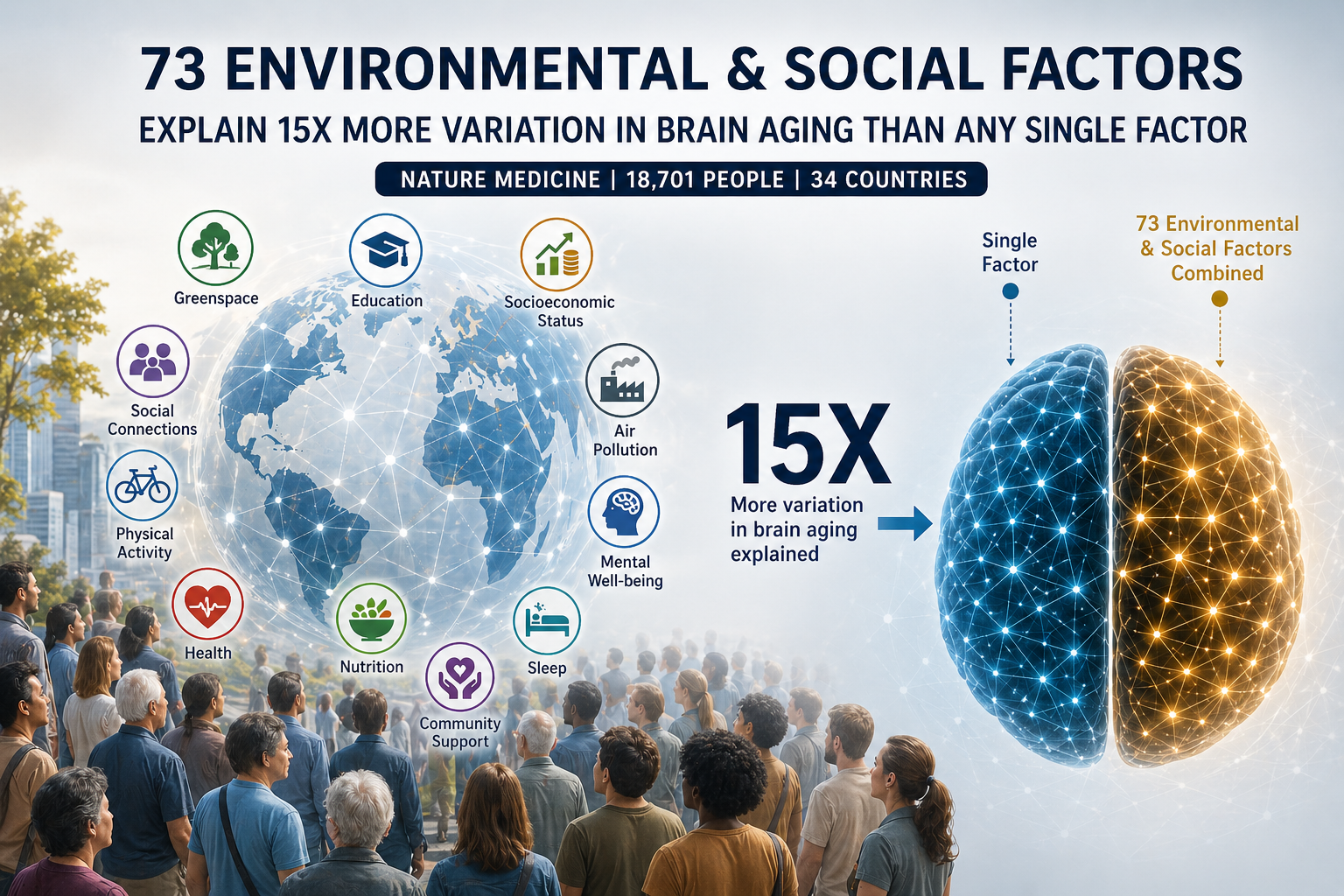
Meanwhile, the practical insight: don't bet on just one theory. A lifestyle that supports DNA repair, inflammation regulation, the epigenome, telomeres, and mitochondria is a sensible bet in a world of scientific uncertainty. Diet, activity, sleep, and social connections, the four pillars that hold them all.
In the end, the important question is not just which theory wins, but how to live long and well even while science is still developing. And that we have known for a long time: move, eat right, sleep enough, and love. The rest of the details, one molecule or another, are important but not dramatic. Paradigms update, the foundations remain.
References:
Genes & Development - Bergman, Harel et al., 2026: A dual role for cGAS in shaping cellular and organismal responses to genomic instability
SciTechDaily, 2026 (science news site): New Discovery Challenges Decades-Old Theory of DNA Damage and Aging
Cell - Yang, Sinclair et al., 2023: Loss of Epigenetic Information as a Cause of Mammalian Aging
Nature - Lu et al., 2020: Reprogramming to recover youthful epigenetic information and restore vision

💬 Comments (0)
Be the first to comment on the article.