The global market for anti-aging supplements stands at over $200 billion per year. Bloggers, podcasts, and advertisements offer complex supplements at astronomical prices: NMN at $300 per month, resveratrol at two hundred shekels per bottle, injectable peptides costing thousands of shekels per month. But what do doctors actually recommend to their patients when they sit with them in the clinic and talk about healthy aging?
When examining the recommendations that repeatedly emerge from family doctors, geriatricians, and internists, you get a list that is the complete opposite of the anti-aging hype. A limited number of supplements only, most of them cheap, all well-studied, and each one addresses a specific deficiency or provides evidence-based benefit in the older population. It doesn't sound sexy, but it's what works in the clinic.
Why Doctors Differ from Bloggers
The gap between a clinician's supplement list and an anti-aging influencer's list stems from a fundamental difference in approach:
- Doctors operate on the principle of 'first, do no harm'. A supplement must prove benefit before it's worthwhile to recommend it.
- Doctors prioritize supplements that correct a measurable deficiency. If a blood test shows a low level, the supplement solves a real problem.
- Doctors consider interactions with medications. Most older patients take 3-5 prescription drugs.
- Doctors weigh cost versus benefit. A $15/month supplement with moderate evidence is preferable to a $150/month supplement with moderate evidence.
This is why the list below looks completely different from the average viral anti-aging list.
The Connection Between Nutritional Deficiencies and Accelerated Aging
Healthy aging is not just about exotic molecules. Routine nutritional deficiencies are common in a significant portion of the population over 60. Blood tests in the United States, Europe, and Israel show high rates of:
- Vitamin D deficiency (40-60% of the adult population).
- Vitamin B12 deficiency (15-25% over age 65, increasing with the use of metformin and proton pump inhibitors).
- Low Omega 3 intake (significantly lower than what was tested in large studies).
- Low magnesium intake (about 70% of the population does not reach the RDA).
- Protein and creatine deficiency in older adults, a major cause of sarcopenia.
Correcting these deficiencies slightly improves all body systems simultaneously: brain, muscles, immune system, bones, and blood vessels. It's not revolutionary anti-aging, it's just refilling reservoirs that stop wear and tear.
The 9 Supplements Doctors Recommend
1. Vitamin D3 (1000-2000 IU per day)
The most common deficiency in the older population. In observational studies, low levels are linked to an increased risk of mortality, hip fractures, and cognitive decline and dementia (observational link, not necessarily causal). Doctors recommend a blood test (25-OH Vitamin D) before starting. Target: a level of 30-50 nanograms per milliliter. Contraindications: hypercalcemia, active kidney stones, sarcoidosis.
2. Vitamin B12 (500-1000 micrograms per day)
With age, the ability to absorb protein-bound B12 from food decreases due to reduced stomach acidity and the high prevalence of atrophic gastritis (absorption of crystalline B12 from supplements and fortified foods does not decrease with age). B12 deficiency causes fatigue, memory problems, tingling in hands and feet, and anemia. Anyone taking metformin, proton pump inhibitors (like omeprazole), or H2 blockers (like famotidine) long-term is at increased risk. Doctors recommend the methylcobalamin or cyanocobalamin form, absorption is identical. Safe even at high doses, no documented toxicity.
3. Omega 3 (1-2 grams EPA+DHA per day)
The strongest evidence for cardiovascular benefit. Important to be precise: The VITAL study did not show a significant reduction in the primary composite cardiac event for a standard fish oil dose (1 gram per day), although a secondary reduction in heart attacks was found. The impressive reduction of about 25% in cardiac events was found in the REDUCE-IT study, but that was a prescription formulation of icosapent ethyl at a high dose (4 grams per day) in patients on statins with high triglycerides, not a regular over-the-counter Omega 3 supplement. However, low Omega 3 intake is common, and correcting a nutritional deficiency is a reasonable goal. Source: fish oil from krill, sardines, or anchovies. If you are vegetarian, algae is an alternative source. Contraindications: regular use of aspirin or anticoagulants will require medical supervision.
4. Magnesium (300-400 mg per day)
About 70% of adults do not consume the minimum RDA. Magnesium participates in over 300 enzymatic reactions in the body: energy production, heart health, sleep quality, nerve function. Recommended forms: magnesium glycinate or magnesium L-threonate for cognitive benefits. Avoid magnesium oxide, low absorption and common diarrhea. Contraindications: kidney failure, intestinal blockages.
5. Creatine Monohydrate (3-5 grams per day)
The new supplement that has joined the classic list. Decades of research in athletes, and recently also in older adults, show real benefit: combined with strength training, creatine adds an average of about 1.4 kg of lean body mass and improves muscle strength in older adults, and a moderate but significant benefit for memory in older adults has also been found. Especially important for vegans and people over 50 who do strength training. Creatine is one of the cheapest and most evidence-based supplements available. Contraindications: kidney disease requires medical consultation.
6. Calcium with Vitamin K2 (1000 mg calcium + 100 mcg K2)
Calcium alone is problematic, studies show it may calcify in blood vessels. Adding vitamin K2 (mk-7) directs calcium to bones instead of arteries, through the activation of K-dependent proteins like matrix-Gla-protein (MGP) and osteocalcin. The recommendation is mainly for women during and after menopause, and for men over 70. Important to check if you are taking anticoagulant medications (Warfarin), K2 can interfere with them.
7. Targeted Strain Probiotics (10-50 billion CFU)
Not all probiotics are the same. Doctors recommend specific strains with evidence, mainly Lactobacillus rhamnosus GG, Bifidobacterium longum BB536, and Saccharomyces boulardii. Proven benefit: improved digestion, strengthened immune system, and improved mood via the gut-brain axis. A daily supplement after antibiotics is almost mandatory. (For preventing recurrent urinary tract infections in women, other specific strains have been studied, mainly L. rhamnosus GR-1 and L. reuteri RC-14, not the strains above.) Contraindications: severe immunosuppression, recent gastrointestinal surgeries.
8. Coenzyme Q10 (100-200 mg per day)
Especially recommended for those taking statins, cholesterol-lowering drugs that are known to reduce bodily CoQ10 by up to 40%. This decrease is linked to muscle pain in some statin patients. Regarding CoQ10 supplementation for muscle pain, the evidence is mixed: early meta-analyses found no significant benefit, and a recent meta-analysis found a moderate but significant reduction in statin-associated muscle pain. The ubiquinol form is better absorbed than ubiquinone in people over 50. Relatively cheap, no significant side effects.
9. Dietary Fiber (5-10 grams supplement per day)
The vast majority of adults do not reach the recommended 25-30 grams of fiber per day. A fiber supplement, mainly psyllium husk or inulin, reduces LDL cholesterol by 7-10%, balances blood sugar, and improves gut microbiome diversity. Fiber is also considered one of the strongest factors for longevity among 'Blue Zone' populations. Important to drink plenty of water, otherwise it will cause constipation.
What's Not on the List and Why
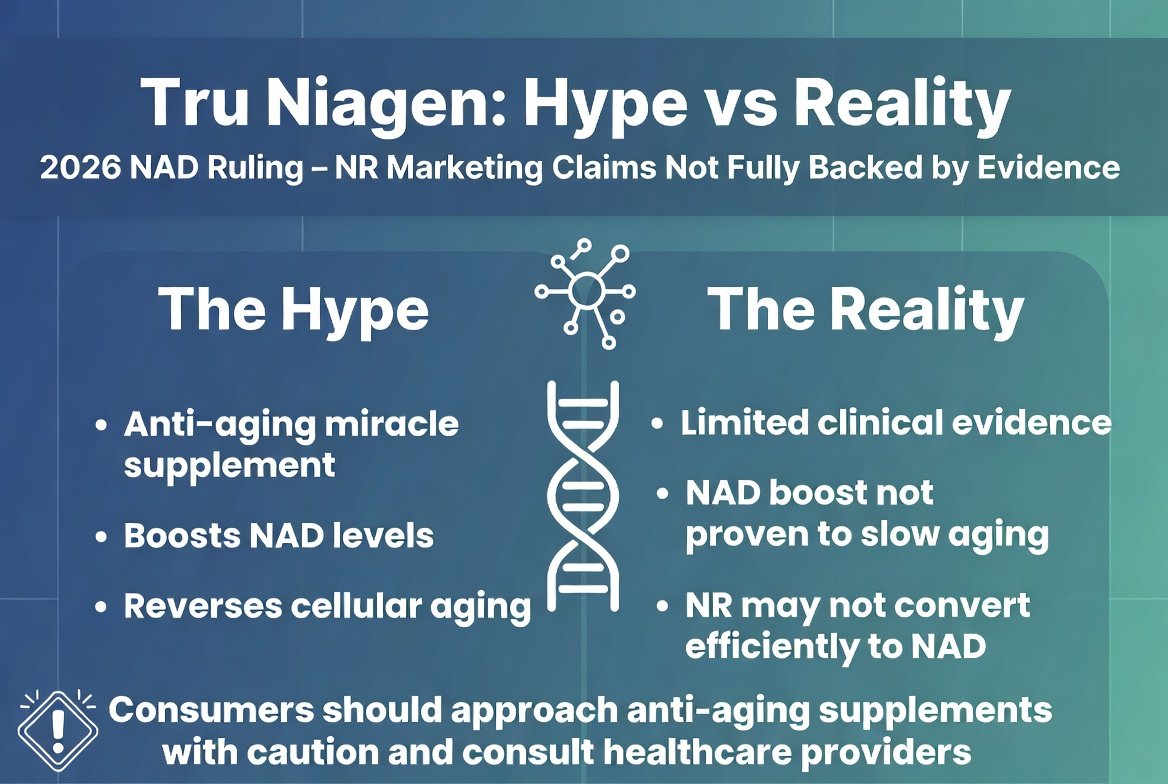
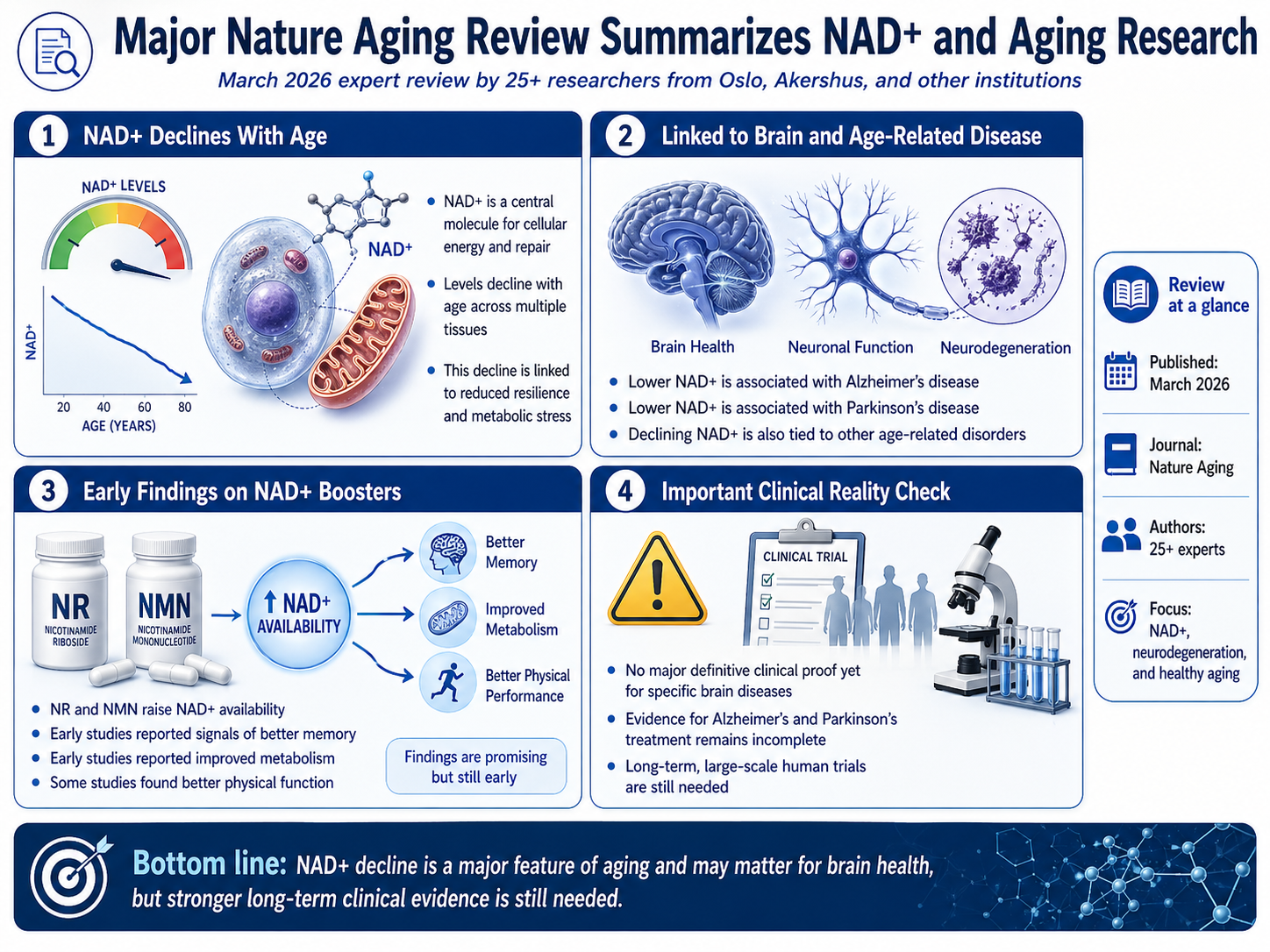
What's not on the list tells the story just as much: no NMN, no NR, no resveratrol, no off-label metformin, no rapamycin, no peptides. The reason? Despite the hype and promises, there is not enough human evidence to justify a blanket recommendation.
NMN, as we reviewed in a separate article, is under new scrutiny due to a possible link to cancer acceleration. Resveratrol has shown conflicting results in large studies. Rapamycin is an immunosuppressive drug, off-label use requires close medical supervision. The list of 9 is the conservative consensus, what a responsible doctor would recommend in clinical reality, as opposed to what an influencer would recommend on YouTube.
How to Build a Personal Supplement Plan
- Start with blood tests. Vitamin D, B12, ferritin (iron), TSH (thyroid), hemoglobin, albumin. These tests reveal routine deficiencies that personalize identification.
- Prioritize food before supplements. Fatty fish twice a week provides Omega 3. Dark leafy greens provide magnesium and calcium. Whole eggs provide B12, protein, and choline. A supplement is a complement, not a substitute.
- Introduce one supplement at a time. Start with the most important based on tests (usually D and B12), and add gradually. This way you can identify personal reactions.
- Check interactions with medications. With a pharmacy or pharmacist, before you start. K2 + Warfarin, magnesium + antibiotics, Omega 3 + anticoagulants, all require caution.
- Re-test after 3 months. If levels have risen and there is no subjective improvement, perhaps the problem is not a deficiency. If there is improvement, continue.
The Broader Perspective
The list of 9 reflects a fundamental principle that cannot be bypassed: healthy longevity is not the result of a single exotic molecule. It is the result of thousands of small daily decisions: getting enough sleep, strength training, eating quality protein, maintaining social connections, managing stress, and filling routine nutritional deficiencies.
Expensive anti-aging supplements promise a shortcut, but research shows there isn't one. 9 simple, evidence-based, and relatively cheap supplements provide more benefit than 90% of the supplements on the anti-aging market. The difference between the real clinic and the viral blog is not just a matter of supplements, it's a matter of approach to evidence.
Note: This list is based on clinical consensus and research evidence regarding healthy aging, and does not constitute personal medical advice. Consult a doctor or pharmacist before starting a supplement, especially if you are taking prescription medications.



💬 Comments (0)
Be the first to comment on the article.