If physical activity were a drug, it would be among the most powerful anti-aging medications. It improves heart, brain, metabolism, and mood. And now, evidence is accumulating at the most basic cellular level: Regular exercise helps maintain your telomere length. A meta-analysis published in Frontiers in Physiology in June 2025 (Sun et al.) compiled 16 randomized controlled trials (RCTs) with 1,908 participants and reached a cautious but consistent conclusion: Regular exercise preserves telomere length and increases telomerase activity, compared to the expected attrition in inactive individuals.
The Connection Between Exercise and Telomeres: Background
For years, it was hypothesized that sports help telomeres. One observation that sparks the imagination comes from an observational study by Denham et al. from 2013 published in PLoS One: A comparison between 67 ultra-marathon runners and 56 healthy men of the same age found that endurance runners had telomeres approximately 11% longer. The researchers translated this gap into a difference of about 16 years in cellular "biological age". It is important to emphasize: This was a cross-sectional observational correlation, not a controlled experiment or proof of causality. Genetics, diet, and accompanying lifestyle may also contribute to the picture. However, this observation spurred a decade of further research, part of which is summarized in the new meta-analysis.
The Analysis: Summary of 16 Controlled Studies
The research team from Southwest University in China screened international databases up to February 2025 and included only randomized controlled trials that met the criteria. In total, 16 RCTs with 1,908 participants were included. The studies examined two main measures: telomere length and telomerase enzyme activity, and compared different types of exercise, primarily aerobic, resistance, and high-intensity interval training (HIIT).
Main Findings
Two prominent results emerged from the pooled analysis:
- Preservation of telomere length: Exercise was found to be associated with significant preservation of telomere length compared to control groups (standardized mean difference, SMD, of approximately 0.59). That is, in exercisers, telomeres were better maintained than in those who did not exercise.
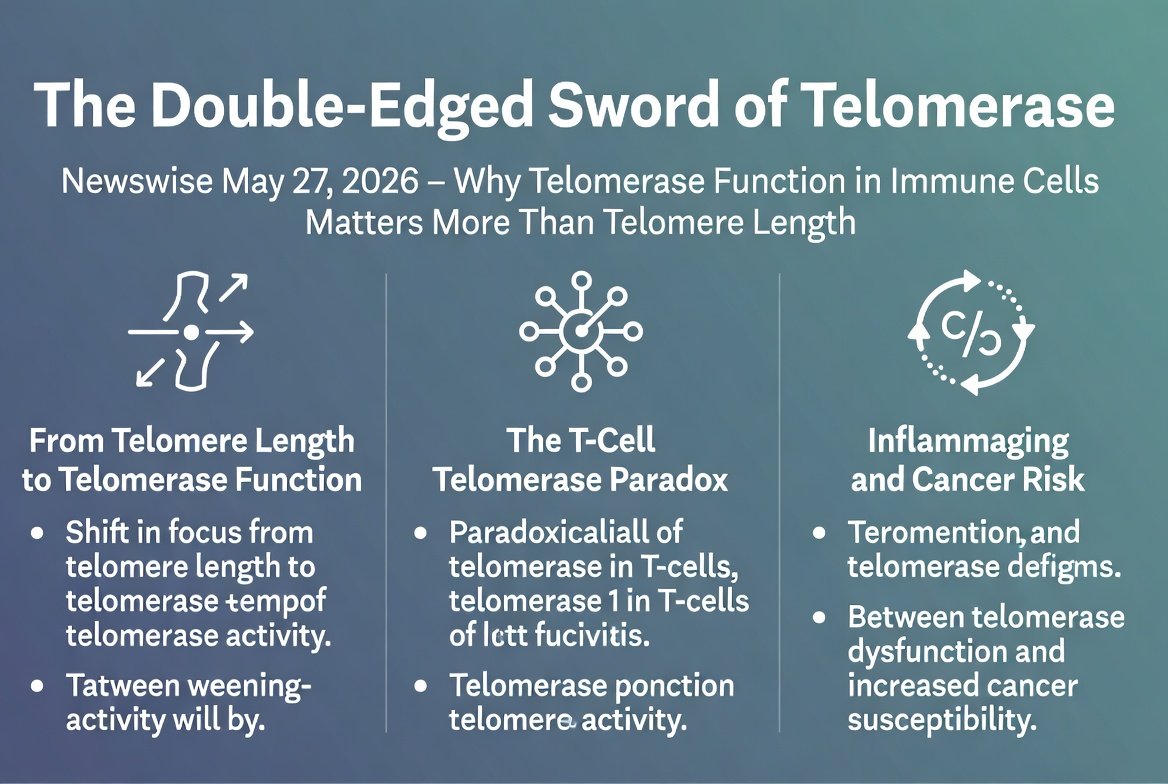
- Increase in telomerase activity: Exercise significantly increased telomerase activity (SMD of approximately 0.35), the enzyme that maintains chromosome ends.
This is the essential difference to understand: The main effect is preservation, not aggressive elongation. Our telomeres shorten with age. Regular exercise slows this process and helps maintain length, but does not necessarily "lengthen" them beyond the starting point.
Aerobic Exercise
Among exercise types, aerobic exercise (brisk walking, running, cycling, swimming) showed the most consistent effect on increasing telomerase activity (SMD of approximately 0.33, statistically significant). This is the type with the strongest evidence base in the meta-analysis.
Resistance Training
- Resistance training (weights, bodyweight exercises) showed a positive but non-significant trend for telomerase activity (SMD of approximately 0.16, not significant).
- It is important to remember: Even if the effect on telomeres is less clear, resistance training is essential for muscle, bone, and metabolism, and remains a central part of any healthy program.
Interval Training (HIIT)
- Evidence for HIIT is very limited: A single study suggested it might help preserve telomere length.
- This is a promising but not established result: More controlled studies are needed before it can be recommended as a preferred tool for telomeres.
Methodological note: The subgroups for resistance training and HIIT were based on a very small number of studies, so strong conclusions should not be drawn from them. The idea that "combination is best" is also not directly supported by the data in this meta-analysis.
Sex Differences
A subgroup analysis by sex indicated a trend towards greater telomere preservation in women (SMD of approximately 0.48), but the finding was only borderline significant and requires further confirmation. There is no definitive conclusion here, only a direction for future investigation.
How Does It Work? Possible Mechanisms
The researchers propose several plausible mechanisms through which exercise might affect telomeres. These are biologically reasoned explanations, not all necessarily fully proven in humans:
1. Activation of Telomerase
Exercise may encourage the expression of the TERT gene, which encodes a key component of the telomerase enzyme. An increase in telomerase activity can help maintain chromosome ends.
2. Reduction of Oxidative Stress
This sounds paradoxical: A single workout creates free radicals. But regular exercise over time may strengthen the body's antioxidant defense system, so the overall balance may result in lower oxidative stress. Oxidative stress is considered one of the causes of telomere attrition.
3. Reduction of Inflammation
Regular exercise is linked to a reduction in chronic systemic inflammation. Chronic inflammation is associated with telomere shortening, so reducing it may contribute to protection.
4. Improvement of Mitochondrial Health
Healthy mitochondria may produce less oxidative damage to DNA, which could slow telomere attrition over time.
What Is a Reasonable Protocol?
The meta-analysis points to aerobic exercise as having the strongest evidence base, but a balanced program is the sensible choice for overall health. A practical and safe approach:
- 3-4 aerobic sessions per week: 30-45 minutes, moderate intensity. Brisk walking, light jogging, cycling, swimming.
- 2 resistance training sessions per week: 30-45 minutes. Compound exercises like squats, deadlifts, rows, important for muscle and bone.
- Optional: Interval training: For those for whom it is suitable and safe, a short interval session can be incorporated once a week.
The general message aligns with broad physical activity recommendations: about 150 minutes of moderate aerobic activity per week, plus strength training. The exact protocol should be tailored individually, and especially if there is an existing medical condition, consult a doctor.
It Is Never Too Late to Start
One encouraging message: It is never too late to start moving. The body can respond to exercise at any age, and improvements in fitness, heart, and metabolism are well-documented even in people who start at an older age. Regarding telomeres specifically, it is important to maintain realistic expectations: The supporting evidence mainly points to slowing attrition and preservation, not "resetting" the cellular clock.
The Bottom Line
Physical activity is the cheapest and most accessible intervention for health and longevity. The 2025 meta-analysis adds a layer: Regular exercise, particularly aerobic exercise, is associated with maintaining telomere length and increasing telomerase activity at the cellular level, compared to attrition in inactive individuals. This is not a promise of eternal life, but another good reason to move regularly. If you want to maintain health over the years, the message is simple: Start today, and continue tomorrow and in 30 years.


💬 Comments (0)
Be the first to comment on the article.