"Discover your true biological age from home!" That's the pitch from companies selling home test kits. With a saliva sample sent by mail and a payment of $100 to $500, you're supposed to receive a number within two weeks that claims to describe how much your body has aged. But does it really work? Dr. Mary Armanios, an oncologist and telomere researcher at the Johns Hopkins School of Medicine, is investigating exactly this question, and her answers are troubling. More importantly, even before discussing accuracy, you need to understand that some of the most talked-about companies in the field don't measure telomeres at all.
What Are Telomeres and Why Is the Test Intriguing?
Telomeres are repetitive DNA sequences that cap and protect the ends of chromosomes, similar to the plastic tips of shoelaces. They shorten slightly with each cell division, which is why many see them as a "biological clock." In large populations, a statistical link has been found between telomere length and:
- Risk of all-cause mortality
- Risk of certain diseases
- Rate of biological aging at the group level
- Response to chronic stress and lifestyle
Marketing takes this group-level correlation and turns it into a personal promise. That's where the problem begins. A correlation that holds true for thousands of people together is not strong enough to accurately predict the biological age of a single individual.
Common Mistake: Not Every "Biological Age Test" Is a Telomere Test
This is one of the points that marketing blurs. Many companies appearing under the same "biological age test" banner use completely different technologies, and only some measure telomeres at all.
- Real telomere tests measure the length of the telomeres themselves. The most well-known consumer example was TeloYears from Telomere Diagnostics, which used the qPCR method. The company later shifted its focus to other areas, and this consumer test is no longer available as it once was.
- Epigenetic methylation tests do not measure telomeres at all. They examine chemical markers on the DNA, whose distribution pattern changes with age, and calculate an "epigenetic clock" from them. TruDiagnostic (TruAge test) and Elysium (Index test) belong to this category. TruAge scans hundreds of thousands of methylation sites (CpG), and Elysium's Index uses a dedicated chip to read methylation patterns. Both are epigenetic tests, not telomere tests.
The implication is simple: if someone tells you that "TruDiagnostic measures your telomeres," that's incorrect. It measures methylation. That's a completely different technology, with its own assumptions and limitations.
How Are Telomeres Actually Measured?
In the research and medical world, there are several main methods for measuring telomere length, and the gap in their accuracy is enormous.
1. qPCR, the Cheap Method Underpinning Most of the Home Market
This is the most common method in home tests. A DNA sample is amplified in a chemical reaction, and telomere length is estimated relative to a reference sequence.
- Advantage: Cheap and fast, making it suitable for the consumer model
- Major Disadvantage: High variability. According to Dr. Armanios and other research groups, a qPCR test can yield results that differ by up to 20%, depending on the day the test was performed and the lab that conducted it. The same sample itself could return a different number a week later.
2. Flow-FISH, the More Accurate Clinical Method
This is the method used by Dr. Armanios's research group and used in medical diagnosis. It combines flow cytometry with fluorescent labeling of telomeres (Fluorescence In Situ Hybridization).
- Advantage: Much higher accuracy and reproducibility. Its variability rate is around 5%, compared to about 20% for qPCR. Studies have directly compared the two and found flow-FISH to be more accurate, sensitive, and specific for measuring telomere length in blood cells.
- Disadvantage: More expensive and complex, performed in a specialized clinical lab, not as a home kit.
3. Long-Read Telomere Sequencing, an Emerging Research Method
The new direction in the field is dedicated long-read sequencing of telomeres, for example, the Telo-seq method developed using Oxford Nanopore technology and the Salk Institute. This method allows measuring the telomere length of each chromosome arm individually.
- Advantage: Very high resolution and the ability to distinguish between chromosomes
- Disadvantage: This is currently a research method, not a consumer product you can buy at a fixed price.
What Does the Johns Hopkins Researcher Say?
Dr. Mary Armanios is not opposed to telomere science; she leads it. But regarding home tests, her stance is unequivocal: They are not a reliable marker of individual aging.
She explains that there is a very wide range of "normal" telomere length, and commercial companies tend to label a customer as "older than their age" whenever their telomeres are even slightly shorter than the median, even though cells do not stop dividing or die due to telomere shortening unless the ends become very short. Within the normal range, Armanios emphasizes, you simply cannot determine a person's exact biological age, and telomeres are not a good measure of "youthfulness."
Her main warning is about the potential harm: "Tests of this kind can cause harm when they suggest something is wrong when everything is fine." A frightening result could send a healthy person on a journey of anxiety and unnecessary tests, or alternatively, give a false sense of security.
Dangerous Misconception: "Long Is Always Good"
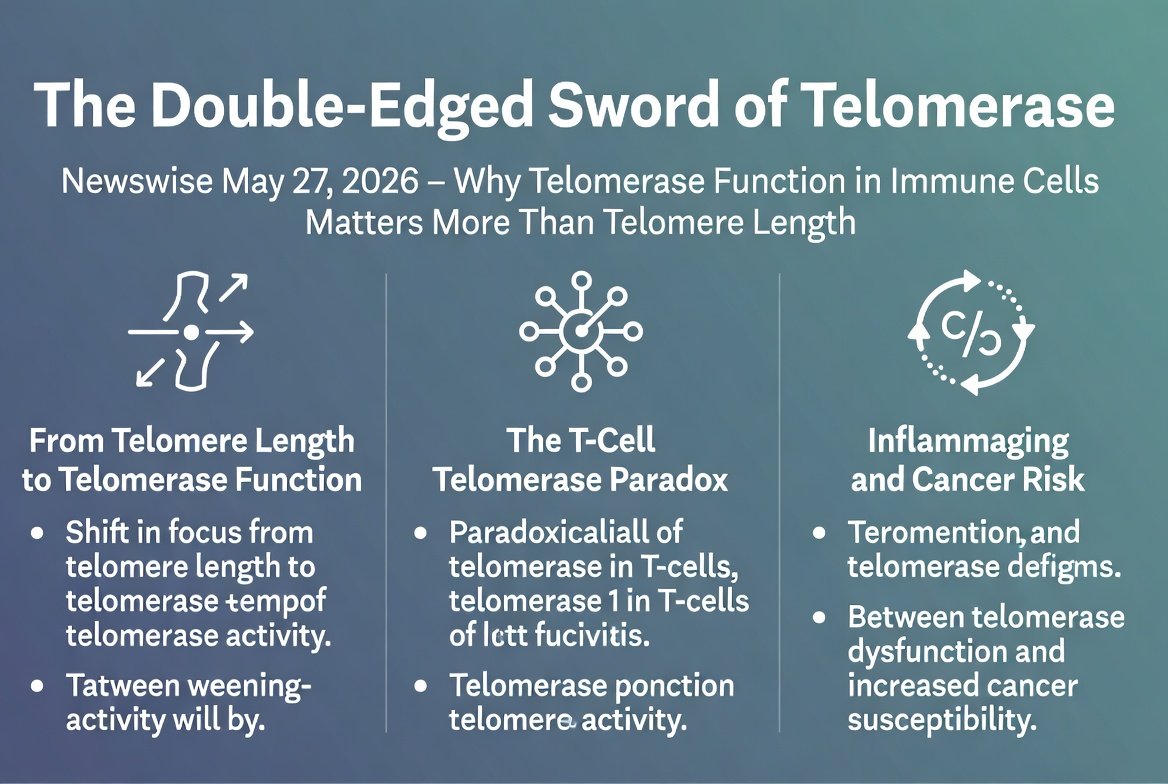
The underlying assumption of the marketing is that long telomeres are a good sign and short ones are bad. Reality is more complex. Studies, including work by Armanios's group, link especially long telomeres to an increased risk of cancer, particularly cancers of the lymphatic blood system. Cells with very long telomeres remain "young" for too long, continue to divide, and accumulate mutations that the normal telomere shortening mechanism would have restrained. In other words, a result of "telomeres longer than average" is not automatically a reason for optimism.
So Why Is the Variability So High in Home Tests?
Beyond the method itself, several factors inflate the inaccuracy of a home-based qPCR test:
- DNA Extraction Method: Different extraction kits yield different results.
- Sample Quality: A saliva sample sent by mail is exposed to heat and delay, which can damage the DNA.
- Lab Conditions: Small differences in the process translate into large variability in the result.
- Calculation Algorithm: Each company has its own formula, and there is no uniform standard.
All these contribute to the same variability of up to 20% that Armanios points out.
How to Evaluate a Result Anyway, If You Decide to Get Tested?
Suppose you've already taken a test. Some rules of thumb:
First, look at the stated variability. If the method suffers from 20% variability, a result that translates to "you are 53 instead of 50" is not significant at all; it's within the measurement noise.
Second, compare to yourself over time, not to others. A single test says little. A trend over several years is more reliable than a one-time number, but this also depends on the stability of the method.
Third, don't rely on a single metric. A more reliable picture of health comes from combining tools:
- Epigenetic clocks like GrimAge or DunedinPACE (and this, by the way, is what TruDiagnostic and Elysium actually measure)
- Routine blood tests: glucose, cholesterol, CRP, albumin
- Functional measures: grip strength, walking speed
What to Take Away from All This?
- Don't buy a home telomere test to find out "how much you've aged." The common method (qPCR) is simply not accurate enough at the individual level.
- Know what you're buying. If the product is based on methylation (like TruDiagnostic or Elysium), it's an epigenetic test, not a telomere test. Don't confuse the two.
- If there is a real medical suspicion of a telomere syndrome (e.g., certain hereditary diseases), measurement is done using an accurate clinical method like flow-FISH, under a doctor's supervision, not with a saliva kit sent by mail.
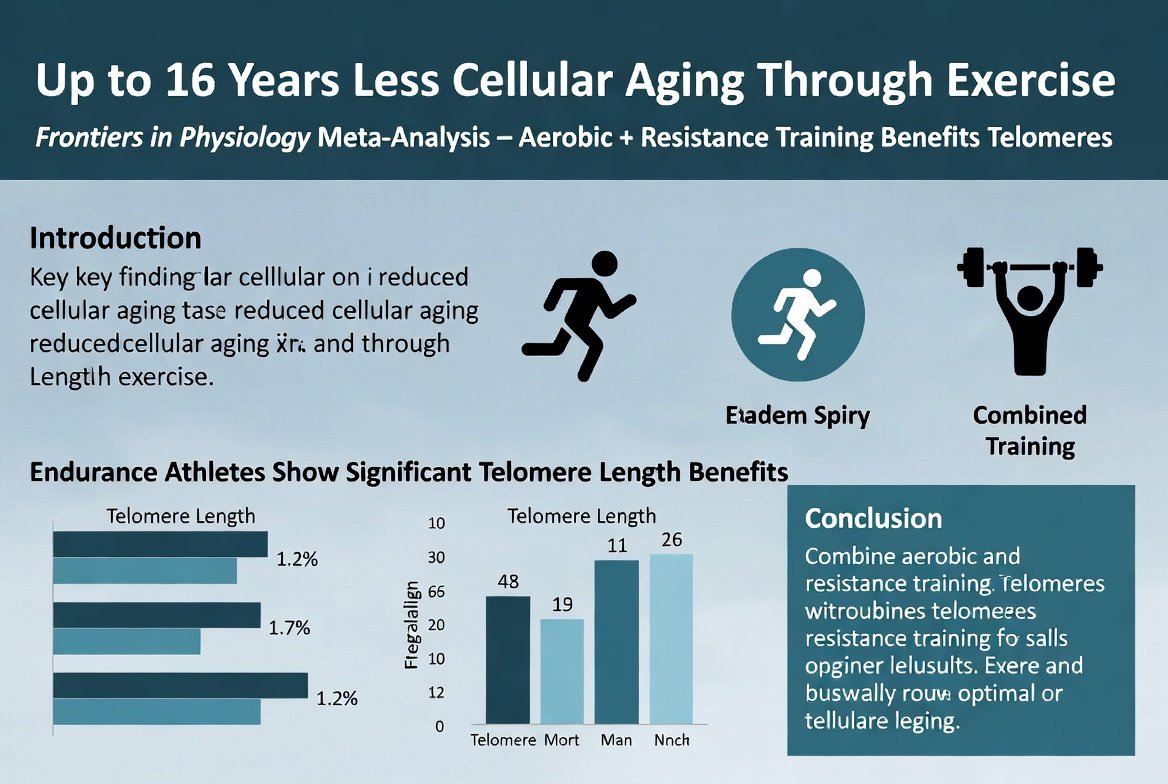
- Act as if your telomeres need protection, regardless of the test. Sleep, physical activity, stress reduction, not smoking, and good nutrition are recommendations that apply to everyone.
The Bottom Line
At-home telomere tests are an intriguing idea with a deep accuracy problem. As Dr. Mary Armanios from Johns Hopkins explains, the common home method is not a reliable marker of aging, it can scare healthy people, and long telomeres are not necessarily good news. Some of the most talked-about companies in the field don't measure telomeres at all, but methylation. The most powerful tool against aging is not a number you bought by mail, but the habits you build every day.
References:
Science News: At-home telomere testing is not a reliable marker of aging, researcher says (citing Dr. Mary Armanios, Johns Hopkins)
Johns Hopkins Medicine: Inherited Long Telomeres May Drive Broad Risk for Lymphoid Cancers


💬 Comments (0)
Be the first to comment on the article.