For years, when we talked about telomeres, the story was almost always the same: at the end of each chromosome, there is a protective 'cap' that shortens slightly with every cell division, and when it becomes too short, the cell stops dividing or dies. Telomere length became a kind of 'biological clock,' and many biological age tests measure it. But this perspective, which focuses only on length, misses an important part of the picture.
A new study reported by Newswise on May 27, 2026, shifts the spotlight from the telomere itself to the enzyme that builds it: telomerase. And the surprising finding is that this enzyme plays a protective role specifically in immune system cells. When telomerase functions properly in immune cells, they remain active, alert, and functional. When it declines, the immune system deteriorates and begins to produce silent chronic inflammation that accelerates the major chronic diseases of old age. This is not another article about 'how to lengthen telomeres,' but a deeper explanation of why the immune system ages, and what that does to the rest of the body.
What is Telomerase and How is it Different from Telomeres?
It is important to distinguish between the two concepts, because this is where the most confusion occurs:
- Telomere is the physical structure: a repetitive DNA sequence (TTAGGG) at the end of a chromosome that protects it from erosion and from 'sticking' to other chromosomes.
- Telomerase is the enzyme: a molecule that can add back the sequences lost during division, thereby restoring telomere length.
- In most adult body cells, telomerase is almost turned off. Therefore, telomeres gradually shorten throughout life.
- But in certain cell groups, such as stem cells and immune system cells, telomerase remains active in a controlled manner, because these cells must divide repeatedly throughout life.
This difference is the heart of the matter. A skin cell or liver cell divides a limited number of times. But an immune cell must multiply rapidly every time you are exposed to an infection, and then remain available for the next time. Without telomerase, immune cells would 'wear out' after just a few infections.
The Connection to the Immune System: A Surprising Mechanism
To understand why immune cells are particularly dependent on telomerase, you need to understand how they work. When a pathogen enters the body, T cells that recognize it undergo clonal expansion: a single cell can divide dozens of times in a row and produce millions of copies within days. Each such division shortens the telomeres.
This is where telomerase comes in. In activated T cells, telomerase is 'turned on' temporarily and restores the shortened telomeres, allowing the cells to continue dividing without collapsing. This is an elegant mechanism: the enzyme is activated at exactly the right time, enabling the immune system to respond powerfully to an infection, and then return to a resting state with 'memory cells' ready for the next time.
But with age, the ability of T cells to activate telomerase declines. The result is a cascade of events that directly leads to disease:
- T cells with overly short telomeres enter a state of cellular senescence; they live but stop dividing properly.
- Senescent T cells lose the ability to respond to new pathogens, hence the increased susceptibility of older adults to infections and less effective vaccines.
- Worse still: senescent T cells begin to secrete inflammatory molecules (such as IL-6 and TNF-alpha) chronically, even when there is no threat.
This last step is critical. It is what scientists call inflammaging, a combination of 'inflammation' and 'aging': low-grade chronic inflammation that accompanies aging and accelerates almost every disease of old age.
Current Evidence
Study 1: The New Report on Telomerase in Immune Cells (2026)
The study reported by Newswise on May 27, 2026, is at the center of the story. The researchers showed that normal telomerase activity in immune cells is directly linked to protection against chronic diseases. When enzyme activity in T cells is maintained, systemic inflammation levels remain low. When it is impaired, chronic inflammation rises, along with the risk of heart disease, type 2 diabetes, and systemic inflammation. The key innovation: the protection does not stem from 'average' telomere length in the body, but rather from the specific function of telomerase specifically in immune cells.
Study 2: Senescent T Cells and Inflammatory Cytokine Secretion
Previous work in the field, on which the new finding builds, found that T cells with shortened telomeres adopt an inflammatory secretion profile. Studies have shown that in adults over 65, a higher proportion of 'senescent' T cells in the blood predicts higher levels of inflammatory markers such as CRP and IL-6, and these in turn are linked to cardiovascular morbidity and early mortality.
Study 3: Telomerase Mutations and Disease at a Young Age
Evidence from the opposite side comes from rare syndromes. People with inherited mutations that impair telomerase (such as in Dyskeratosis Congenita) suffer from immune deficiency and bone marrow failure at a particularly young age, sometimes in their second or third decade of life. This is living human proof that without normal telomerase, the immune system collapses early.
Population Data
Large cohort studies have found a consistent link between short telomeres in white blood cells and an increased risk of disease. In some studies, people in the lowest quartile of telomere length in lymphocytes showed a 20-40% higher risk of coronary heart disease compared to the highest quartile, even after adjusting for age and smoking.
What is the Connection to Inflammaging and Major Diseases?
The chronic inflammation generated by aging immune cells is not a local problem. It spreads throughout the body via the bloodstream and fuels the three major chronic diseases of aging:
- Cardiovascular disease: Chronic inflammation accelerates the formation of atherosclerotic plaque in arteries. The IL-6 and TNF secreted by senescent T cells directly contribute to plaque instability.
- Type 2 diabetes: Systemic inflammation impairs insulin sensitivity. Inflammaging is one of the factors that explains why insulin resistance increases with age even in lean individuals.
- Dementia and neurodegenerative diseases: Chronic systemic inflammation is linked to neuroinflammation in the brain, which accelerates the accumulation of amyloid plaques and cognitive decline.
In other words: the decline of telomerase in immune cells is not just 'a problem of the immune system'. It is an open tap of inflammation that leaks into every system in the body. This is why understanding this mechanism is so important; it is a central hub from which seemingly unrelated diseases branch out.
Does This Mean We Should 'Take' Telomerase?
Here we need to stop and take a deep breath, because this is the point where many health articles fail. The temptation is clear: if the decline of telomerase causes all this harm, then why not simply boost telomerase? The answer is that boosting telomerase is a dangerous double-edged sword, and not for a theoretical reason.
The Problem: Cancer Got Here First
The main reason telomerase is turned off in most body cells is built-in protection against cancer. A cell whose telomeres shorten loses the ability to divide indefinitely, and this is a natural brake on cancerous growth. Indeed, over 85-90% of cancerous tumors reactivate telomerase to become 'immortal' and divide endlessly. In other words, the enzyme that the immune system needs to stay young is the same enzyme that cancer hijacks to thrive.
Why a 'Telomerase Pill' is Not a Solution
Systemic and blanket activation of telomerase throughout the body could remove one of the most important safety brakes against cancer. Any supplement or 'telomerase activator' that promises to lengthen telomeres in all cells indiscriminately should be met with extreme caution. The marketing promise ignores the deep biological reason why evolution 'chose' to turn off the enzyme.
The Real Scientific Direction
What this research offers is not 'take telomerase,' but understanding. The goal of researchers in the field is not to flood the body with telomerase, but targeted and temporary activation of it specifically in immune cells, in a way that restores function without opening the door to cancer. This is a delicate biological engineering challenge, and we are years away from it. Until then, any 'shortcut' approach is more dangerous than beneficial.
What to Take Away from the Research?
- Do not chase after 'telomerase activators' in supplements. Science still does not know how to activate telomerase safely and in a targeted manner, and marketing promises ignore the cancer risk. This is one of those areas where 'supplement' is not equivalent to 'safe.'
- Focus on reducing chronic inflammation through proven methods. If the real problem is inflammaging, you can attack it directly: a diet rich in omega-3s, reducing sugar and processed carbohydrates, and quality sleep lower systemic inflammatory markers.
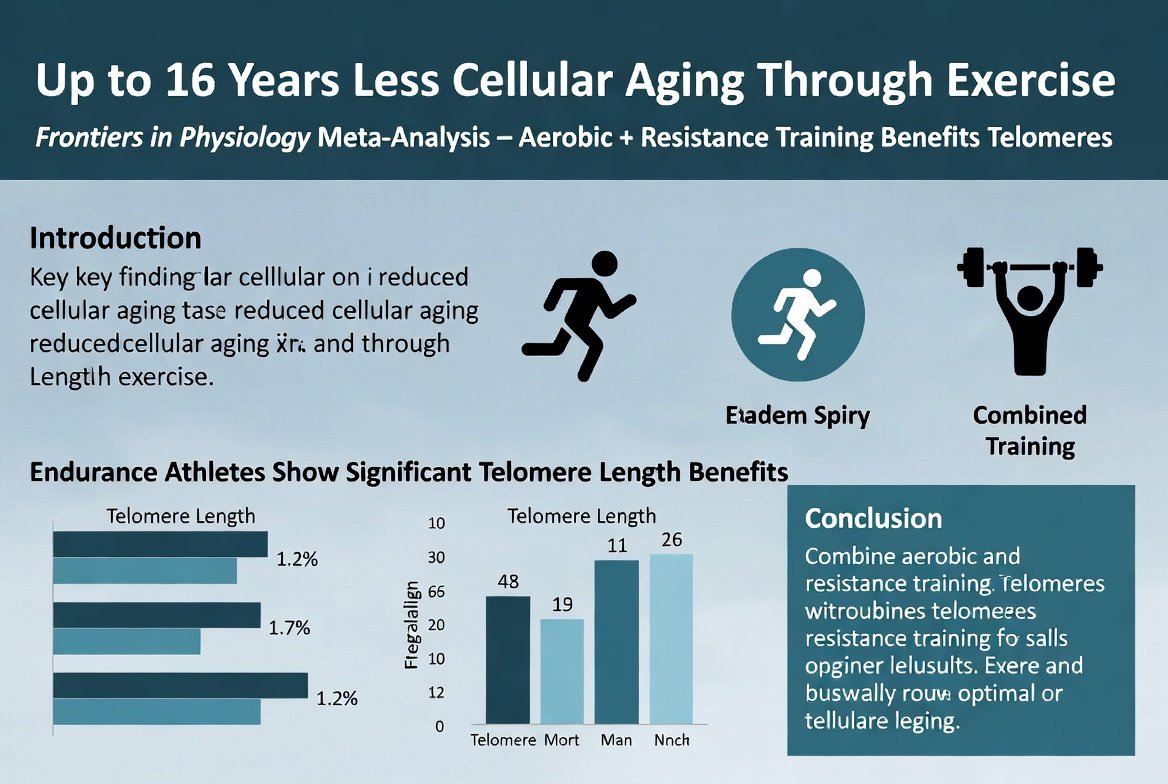
- Regular physical activity keeps immune cells young. Studies show that aerobic and resistance training are associated with longer telomeres in white blood cells and functionally 'younger' T cells, without any supplement.
- Maintain a healthy weight and metabolic health. Visceral fat tissue itself secretes inflammatory cytokines and accelerates inflammaging. Weight loss reduces inflammation.
- If there is concern about early or unusual immune deficiency, consult a doctor. Extreme immune decline at a young age may be a sign of rare telomerase syndromes, and this has diagnostic significance.
The Broader Perspective
The story of telomerase in immune cells is a perfect example of how aging is not one process, but a network of intertwined mechanisms. We have told you quite a bit about telomere length as a 'clock,' but this research reminds us that the clock is only part of the picture. The other part, perhaps the more important one, is function: not just how long the telomere is, but whether the system tasked with maintaining it is still working where it needs to.
The immune system is a central hub. When it ages, it not only protects us less against infections and cancer, but it itself becomes a source of inflammation that accelerates all other aging. This is why many researchers believe that 'rejuvenating' the immune system may be one of the most powerful levers for extending healthspan, more than any single supplement.
And finally, the sobering message: The same mechanism that keeps cells young is the same mechanism that cancer hijacks to become immortal. Aging, it turns out, is not a simple glitch that can be 'turned off.' It is sometimes an evolutionary compromise, a price we pay in exchange for protection against something worse. This understanding, not the search for shortcuts, is the responsible way forward.
References:
Newswise - New Study Reveals Role for Telomerase in Immune Cells Preventing Chronic Disease
💬 Comments (0)
Be the first to comment on the article.