While you are reading this article, there is a Greenland shark in the North Atlantic Ocean that was born before the United States was founded. It has seen humanity transition from sailing ships to rockets. It has seen two world wars. It sees you now (well, metaphorically). Its estimated age: about 392 years. And there is no need to exaggerate: in the animal kingdom, there are animals that live several times longer than humans. What is their secret? Research teams around the world are trying to understand, and they have intriguing theories that could also change our understanding of human aging.
Who are the longevity champions?
Greenland Shark - The Vertebrate Champion
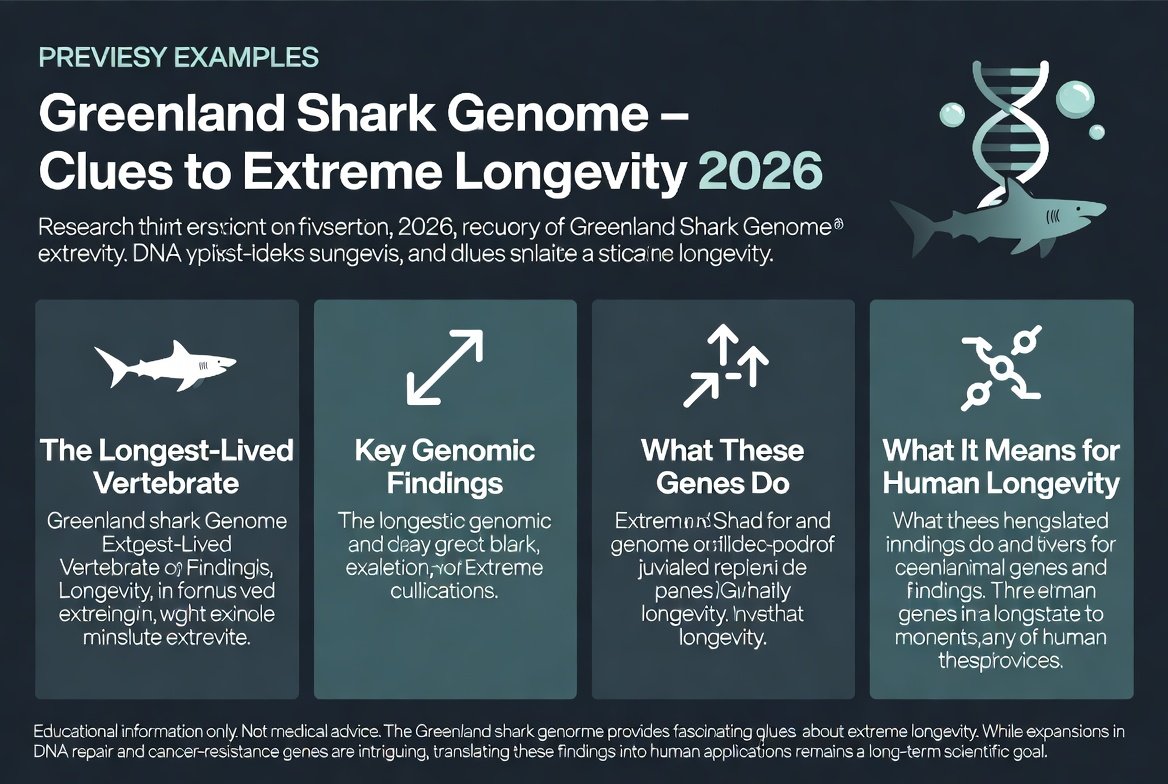
The Greenland shark is a large, slow fish that roams the very cold waters of the Arctic Ocean. In 2016, in a study published in the journal Science (Nielsen et al.), researchers estimated its age through radiocarbon dating of the eye lens nucleus. The largest individual (about 5 meters) was estimated to be 392 years old, with an uncertainty range between about 272 and 512 years. This makes it the longest-lived vertebrate known to science.
In other words, a Greenland shark caught today was already an old animal during the time of Napoleon.
Bowhead Whale - The Mammal Champion
Large whales generally tend to live long lives, but the bowhead whale beats them all. The oldest documented individual reached an age of about 211 years. It also lives in the icy waters of the Arctic, is also slow, and is also huge (up to about 100 tons). A bowhead whale calf born today could live until the 23rd century.
Ocean Quahog
But the absolute winner is not a vertebrate at all. It is a clam of the species Arctica islandica. In 2006, researchers from Bangor University in Wales dredged a single individual from the seabed off the coast of Iceland. Initially, in 2007, they reported its age as about 405 to 410 years based on counting growth rings in the shell. In 2013, using more precise measurement methods, they revised the estimate upward: 507 years. The clam, nicknamed "Ming" after the Chinese dynasty that ruled at the time of its birth, was therefore born around the year 1499. Columbus had reached America only 7 years earlier.
Naked Mole Rat - The Mammalian Anomaly
Back on land, there is a fascinating outlier: the naked mole rat. A small rodent the size of a finger. Most mammals of this size live 2-4 years. The naked mole rat lives 30+ years, 10 times longer than expected for its size. Additionally, it almost never develops cancer.
What do they all have in common?
Researchers have found surprising similarities in genome and physiology, but also important differences. Here is what aging science knows today:
1. Slow Metabolism and Cold Environment
The Greenland shark moves at a speed of only about 3 km/h. Its heart beats slowly and its metabolism crawls. The same is true for the bowhead whale. Slow life at low temperatures may contribute to less accumulated metabolic damage. Interestingly, research on the bowhead whale found that cooling human cells to a whale-like temperature (about 33 degrees Celsius) improved their DNA repair ability, likely by increasing levels of a protein called CIRBP.
2. Exceptional DNA Repair (Bowhead Whale)
The main secret of the bowhead whale is not killing damaged cells, but exceptionally precise repair of DNA damage. In its genome, the ERCC1 gene (a DNA repair enzyme) was identified as having undergone positive natural selection, and the PCNA gene was duplicated into additional copies. Additionally, a protein called CIRBP is expressed in whale cells at much higher levels than in other mammals, and a gene called RPA2 is also involved in the mechanism. The result: whale cells repair double-strand breaks in DNA more faithfully and accurately, accumulating fewer mutations over centuries.
3. Unique Anti-Cancer Mechanisms (And the Difference Between Whale and Elephant)
The theoretical risk of cancer increases with body size and lifespan. A whale with a thousand times more cells than a human, and a much greater lifespan, should be experiencing a cancer epidemic. But it does not. This is Peto's Paradox.
It is important to distinguish here between two completely different strategies that evolution has found:
- The bowhead whale solves the problem mainly through prevention: superior DNA repair and a low mutation rate, so fewer defects that could become cancer accumulate in the first place.
- The elephant, on the other hand, solves the same problem through elimination: the elephant has about 20 copies of the p53 gene ("guardian of the genome"), while humans have only one copy. This multiplicity makes elephant cells very sensitive to DNA damage, causing them to self-destruct quickly (apoptosis) as soon as a defect is detected. Thus, a potentially cancerous cell is eliminated before it becomes a tumor.
This is a beautiful example that longevity does not rely on a single mechanism: different animals have found different solutions to the same problem.
4. Tolerance to Oxidative Damage (Naked Mole Rat)
Here is the big surprise: contrary to intuition, the naked mole rat does not avoid oxidative stress. In fact, its cells suffer high oxidative damage from a young age, and its antioxidant systems are even weaker than those of a mouse. So how does it live so long? It tolerates the damage instead of avoiding it. This finding actually challenges the classic oxidative stress theory of aging. Researchers attribute its longevity to other mechanisms: mainly a unique high molecular weight hyaluronic acid (HMW-HA) that protects cells and prevents tumor development, as well as a particularly high-quality system for maintaining protein integrity (proteostasis).
5. DNA Repair and Chromatin Stability (Greenland Shark)
In the Greenland shark as well, genome sequencing (2024) indicated an expansion of gene families related to DNA repair, especially the repair of double-strand breaks. Additionally, unique changes were found in the histone protein H1.0 that may strengthen chromatin stability and reduce age-related genetic damage. So here too, the emphasis is on maintaining and repairing DNA, not on a miraculous telomerase mechanism.
Why can't we just copy them?
If there are genes that work in whales or elephants, why not transplant them into humans?
1. Complex System
These genes do not work alone. They operate in the context of thousands of other genes. In whales or elephants, they are all adapted to each other over a long evolution. In humans, transplanting a single gene could break the balance.
2. Possible Side Effects
For example, uncontrolled enhancement of p53 sensitivity in humans could cause too many healthy cells to self-destruct, which might actually accelerate aging processes or damage tissues. The delicate balance that works in the elephant is not guaranteed in us.
3. Long Evolution
Whales, elephants, and Greenland sharks developed their adaptations over millions of years. Human evolution took different paths.
But there are practical lessons
Even if we don't transplant genes, we can learn principles:
1. Maintaining DNA Integrity
The strongest common denominator among longevity champions is DNA protection and repair. For us, this translates to reducing factors that damage DNA: avoiding smoking, reducing exposure to harmful UV radiation, and an anti-inflammatory diet.
2. Reducing Cancer Risk
While the elephant "eliminates" damaged cells, we can rely on early detection: regular screening tests, physical activity, and maintaining a healthy weight all reduce risk.
3. Drugs That Mimic Some Effects
Pharmaceutical companies are trying to develop molecules that mimic some of the mechanisms observed in long-lived animals. Rapamycin is considered one of them: it inhibits the mTOR pathway and promotes autophagy (clearance of damaged cellular components), a process studied in connection with longevity. It is important to emphasize that this is a research field that has not yet been proven safe or effective for longevity in humans.
4. Epigenetic Reprogramming - The Research Frontier
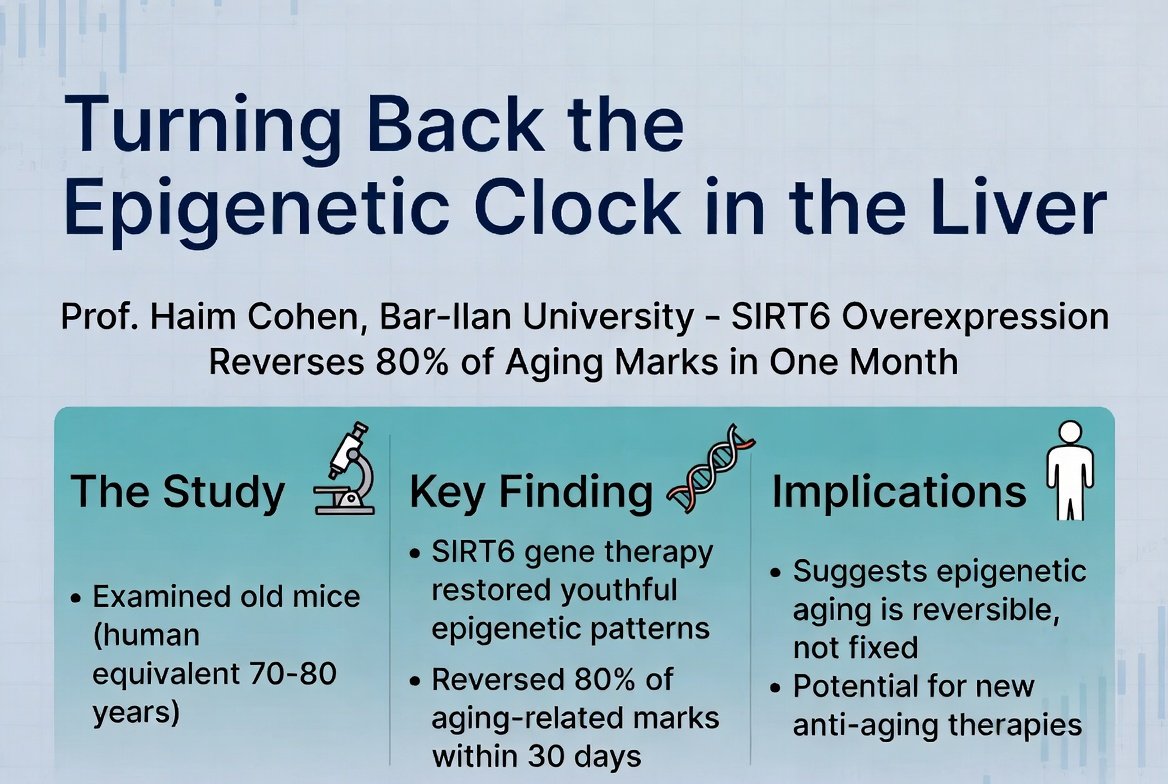
One of the most promising and researched approaches today is not related to telomerase, but to partial epigenetic reprogramming: the controlled use of "Yamanaka factors" to partially "reset" the cellular age without erasing the cell's identity. This is the approach being developed by Altos Labs and Life Biosciences. In 2026, it was reported that the first participant in a clinical trial received such treatment. This is an experimental field in its early stages, but particularly intriguing.
What can be taken today?
Lessons from the long-lived animals, translated to our lives:
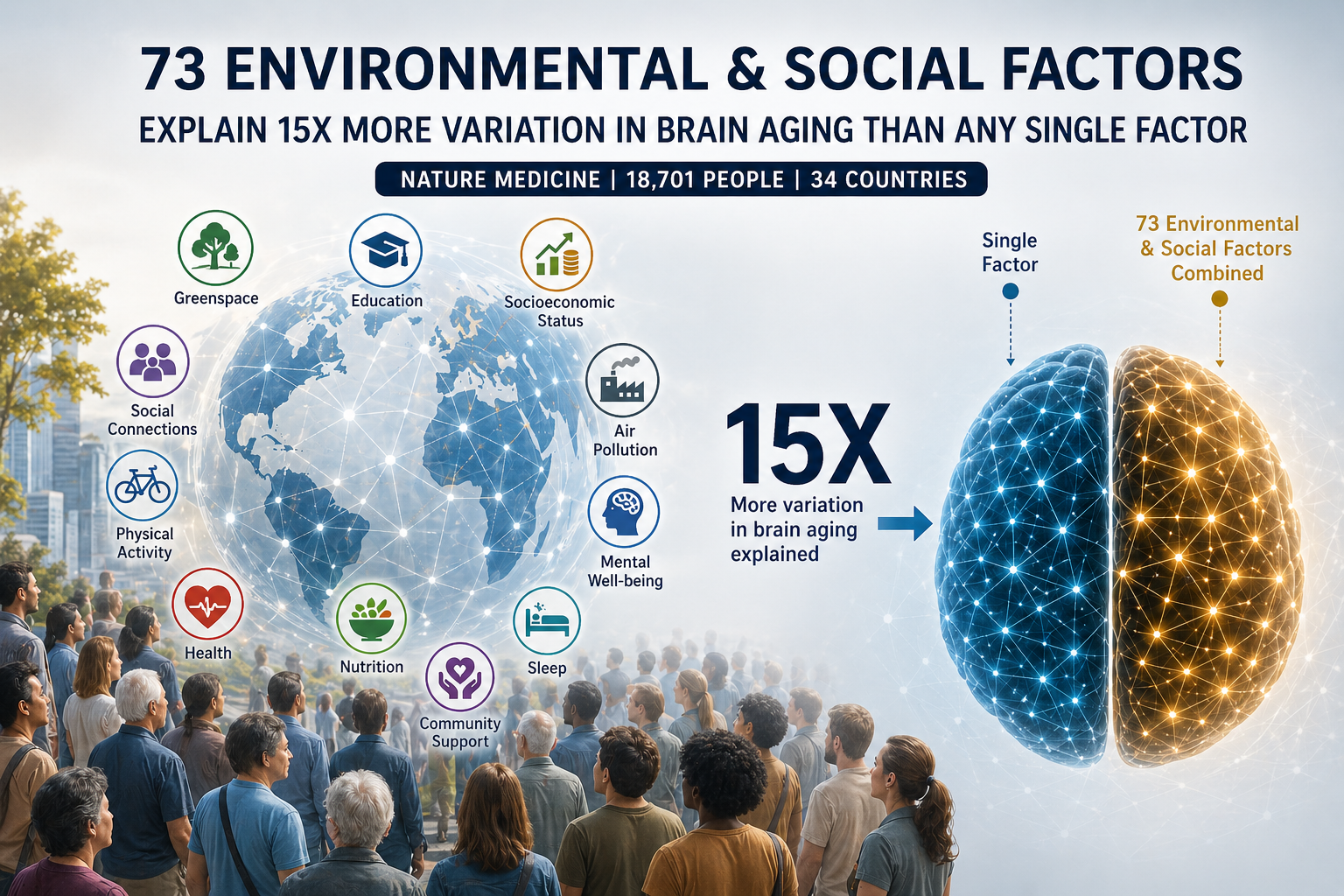
- Don't rush: Balanced lifestyle, quality sleep, stress management
- Protect your DNA: Anti-inflammatory diet, avoid harmful UV radiation and smoking
- Reduce cancer risk: Regular screening tests, physical activity, healthy lifestyle
- Follow the science: The fields of reprogramming and autophagy are advancing rapidly
The Bottom Line
None of us will live 400 years like the Greenland shark. But its story (and that of the bowhead whale, the naked mole rat, the elephant, and the Ming clam) shows that aging is not an unbreakable law of nature. Biology knows how to do much more than it does in us, and in several different ways: superior DNA repair, elimination of damaged cells, or tolerance to damage. The better we understand these secrets, the more we might be able to gradually promote healthier and longer lives.

💬 Comments (0)
Be the first to comment on the article.