Dietary supplements are a $50 billion a year industry. Every pharmacy, every Instagram, every health podcast promises that Supplement X will extend your life. What are you supposed to believe? When looking at the existing scientific literature, you can separate what truly works from marketing. Here is the clear list: 4 supplements worth the money, and 4 that aren't.
4 Proven Supplements
1. Vitamin D
Vitamin D is not actually a "vitamin" but a hormone. It affects hundreds of processes in the body, from bone growth to immune system function.
The Evidence: According to NHANES data, about 40% of Americans have insufficient levels of vitamin D, and another 22% have a true deficiency. In studies, supplementation of 1,000-2,000 IU per day in those who are deficient showed:
- Reduced risk of respiratory infections
- Improvement in cellular aging (slowing of telomere shortening rate, according to a sub-study within the VITAL trial)
- Improved mood in people with mild depression
- Strengthened bone density
Who It's Relevant For: Almost everyone, almost everywhere in the world. Especially those living in areas with less sun, older adults, or people with darker skin.
Dosage: 1,000-2,000 IU per day. A blood test (25-OH Vitamin D) once a year. If your level is below 30 ng/ml, you are at an insufficient level.
2. Omega-3 Fatty Acids
EPA and DHA are fatty acids that cannot be produced by the body. We need to get them from our diet.
The Evidence: Dozens of large controlled trials have examined omega-3s in the context of systemic inflammation, heart health, and brain function. In the large VITAL trial, the primary composite endpoint of cardiovascular events did not decrease significantly (only about an 8% reduction, not statistically significant). However, in an analysis of secondary endpoints, an approximately 28% reduction in myocardial infarction (heart attack) and an approximately 50% reduction in fatal heart attack were observed. In other words: not a "miracle prescription" for all heart events, but an encouraging sign regarding heart attacks, especially for those who consume little fish.
Who It's Relevant For: Those who do not eat fatty fish (salmon, sardines, mackerel) at least 2-3 times a week.
Dosage: 1,000-2,000 mg of EPA+DHA combined per day. A quality supplement, purified from heavy metals.
3. Protein (Powder)
The term "supplement" can also include protein powder. People over 50 need more protein than younger people, and it's easier to reach the target with a supplement.
The Evidence: Individuals aged 65+ who consume less than 1 gram of protein per kilogram of body weight per day are at significantly increased risk for sarcopenia (muscle mass loss). The recommendation for adults is about 1.0-1.2 grams of protein per kilogram per day or more, and supplementation of 20-30 grams per day (powder or a quality source) fills the gap.
Types:
- Whey protein powder: The standard. Fast absorption, good amino acid profile
- Casein: Slow absorption. Good before sleep
- Plant protein (pea, rice): For vegans. Combining 2 types provides a complete profile
Dosage: 20-40 grams per day if the diet is not sufficient.
4. Creatine Monohydrate
One of the most researched supplements in the world, with over 500 controlled studies. Previously considered only a sports supplement. Today, it is also recognized for brain function in older age.
The Evidence: Creatine increases cellular energy availability. In older adults, it has been found to:
- Improve muscle strength by 5-10% within 4-8 weeks
- Preserve muscle mass during periods of inactivity (bed rest after surgery)
- Improve working memory in older adults, arithmetic performance
- Possibly slow brain aging (early evidence)
Dosage: 3-5 grams per day, whenever convenient. Very safe even long-term.
(Note: Other expert lists recommend magnesium instead of creatine, which is also a reasonable candidate for a basic supplement. Both supplements are well-supported, and the difference is mainly in what matters to you: strength and muscle vs. sleep and neuromuscular function.)
4 Supplements Not Worth It
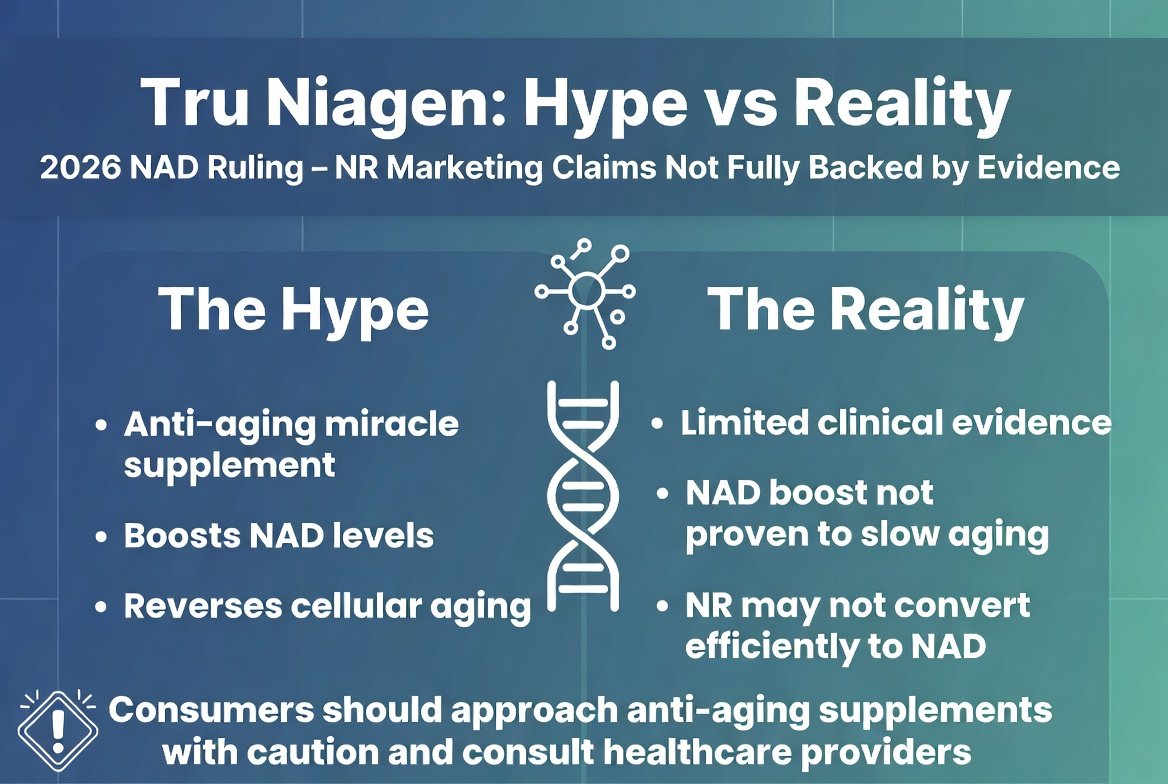
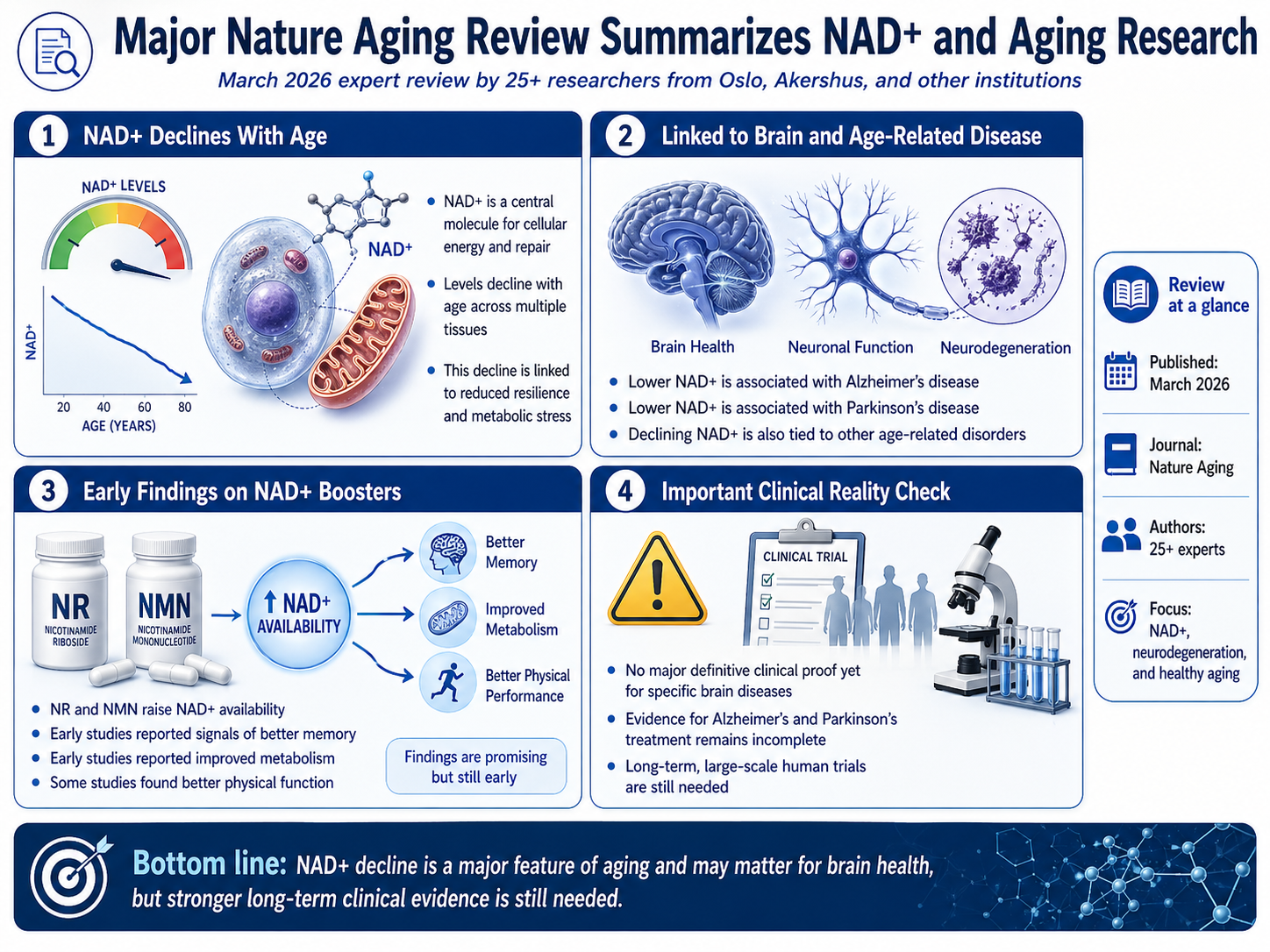
1. NMN and NR (NAD+ Boosters)
NAD+ supplements are the big trend of 2020-2025. Powerful marketing, high prices, and David Sinclair recommends them.
The Problem: As we covered in in-depth research, most evidence is in mice. In humans, the benefits are modest (a 2 mmHg reduction in diastolic blood pressure, minor improvement in fitness). There is no proof of lifespan extension. Additionally, a study from Case Western (published in Cancer Letters) showed in the lab and in mice that NAD+ boosters may help pancreatic cancer cells survive chemotherapy.
Recommendation: Most people will get a better ROI from regular vitamin B3 (niacin) at 5% of the supplement's cost.
2. Resveratrol
The story of resveratrol: It is found in red wine and activates sirtuins, enzymes linked to aging. In the lab, it extends the lifespan of yeast. Sinclair was its face.
The Problem: Resveratrol is not well absorbed in the human gut. Most of what you consume does not reach the cells. In human studies, it has not shown consistent benefits. Sinclair himself still takes it (about 1 gram per day, mixed with a fatty source to improve absorption) alongside NMN, believing the two work synergistically, but he also admits that resveratrol absorption in the body is problematic.
Recommendation: Save your money, and occasionally drink a glass of red wine (if you like it). It won't save your life, but at least it tastes good.
3. High-Dose Antioxidant Supplements
Vitamin E, vitamin C, beta-carotene, selenium - they are often promised to lower the risk of cancer and heart disease.
The Problem: A systematic review (Cochrane / Bjelakovic) of studies on hundreds of thousands of patients found that high-dose antioxidants may increase the risk of mortality. They may interfere with healthy cell signaling. In the famous ATBC study, beta-carotene and vitamin E themselves increased the risk of lung cancer in smokers (about an 18% increase in the beta-carotene group).
Recommendation: Eat colorful vegetables. High-dose antioxidant supplements are a problem, not a solution.
4. "Longevity Blends" - Proprietary Mixtures
Many companies offer expensive bottles containing "10 vitamins, 5 minerals, and 7 active ingredients." Price: $80-150 per month.
The Problem:
- Most ingredients are in sub-therapeutic amounts (less than the dose showing benefit in studies)
- There is no research on this specific combination - only on individual ingredients
- Unknown interactions between the substances
- Marketing based on "name-dropping" famous researchers, not controlled research
Recommendation: Take the 4 proven supplements above separately, in high quality. You'll save a lot of money and get more.
Conclusion: A Smart Shopping List
If you want supplements that work:
- Vitamin D 1,000-2,000 IU - $5-10/month
- Quality Omega-3 1-2 grams - $15-25/month
- Protein Powder 1 kg - $30-40/month
- Creatine 5 grams - $5-10/month
- Total: $55-85/month for a protocol that works
That's much less than the price of a single unproven NMN supplement. And more importantly, it also leaves a budget for things that work better than supplements: quality food, a gym membership, and medical check-ups.

💬 Comments (0)
Be the first to comment on the article.